

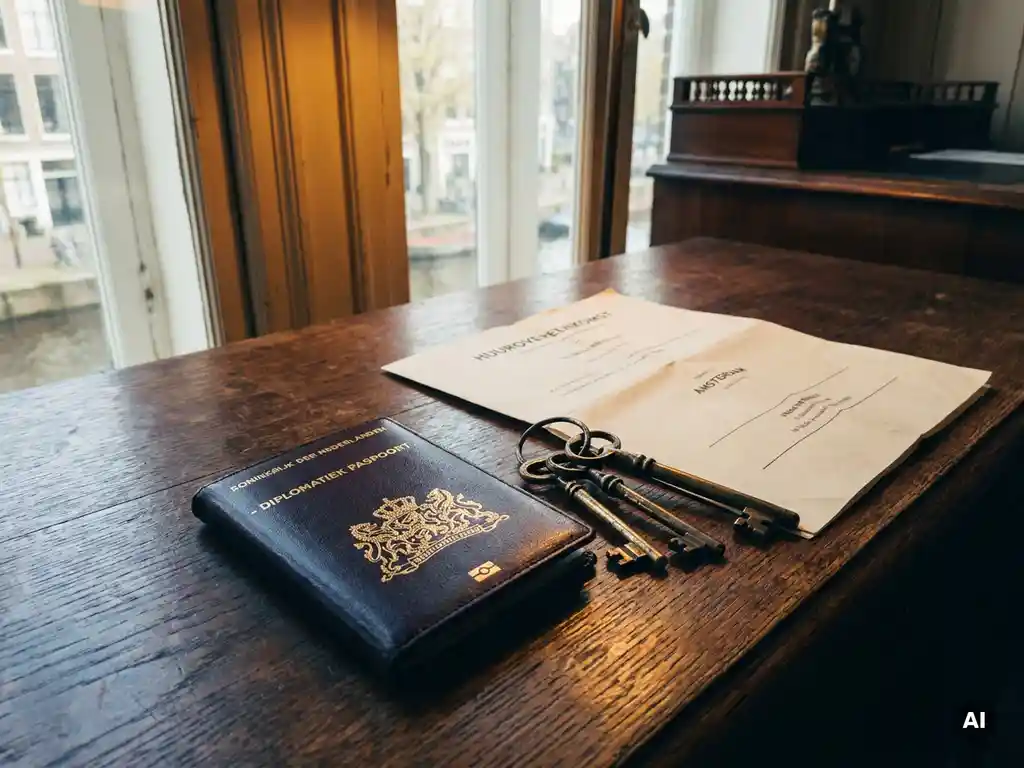
A landlord in the Netherlands can invoke the diplomat clause when they need to return to their own property before the end of a fixed-term lease. The clause must be explicitly included in the rental agreement at the outset and can only be used under specific statutory conditions. The sections below address the most important practical and legal questions surrounding this provision.
What conditions must be met to invoke the diplomat clause?
The diplomat clause can be invoked when the landlord is the owner-occupier of the property, the clause was included in the original lease agreement, and the landlord genuinely intends to return to the property for personal use. In the Netherlands, this provision is governed by the rules on residential tenancy protection under Book 7 of the Dutch Civil Code.
For the clause to be valid and enforceable, the following conditions generally need to be satisfied:
- The landlord must have lived in the property as their primary residence before renting it out.
- The diplomat clause must be explicitly written into the lease agreement before the tenancy begins.
- The landlord must have temporarily vacated the property, for example due to an international posting or relocation abroad.
- The landlord must have a genuine and demonstrable intention to reoccupy the property upon return.
- The clause must comply with the statutory requirements for temporary rental under Dutch tenancy law.
It is worth noting that the name “diplomat clause” does not mean it is reserved exclusively for diplomats. The term has become common usage in the Dutch rental market, but the clause can in principle be used by any owner-occupier who temporarily lets their home while working or living abroad. Whether the clause will hold up in a specific situation depends on the precise wording of the agreement and the circumstances at the time of invocation. Legal advice is strongly recommended before relying on this provision.
What is the difference between the diplomat clause and ordinary termination?
The key distinction is that ordinary termination of a residential lease in the Netherlands is subject to strict tenant protection rules, which make it very difficult for a landlord to end a tenancy against the tenant’s wishes. The diplomat clause, by contrast, is a contractually agreed mechanism that allows the landlord to reclaim the property at a predetermined point, provided the original conditions are met.
Under standard Dutch tenancy law, a landlord cannot simply terminate an open-ended residential lease without a legally recognized ground, such as urgent personal use, failure to act as a good tenant, or a court order. Even then, the process typically involves court proceedings and significant notice periods.
The diplomat clause bypasses some of this complexity because both parties agreed at the outset that the tenancy would end when the landlord returns. This makes it a form of temporary rental arrangement rather than a standard indefinite lease. However, the clause does not override all tenant protections. If the clause is improperly drafted or the landlord cannot demonstrate genuine personal use, a court may still rule in favor of the tenant. The practical effect is that the diplomat clause shifts the balance somewhat toward the landlord, but only within the boundaries set by law.
How does a landlord correctly include the diplomat clause in a lease?
To be legally effective, the diplomat clause must be included in the written lease agreement before the tenancy commences. It cannot be added retroactively. The clause should clearly state the reason for the temporary rental, the landlord’s intention to return, and the conditions under which the tenancy will end.
A well-drafted diplomat clause typically addresses the following points:
- Identification of the property as the landlord’s primary residence prior to the rental period.
- The reason for temporary absence, such as an international assignment or posting abroad.
- The notice period the landlord will give the tenant before requiring the property to be vacated.
- The anticipated return date or period, even if stated as an estimate.
- A clear statement that the tenancy is temporary and will end upon the landlord’s return for personal use.
The notice period is particularly important. Dutch law requires that the tenant receive adequate notice, and in practice this is often set at a minimum of one month, though longer periods are common and advisable. The lease should also be registered with the relevant authorities where required. Given the legal complexity involved, having the agreement reviewed by a qualified lawyer before signing can prevent significant disputes later.
Can a tenant refuse to leave after the diplomat clause is invoked?
A tenant can contest the invocation of the diplomat clause, and in practice some tenants do refuse to vacate. If the tenant does not leave voluntarily, the landlord cannot forcibly remove them and must initiate court proceedings to obtain an eviction order. The court will assess whether the conditions of the clause have genuinely been met.
Grounds on which a tenant may successfully challenge the clause include:
- The clause was not properly included in the original lease agreement.
- The landlord cannot demonstrate a genuine intention to reoccupy the property.
- The notice given was insufficient or procedurally incorrect.
- The landlord’s circumstances have changed in a way that undermines the original basis for the clause.
Dutch courts take residential tenant protection seriously, and a landlord who cannot substantiate their claim to personal use may find the eviction request denied. This underlines the importance of careful documentation throughout the rental period, including correspondence that confirms the landlord’s continued intention to return. Tenants who are renting in the Netherlands as expats should be aware of this provision when signing any lease agreement, as it can significantly affect their housing security.
What happens if the landlord does not return to the property after invoking the clause?
If a landlord invokes the diplomat clause and the tenant vacates, but the landlord subsequently does not return to live in the property, the tenant may have grounds for a legal claim. Dutch law does not permit a landlord to use the diplomat clause as a pretext to end a tenancy for other reasons, such as re-letting the property at a higher rent.
In such circumstances, the former tenant may be entitled to compensation for damages suffered as a result of the wrongful termination. The strength of such a claim depends on the specific facts, including how quickly the landlord re-let the property, whether there is evidence of bad faith, and what losses the tenant can demonstrate.
Courts have in the past awarded compensation to tenants where it became apparent that the landlord’s stated intention to return was not genuine. This is why landlords are advised to invoke the clause only when their intention to reoccupy the property is real and demonstrable. Misuse of the diplomat clause not only exposes the landlord to financial liability but may also damage their credibility in any future tenancy dispute.
The outcome in any individual case will depend on the specific circumstances, the wording of the lease, and the evidence available to both parties. This is a nuanced area of Dutch tenancy law, and the consequences of getting it wrong can be significant for both landlord and tenant.
How Russell Advocaten Can Help With the Diplomat Clause
Russell Advocaten is an internationally oriented law firm based in Amsterdam, with decades of experience advising on real estate and tenancy law, employment, contracts, immigration, and business formation. Their lawyers are equally at ease in English, German, and Dutch, making them a natural point of contact for international clients navigating the Dutch legal system.
When it comes to the diplomat clause and residential tenancy matters, Russell Advocaten can assist with:
- Reviewing or drafting a lease agreement that includes a properly worded diplomat clause.
- Advising landlords on whether their circumstances justify invoking the clause.
- Representing landlords or tenants in court proceedings relating to disputed evictions.
- Advising expats and international clients on their rights and obligations under Dutch tenancy law.
- Providing guidance on temporary rental arrangements and the applicable statutory framework.
Whether you are a landlord preparing to let your property while working abroad, or a tenant who has received notice under a diplomat clause, obtaining tailored legal advice at an early stage can make a significant difference to the outcome. Contact Russell Advocaten to discuss your specific situation with an experienced lawyer.
This information is general in nature and does not constitute legal advice for your specific situation. Please consult a lawyer at Russell Advocaten for advice tailored to your circumstances.
Veelgestelde vragen
Can the diplomat clause be used for a property that was never the landlord's primary residence?
No. The diplomat clause is specifically designed for owner-occupiers who temporarily vacate their primary residence. If the property was purchased as an investment or was never lived in by the landlord as their main home, the clause cannot be validly invoked. Attempting to use it in this way is likely to fail in court and could expose the landlord to liability for wrongful termination.
How much notice does a landlord need to give a tenant when invoking the diplomat clause?
The required notice period should be specified in the lease agreement itself, but in practice a minimum of one month is common under Dutch law. Many legal professionals recommend building in a longer notice period — such as two or three months — to reduce the risk of a tenant successfully challenging the termination on procedural grounds. If the lease is silent on this point or the notice given is deemed insufficient, a court may side with the tenant.
What documentation should a landlord keep during the rental period to protect themselves when invoking the clause?
Landlords should retain evidence that consistently supports their intention to return, such as correspondence confirming their posting abroad, employment contracts, records of maintaining ties to the Netherlands (such as a Dutch address registration or utility accounts), and any communications with the tenant that reference their planned return. The stronger and more consistent this paper trail, the harder it becomes for a tenant to argue that the landlord’s stated intention was not genuine. Keeping this documentation organised from the start of the tenancy is far easier than trying to reconstruct it later.
Does the diplomat clause apply to social housing (sociale huurwoning) in the Netherlands?
The diplomat clause is generally associated with the private rental sector and is most relevant to owner-occupiers temporarily letting their home. Social housing in the Netherlands is subject to a different and heavily regulated legal framework, and the circumstances in which an owner-occupier would let out a social housing unit are extremely limited. If you are unsure whether your property falls within the scope of social or private housing regulations, a tenancy lawyer can clarify which rules apply to your specific situation.
Can a tenant negotiate the terms of the diplomat clause before signing the lease?
Yes, and it is advisable to do so. Before signing, a tenant can request modifications such as a longer notice period, a clearer definition of the return conditions, or a compensation arrangement if the clause is invoked earlier than expected. Since the clause must be agreed upon before the tenancy begins, the pre-signing stage is the only realistic opportunity to negotiate its terms. Tenants — particularly expats unfamiliar with Dutch tenancy law — should have the lease reviewed by a lawyer before signing to fully understand the implications of the clause.
What is the risk for a landlord who invokes the diplomat clause but then decides to sell the property instead of returning to live in it?
Selling the property rather than reoccupying it after invoking the diplomat clause is a strong indicator of bad faith and could form the basis of a compensation claim by the former tenant. Dutch courts have previously awarded damages in cases where it became clear that the landlord’s stated intention to return was a pretext. The financial and reputational consequences can be significant, so landlords should only invoke the clause when their intention to reoccupy is genuine and well-documented.
Is it possible to extend a tenancy that was originally set up under the diplomat clause, and what are the legal implications?
Extending a tenancy that was established under the diplomat clause requires careful legal consideration. If the landlord’s return is delayed and the tenancy is extended — even informally — this could affect the enforceability of the original clause and potentially convert the arrangement into a more standard tenancy with stronger tenant protections. Any extension should be documented in writing and reviewed by a lawyer to ensure the original basis for the temporary rental is preserved and that both parties’ rights remain clearly defined.
Gerelateerde artikelen
- What is community of property and does it apply to expats in the Netherlands?
- What is a temporary rental contract and how does it work in the Netherlands?
- What is the highly skilled migrant visa in the Netherlands?
- What visa do you need to move to the Netherlands for work?
- How do you register as an expat in the Netherlands?
Deze inhoud is gegenereerd met behulp van AI en kan fouten bevatten.