

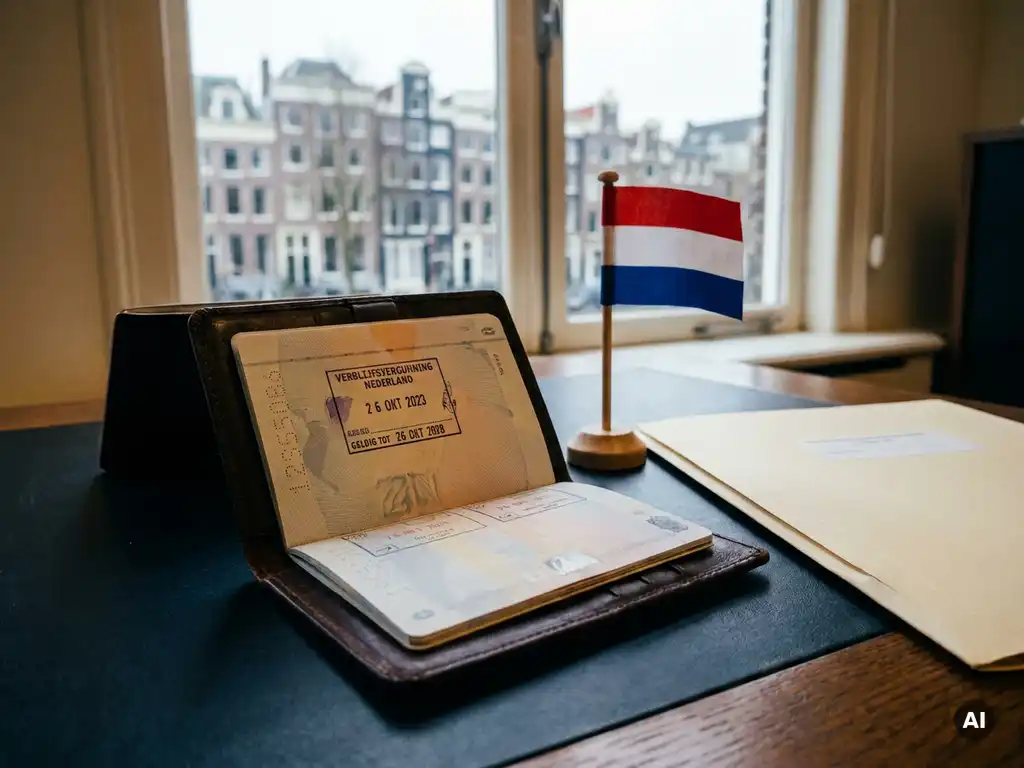
The highly skilled migrant visa in the Netherlands, known in Dutch as the kennismigrant permit, is a residence permit that allows Dutch employers to bring talented foreign professionals to the Netherlands without having to demonstrate that no suitable Dutch or EU candidate was available. It is designed for non-EU nationals who meet a minimum salary threshold and are sponsored by a recognised employer. The sections below address the most common questions about how the scheme works, who qualifies, and what the process involves.
Who qualifies as a highly skilled migrant in the Netherlands?
A highly skilled migrant in the Netherlands is a non-EU national who is offered employment by a recognised Dutch employer and whose salary meets the applicable minimum income threshold set by the Immigration and Naturalisation Service (IND). Unlike the standard single permit (GVVA), the highly skilled migrant scheme does not require the employer to prove that no suitable Dutch or EU candidate exists.
To qualify, the applicant must hold a valid employment offer from a recognised sponsor in the Netherlands, earn at least the minimum salary required for their age category, and be a national of a country outside the European Economic Area or Switzerland. There is no specific educational requirement tied to the permit itself, though in practice the salary thresholds tend to reflect professional or graduate-level roles. Applicants who have recently completed a degree and are using the orientation year (zoekjaar) permit to search for work may subsequently transition to the highly skilled migrant permit once they secure qualifying employment, often benefiting from a reduced income threshold in that situation.
Which employers can sponsor a highly skilled migrant?
Only employers that have been formally recognised as a sponsor by the IND are permitted to apply for a highly skilled migrant permit on behalf of a foreign employee. Recognised sponsors are registered with the IND and appear on a publicly available register. This recognition status is what enables the streamlined process that sets the highly skilled migrant scheme apart from other work-related permits.
A wide range of organisations can obtain recognised sponsor status, including private companies, multinationals, non-profit organisations, and research institutions. Employers must meet certain financial and administrative requirements to qualify and maintain their recognised status. If an employer does not yet hold recognised sponsor status, they must apply for it before they can sponsor a highly skilled migrant. This step is worth factoring into the overall timeline when planning an international hire.
How does the highly skilled migrant application process work?
The highly skilled migrant application is submitted by the recognised employer, not the employee, to the IND. The employer acts as the sponsor throughout the process and takes on responsibility for ensuring the employee meets the relevant conditions during the period of their stay.
The general sequence of steps is as follows:
- The employer confirms their recognised sponsor status with the IND.
- The employer submits the highly skilled migrant application to the IND on behalf of the prospective employee.
- If the applicant is outside the Netherlands, they may need to follow the TEV procedure (Entry and Residence) and collect a provisional residence permit (MVV) from the Dutch embassy or consulate in their country of residence before travelling.
- Upon arrival in the Netherlands, the employee collects their residence document from an IND Desk within two weeks.
- The employee registers at their local municipality (gemeente) to be entered in the Personal Records Database (BRP).
- Depending on the permit conditions, a tuberculosis test may be required within three months of arrival.
One of the key advantages of the highly skilled migrant route is that the IND does not consult the UWV (the Employee Insurance Agency) to assess whether suitable local candidates exist. This makes the process considerably faster than the standard single permit route, where the UWV must first confirm that recruitment efforts within the Netherlands and the EU have been exhausted.
What are the salary thresholds for the highly skilled migrant permit?
The highly skilled migrant permit requires the applicant’s gross annual salary to meet a minimum threshold, which is reviewed and updated periodically by the IND. The applicable threshold depends on the applicant’s age. In 2026, the general salary requirement and the reduced threshold for younger migrants are aligned with the figures used for the 30% ruling (the Expat Scheme), though it is important to note that these are two distinct schemes.
As a point of reference, the Expat Scheme salary thresholds for 2026 are set at €48,013 for the general category and €36,497 for employees under the age of 30 who hold a qualifying master’s degree. The IND salary thresholds for the highly skilled migrant permit follow a comparable structure, though the exact figures should always be verified directly with the IND or a qualified adviser, as they are subject to annual adjustment.
It is worth noting that the Expat Scheme (30% ruling) and the highly skilled migrant permit are separate instruments. The Expat Scheme is a tax benefit administered by the Dutch Tax Administration, whereas the highly skilled migrant permit is a residence permit issued by the IND. An employee may potentially benefit from both, but they must meet the respective conditions for each independently. Depending on the specific situation, legal advice for expats can help clarify which benefits apply and how to structure an application correctly.
How long is the highly skilled migrant permit valid?
The highly skilled migrant permit is generally issued for the duration of the employment contract, up to a maximum of five years. If the employment contract is for an indefinite period, the permit is typically granted for five years. After this period, the permit can be renewed provided the conditions are still met, or the permit holder may become eligible to apply for a permanent residence permit or Dutch citizenship if they have resided in the Netherlands for a sufficient period.
It is essential to initiate the renewal process before the current permit expires. The IND or the employer sponsor will typically send a notification approximately three months before expiry, but it is the permit holder’s responsibility to ensure their status remains valid. Allowing a permit to lapse without timely renewal can result in an unlawful period of stay, which may have consequences for future applications.
Can family members join a highly skilled migrant in the Netherlands?
Yes. Family members of a highly skilled migrant are generally permitted to join them in the Netherlands. The recognised employer sponsor can submit applications for family members at the same time as the main application, or separately at a later stage. Eligible family members typically include a spouse or registered partner and dependent children.
Partners who join a highly skilled migrant in the Netherlands under a partner permit generally have the right to work freely without needing a separate work permit, provided the main permit holder holds a highly skilled migrant permit, an EU Blue Card, an intra-corporate transfer permit, a self-employed person’s permit, or a researcher’s permit. This is a meaningful practical benefit for households relocating to the Netherlands as part of an international assignment. Partners should verify the exact conditions stated on the back of their own residence document, as this will explicitly state whether employment is permitted and under what terms.
How Russell Advocaten can assist with your move to the Netherlands
Navigating Dutch immigration rules, employment conditions, and related legal obligations can be complex, particularly for international professionals and the companies that employ them. Russell Advocaten is an internationally oriented law firm based in Amsterdam with extensive experience advising expats and businesses on a broad range of legal matters, including:
- Immigration and residence permit questions, including the highly skilled migrant scheme and partner permits
- Setting up a business in the Netherlands as a foreign entrepreneur or company
- Employment law, including contracts, personnel matters, and reorganisations
- Real estate and rental law, including the diplomat clause in rental agreements
- Contracts and corporate law for international clients operating on the Dutch market
- Family law matters relevant to expats living in the Netherlands
Russell Advocaten’s lawyers communicate fluently in English, German, and Dutch, which is a practical advantage for international clients who need clear, precise legal guidance without language barriers. The firm is an official partner of IN Amsterdam, the expat centre of the City of Amsterdam, and is recommended by The Legal 500 as a leading firm in its field. Through the Primerus network of over 3,000 lawyers in 40 countries, Russell Advocaten can also support clients with cross-border legal questions that extend beyond the Netherlands.
If you have questions about the highly skilled migrant permit, the 30% ruling, or any other legal matter related to living and working in the Netherlands, contact Russell Advocaten to discuss your situation with one of their experienced lawyers.
This information is general in nature and does not constitute legal advice for your specific situation. Please consult a lawyer at Russell Advocaten for advice tailored to your circumstances.
Veelgestelde vragen
Can I switch to a highly skilled migrant permit if I'm already in the Netherlands on a different type of visa?
Yes, in many cases it is possible to change your residence purpose from within the Netherlands, provided you meet the conditions of the highly skilled migrant scheme at the time of the switch. Common transitions include moving from an orientation year (zoekjaar) permit to a highly skilled migrant permit once qualifying employment is secured, or switching from a student permit after graduation. Your recognised employer sponsor submits the change-of-purpose application to the IND on your behalf, so it is important to coordinate the timing carefully to avoid any gap in your legal status.
What happens to my highly skilled migrant permit if I change employers?
Your highly skilled migrant permit is tied to your sponsoring employer, so if you change jobs, your new employer must also be a recognised IND sponsor and must submit a new permit application before you start working for them. Continuing to work under your old permit after leaving the sponsoring employer — even briefly — can result in an unlawful period of stay. It is strongly advisable to plan the transition carefully and, where possible, ensure the new permit is in place before your employment with the previous sponsor ends.
Does the salary threshold apply to my total compensation package, or only to my base salary?
The IND salary threshold applies to the guaranteed gross salary only — meaning the fixed, contractually agreed monthly salary excluding variable components such as bonuses, commission, holiday allowances, or expense reimbursements. This is an important distinction, because a compensation package that looks sufficient on paper may fall short of the threshold once only the guaranteed base salary is counted. Employers structuring offers for international hires should ensure the fixed salary component alone clears the applicable minimum to avoid complications during the application.
How long does the highly skilled migrant application typically take, and can my employee start working while it is being processed?
The IND aims to process highly skilled migrant applications within two weeks for recognised sponsors, which is significantly faster than the standard single permit route. However, if the applicant requires an MVV (provisional residence permit) from abroad, additional processing time at the Dutch embassy or consulate should be factored in. In most cases, the employee may not begin working in the Netherlands until the permit has been granted and the relevant documents collected, so aligning the start date with the expected processing timeline is essential.
What are the most common mistakes employers make when sponsoring a highly skilled migrant?
One of the most frequent pitfalls is failing to verify that the offered salary meets the IND threshold before submitting the application, particularly when variable pay is mistakenly included in the calculation. Another common issue is not accounting for the time needed to obtain recognised sponsor status if the employer does not already hold it, which can significantly delay an international hire. Employers also sometimes overlook their ongoing obligations as a recognised sponsor — such as notifying the IND promptly if the employee’s contract ends or their salary changes — which can affect both the employee’s permit and the employer’s sponsor status.
Will my highly skilled migrant permit count toward permanent residency or Dutch citizenship?
Yes, time spent in the Netherlands on a highly skilled migrant permit counts toward the five-year continuous legal residence typically required to apply for a permanent residence permit (verblijfsvergunning voor onbepaalde tijd) or, under certain conditions, Dutch citizenship. However, the five years must generally be uninterrupted, and any gaps in legal status — such as a lapsed permit — can reset or complicate the calculation. Meeting the integration requirements, including passing the civic integration exam (inburgeringsexamen), is also a condition for most permanent residency and naturalisation applications.
Can a highly skilled migrant work as a freelancer or start a side business in the Netherlands?
The highly skilled migrant permit authorises employment with the specific recognised sponsor named on the permit, and does not automatically allow self-employment or freelance activities alongside that employment. Starting a side business or taking on freelance clients would generally require a separate self-employed person’s permit (zelfstandige) or another applicable authorisation, depending on the nature and scale of the activity. If you are considering entrepreneurial activities alongside your employed role, it is worth seeking legal advice early to understand what is permissible under your current permit conditions.
Gerelateerde artikelen
- Is the diplomat clause legal in all Dutch rental agreements?
- What legal protections do expats have in Dutch rental contracts?
- Does the 30% ruling affect your mortgage options in the Netherlands?
- What do expats need to know before moving to the Netherlands?
- How long does it take to register a company in the Netherlands?
Deze inhoud is gegenereerd met behulp van AI en kan fouten bevatten.