

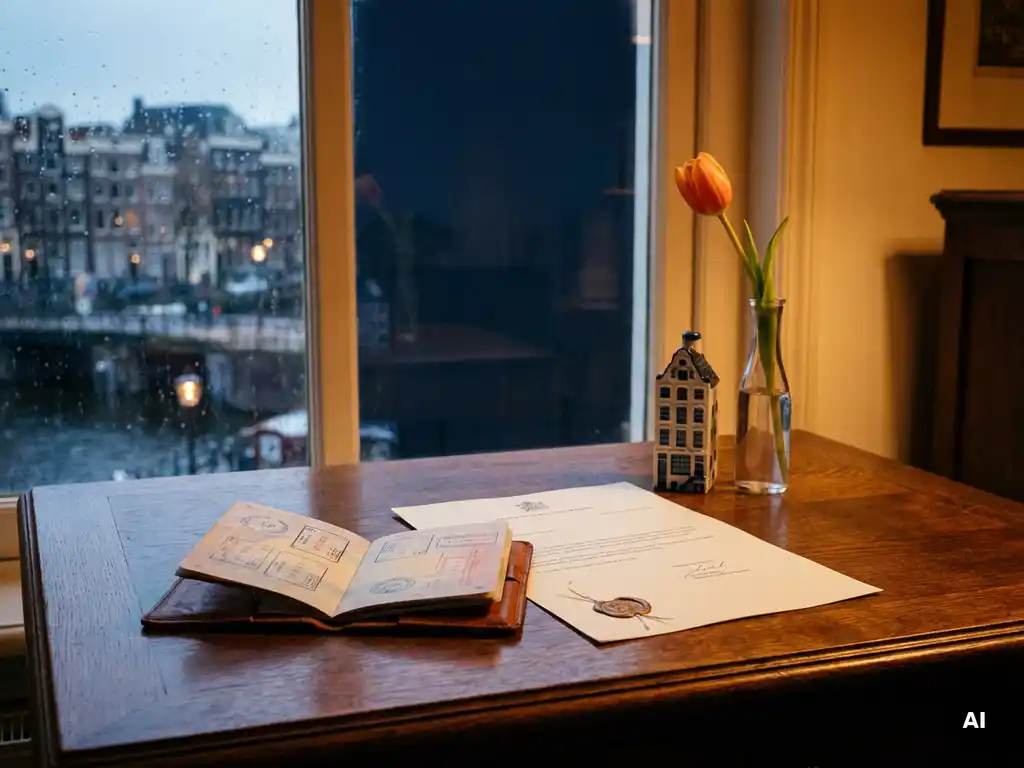
Moving to the Netherlands for work requires a visa or residence permit that matches your employment situation, nationality, and the duration of your stay. For most non-EU nationals, the relevant routes are the highly skilled migrant permit, the EU Blue Card, or an intra-corporate transferee permit. EU and EEA nationals do not need a work visa and may live and work in the Netherlands freely. The sections below address the most common questions international professionals and their employers face when navigating Dutch immigration for employment purposes.
Which Dutch visa categories cover employment?
The Netherlands offers several residence permit categories for foreign nationals coming to work. The most widely used routes for employment are the highly skilled migrant permit, the EU Blue Card, the intra-corporate transferee permit, and the single permit (combined work and residence permit). The right category depends on your nationality, salary level, employer status, and the nature of your role.
Below is an overview of the main employment-related permit categories:
- Highly skilled migrant permit: For non-EU nationals employed by a recognised sponsor in the Netherlands, subject to a minimum salary threshold.
- EU Blue Card: A European-level permit for highly qualified workers, requiring a higher minimum salary than the highly skilled migrant route.
- Intra-corporate transferee permit: For employees transferred from a non-EU branch of a company to a Dutch branch for more than 90 days.
- Single permit (GVVA): A combined work and residence permit for those who do not qualify under the highly skilled migrant or Blue Card routes.
- Orientation year permit (zoekjaar): For recent graduates from recognised universities, allowing up to one year to seek employment in the Netherlands without a separate work permit.
- Researcher permit: For those conducting paid or grant-funded research at a recognised Dutch research institution.
EU, EEA, and Swiss nationals are not required to obtain any of these permits and may work in the Netherlands without restriction. For nationals of all other countries, the appropriate permit depends on the specific circumstances of the employment arrangement.
What is the highly skilled migrant visa and who qualifies?
The highly skilled migrant permit is a residence permit for non-EU nationals employed by a Dutch recognised sponsor at or above a defined minimum salary threshold. It is the most common route for international professionals relocating to the Netherlands for work, and it is widely regarded as one of the most efficient skilled worker routes within the EU.
To qualify for the highly skilled migrant permit, the following conditions must generally be met:
- Your employer must be a recognised sponsor registered with the IND (Dutch Immigration and Naturalisation Service).
- You must earn at or above the applicable minimum salary. In 2026, this is approximately €4,354 per month for applicants under 30, and a higher threshold applies for those aged 30 and above.
- You must hold a valid passport and must not pose a risk to public order or national security.
- You must pass a tuberculosis test after arriving in the Netherlands, unless exempt.
There is no requirement to demonstrate that no suitable Dutch or EU candidate was available for the role, which distinguishes this route from the standard single permit procedure. Once approved, the permit is tied to the sponsoring employer, meaning a change of employer generally requires a new application. The IND typically aims to decide within two weeks when the employer pays by direct debit, though more complex cases may take longer.
Depending on the applicant’s country of birth, a provisional residence permit (MVV) may also be required before entering the Netherlands. This is applied for simultaneously with the residence permit through the TEV procedure.
What is the difference between a work permit and a residence permit in the Netherlands?
A residence permit authorises a foreign national to live in the Netherlands for more than 90 days. A work permit (tewerkstellingsvergunning, or TWV) separately authorises an employer to have a foreign national perform work in the Netherlands. In practice, many employment routes now combine both into a single document, but the distinction remains relevant in certain situations.
For highly skilled migrants and EU Blue Card holders, the residence permit itself includes the right to work for the sponsoring employer, so no separate work permit is required. For other categories, such as certain seasonal workers or those on standard employment contracts, a separate work permit may still be needed alongside the residence permit.
The single permit (GVVA) is the clearest example of a combined document: it functions as both a residence permit and a work permit, issued through a single application procedure. This was introduced to simplify the process for workers who do not qualify under the highly skilled migrant or Blue Card routes.
It is also worth noting that some residence permits carry work restrictions. A student residence permit, for instance, does not automatically grant the right to work as an employee, and a separate work permit is required for paid employment in that context. Understanding which rights attach to a specific permit type is essential before commencing any employment in the Netherlands.
Does an EU Blue Card offer advantages over the highly skilled migrant route?
For most professionals planning to remain in the Netherlands, the highly skilled migrant permit is generally more advantageous than the EU Blue Card. The minimum salary threshold for the highly skilled migrant route is considerably lower, particularly for applicants under 30, and the application process is similarly efficient. However, the EU Blue Card does offer specific advantages for those with longer-term European mobility in mind.
The key differences are as follows:
- Salary threshold: In 2026, the highly skilled migrant minimum is approximately €4,354 per month for those under 30, compared to approximately €5,937 per month for the EU Blue Card, regardless of age.
- EU mobility: EU Blue Card holders and their family members may move to another EU member state to take up a highly qualified position after 18 months of legal residence in the Netherlands, in accordance with the EU Blue Card Directive. The highly skilled migrant permit does not carry this right and is restricted to the Netherlands.
- Long-term EU residency: In certain circumstances, EU Blue Card holders may apply for long-term EU residency after just two years, which can be faster than the standard route.
- Switching permits: It is possible to apply to change a highly skilled migrant permit into an EU Blue Card, provided the relevant conditions are met at the time of application.
In summary, if the Netherlands is the intended long-term destination, the highly skilled migrant route is typically the more practical choice. If cross-border mobility within the EU is a priority, the EU Blue Card merits consideration.
How does a foreign employer sponsor a work visa in the Netherlands?
To sponsor a non-EU employee for a highly skilled migrant permit or EU Blue Card, an employer must first be registered as a recognised sponsor with the IND. Once recognised, the employer submits the residence permit application on behalf of the employee, acts as the primary point of contact with the IND, and assumes ongoing compliance obligations.
The sponsorship and application process works as follows:
- Become a recognised sponsor: The employer applies to the IND for recognised sponsor status. There is a one-time registration fee. Once granted, the employer can sponsor multiple employees.
- Verify eligibility: The employer confirms that the prospective employee meets the conditions for the relevant permit category, including salary thresholds and passport validity.
- Submit the application: The employer completes and submits the application form, either in writing or via the IND Business Portal. Supporting documents do not need to be submitted with the application but must be retained and made available on request.
- Pay the application fee: The fee is paid by the employer, typically by direct debit. This fee is not refunded if the application is refused.
- Await the IND decision: The IND aims to decide within two weeks when direct debit is used. If the application is incomplete or further information is needed, the decision period may be extended.
- Collect the permit: If approved, the employee collects their MVV from the Dutch embassy or consulate in their country of residence (if applicable) and picks up the residence document from an IND Desk within two weeks of arriving in the Netherlands.
Recognised sponsors also carry ongoing obligations, including notifying the IND of changes in the employee’s situation, such as a change of role, a salary reduction below the threshold, or termination of employment. Failure to meet these obligations can affect the employer’s sponsor status.
When should a foreign national seek legal advice on Dutch immigration?
Legal advice on Dutch immigration is advisable whenever the circumstances are complex, time-sensitive, or carry significant consequences for the individual’s right to live and work in the Netherlands. While straightforward applications through a recognised sponsor are often handled administratively, a number of situations benefit from professional legal guidance.
Situations where legal advice is particularly relevant include:
- An application has been refused by the IND and the applicant wishes to lodge an objection or appeal.
- The applicant’s country of birth requires an MVV and there is uncertainty about the correct procedure or timeline.
- The employer is not yet a recognised sponsor and needs guidance on the registration process and compliance obligations.
- The applicant is changing employers and needs to understand the implications for their existing permit.
- There is a question about whether a specific role or salary meets the conditions for the highly skilled migrant or EU Blue Card route.
- The applicant is considering switching from one permit type to another, for example from a highly skilled migrant permit to an EU Blue Card.
- The applicant’s residence permit is approaching expiry and there is uncertainty about eligibility for renewal or a change of purpose of stay.
- The applicant is exploring long-term residency or Dutch citizenship and needs to understand the qualifying conditions.
Immigration rules can change, and the consequences of an incorrect or late application can be significant, including an illegal stay or an entry ban. Depending on the specific situation, outcomes may differ considerably from the general framework described here. It is always advisable to seek personalised legal advice before making decisions that affect your right to reside and work in the Netherlands.
How Russell Advocaten supports expats with Dutch immigration and relocation
Russell Advocaten is an internationally oriented law firm based in Amsterdam, with extensive experience advising expats on the legal aspects of living, working, and doing business in the Netherlands. The firm’s lawyers communicate equally fluently in English, German, and Dutch, which is a practical advantage for international clients navigating an unfamiliar legal system.
For expats and international professionals, Russell Advocaten offers legal support across a broad range of matters that typically arise during and after relocation:
- Immigration and residence permits: Guidance on permit types, eligibility, and procedure, as well as assistance when applications are refused or circumstances change.
- Employment law: Advice on Dutch employment contracts, the 30% ruling for highly skilled migrants, and employment rights under Dutch law.
- Setting up a business: Legal support for foreign nationals establishing a company or branch in the Netherlands, including corporate structure and regulatory requirements.
- Real estate and rental law: Assistance with renting or purchasing property in the Netherlands, including the diplomat clause in rental agreements and disputes with landlords.
- Family law and personal matters: Legal advice on family reunification, partner visas, and related personal circumstances.
Russell Advocaten is an official partner of IN Amsterdam, the expat centre of the Municipality of Amsterdam, and has been recommended by The Legal 500 for many years. The firm regularly organises workshops on Dutch law for the international community in Amsterdam.
If you have questions about your specific situation regarding legal advice for expats in the Netherlands, Russell Advocaten’s team is available to provide personalised guidance. For an initial consultation, please visit the contact page to get in touch directly.
This information is general in nature and does not constitute legal advice for your specific situation. For advice tailored to your circumstances, please consult a lawyer at Russell Advocaten.
Veelgestelde vragen
Can I switch employers in the Netherlands while on a highly skilled migrant permit?
Yes, but you cannot simply start working for a new employer on your existing permit. Because the highly skilled migrant permit is tied to your sponsoring employer, your new employer must be a recognised sponsor and must submit a fresh residence permit application to the IND before you begin working for them. It is strongly advisable not to resign from your current position until the new permit has been approved, as a gap in valid employment authorisation can have serious consequences for your right to remain in the Netherlands.
What happens to my residence permit if I am made redundant or my employment ends unexpectedly?
Your highly skilled migrant permit or EU Blue Card is linked to your sponsoring employer, so termination of employment means you no longer meet the conditions of your permit. However, you are not required to leave the Netherlands immediately — you typically have a short period to find a new qualifying employer or switch to another permit type. During this time, it is important to act quickly and seek legal advice, as the IND must be notified of the change in your employment situation and continued illegal stay can result in an entry ban.
Can my family members join me in the Netherlands on a work visa, and are they allowed to work?
Yes, most recognised permit holders can apply for family reunification, allowing a spouse or registered partner and dependent children to join them in the Netherlands. Family members of highly skilled migrants and EU Blue Card holders are generally granted a residence permit that includes the unrestricted right to work, meaning they do not need a separate work permit of their own. The family member’s permit is typically tied to the primary permit holder’s status, so changes to the main permit — such as a change of employer or permit type — can affect the family members’ permits as well.
Does the 30% ruling apply automatically to highly skilled migrants, and how do I claim it?
The 30% ruling is a Dutch tax facility that allows qualifying highly skilled migrants to receive up to 30% of their gross salary tax-free, intended to offset the extra costs of relocating to the Netherlands. It does not apply automatically — both you and your employer must submit a joint application to the Dutch Tax Authority (Belastingdienst) within four months of your first working day to receive the benefit from the start of your employment. Eligibility depends on factors including your salary level, the distance you lived from the Dutch border before relocating, and whether you have previously lived or worked in the Netherlands; a tax adviser or immigration lawyer can help you assess your eligibility and manage the application.
How long does it take to obtain permanent residency or Dutch citizenship after arriving on a work visa?
In most cases, non-EU nationals can apply for a permanent residence permit (either a Dutch permanent residence permit or a long-term EU residence permit) after five years of continuous lawful residence in the Netherlands, provided they meet integration and other requirements. Dutch citizenship by naturalisation is also generally available after five years of continuous residence, subject to conditions including passing the civic integration exam and, in most cases, renouncing your existing nationality. EU Blue Card holders may qualify for long-term EU residency after as few as two years in certain circumstances, which is one of the key advantages of that route for those planning to remain in Europe long-term.
What is the most common mistake employers make when sponsoring a highly skilled migrant for the first time?
One of the most frequent errors is assuming the employee can begin work while the recognised sponsor registration or permit application is still pending — this is not permitted, and allowing an employee to work without valid authorisation can jeopardise the employer’s sponsor status and expose the company to fines. Employers also commonly underestimate their ongoing compliance obligations, such as the requirement to notify the IND promptly if the employee’s salary drops below the threshold, their role changes significantly, or their employment ends. Engaging an immigration lawyer during the first sponsorship can help employers build compliant internal processes from the outset.
Is the orientation year permit (zoekjaar) a realistic route to long-term employment in the Netherlands?
The orientation year permit can be a practical stepping stone, but it requires careful planning. It gives recent graduates from recognised universities up to one year to find qualifying employment in the Netherlands, during which they may work freely. However, the permit does not automatically convert into a highly skilled migrant permit — once you secure a job offer with a recognised sponsor that meets the salary threshold, your employer must submit a new residence permit application before your orientation year expires. Starting your job search and employer conversations early is essential, as the application and decision process takes time and the orientation year permit cannot be extended.
Gerelateerde artikelen
- What rights do expats have as tenants in the Netherlands?
- What support is available for expat entrepreneurs in Amsterdam?
- Do EU citizens need a work permit to work in the Netherlands?
- How do I move to the Netherlands from the US?
- What jobs can I do in the Netherlands without speaking Dutch?
Deze inhoud is gegenereerd met behulp van AI en kan fouten bevatten.