

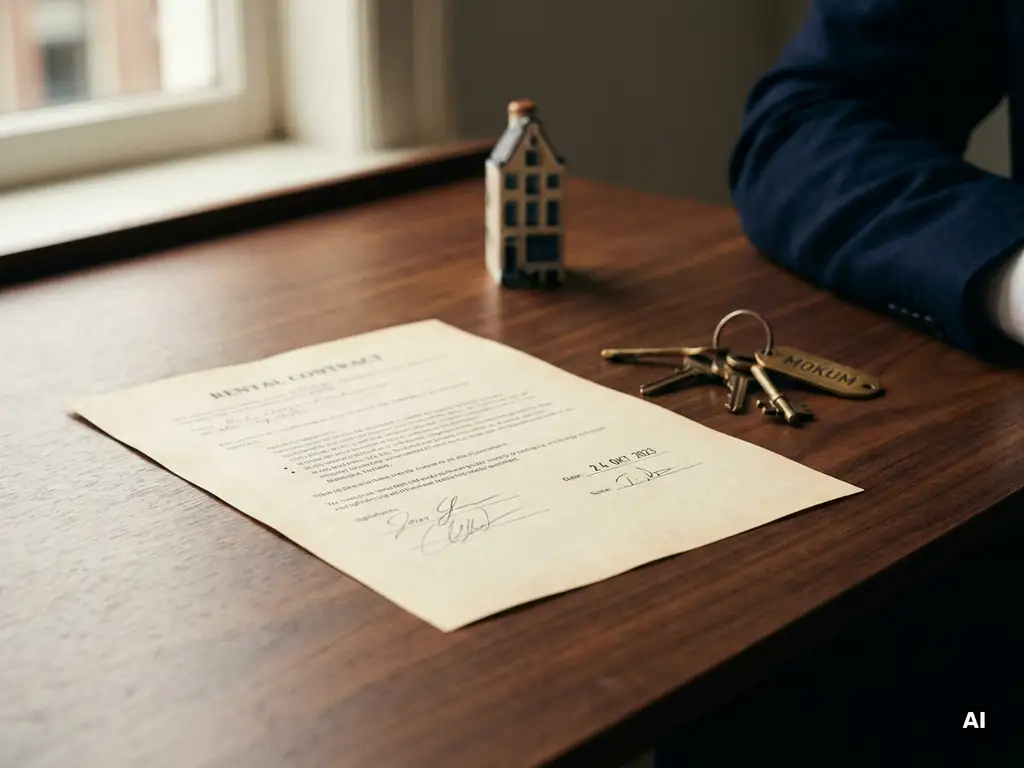
A temporary rental contract in the Netherlands is a fixed-term lease agreement that allows a landlord to rent out a property for a defined period without granting the tenant the full security of tenure associated with an open-ended contract. Since significant legislative changes took effect on 1 July 2024, the rules governing temporary rentals have shifted considerably. The sections below address the most important practical and legal questions landlords and tenants face when entering into a temporary rental arrangement in the Netherlands.
What types of temporary rental contracts exist in the Netherlands?
In the Netherlands, temporary rental contracts fall into two main categories: fixed-term contracts concluded under specific statutory grounds and contracts that include a special clause, such as the diplomat clause or the cohabitation clause, that entitles the landlord to reclaim the property at the end of the agreed term. Each type serves a different purpose and carries different legal consequences for both parties.
Until 1 July 2024, landlords could also make use of a general short-stay fixed-term contract for independent residential accommodation, allowing a lease of up to two years without requiring a specific ground. That option has since lapsed, making the clause-based arrangements the primary route for landlords who wish to let their property temporarily.
The diplomat clause
The diplomat clause, also referred to as an eviction clause, is designed for homeowners who need to go abroad temporarily and wish to rent out their property in the interim. The clause contractually establishes that the tenant must vacate the property once the agreed period expires and the landlord wishes to return. A landlord may enter into successive interim lets and may agree with the tenant to extend the originally agreed period, for instance if the stay abroad is prolonged.
The cohabitation clause
From 1 July 2024, a new variant became available: the cohabitation clause. This clause is specifically designed for homeowners who are moving in together for the first time and do not wish to sell their former property immediately. It allows the landlord to require the tenant to vacate if the landlord decides to sell. To rely on this clause, the landlord must satisfy several cumulative conditions, including that the lease has not lasted more than two years, that the landlord has lived in the property for the two years prior to the lease, and that the clause has been expressly agreed in writing.
How does a temporary rental contract end automatically?
A temporary rental contract in the Netherlands does not end automatically at the expiry of the agreed term. Even where a diplomat clause or cohabitation clause is included, the landlord must actively terminate the agreement. If the landlord fails to give timely notice of termination, the lease may continue and the tenant may acquire stronger security of tenure.
This is one of the most common practical pitfalls for landlords. The obligation to terminate in good time is the landlord’s responsibility: the passing of the agreed end date alone is not sufficient. If the tenant does not agree to vacate after a valid termination, the landlord must apply to the court for an order requiring the tenant to leave. Such proceedings can take a considerable amount of time, which underlines the importance of acting promptly and correctly.
Can a temporary rental contract be extended or renewed in the Netherlands?
Yes, a temporary rental contract can be extended by mutual agreement between landlord and tenant. In the context of a diplomat clause arrangement, landlord and tenant may agree to extend the originally agreed fixed period, for example, if the landlord’s stay abroad turns out to be longer than anticipated. This extension should be documented in writing to avoid disputes about the new end date.
However, landlords should be cautious about the cumulative duration of the arrangement. The cohabitation clause, for instance, may only be relied upon where the lease has not lasted more than two years in total. Exceeding that threshold may affect the landlord’s ability to invoke the clause. Given the complexity of these rules, it is advisable to seek legal advice before agreeing to any extension, particularly where the original contract was concluded under a specific statutory ground.
What tenant rights apply during a temporary rental period?
Tenants under a temporary rental contract in the Netherlands retain a range of fundamental rights throughout the rental period, regardless of the fixed-term nature of the agreement. These include the right to quiet enjoyment of the property, protection against unlawful eviction, and the right to challenge unreasonable rent increases. The temporary character of the contract does not strip the tenant of basic housing protections.
Key tenant rights during a temporary rental period include:
- The right to remain in the property until the contract is validly terminated by the landlord
- Protection against eviction without a court order, even after the agreed end date has passed
- The right to contest the termination if the landlord has not complied with the applicable procedural requirements
- Access to the Dutch rent tribunal (Huurcommissie) for disputes about service charges and rent levels in the social sector
- The right to receive adequate notice of termination in accordance with the terms of the lease and applicable law
For expats renting in the Netherlands, understanding these rights is particularly important, as the Dutch rental market and its legal framework can differ significantly from what tenants may be accustomed to in their home country.
When is a temporary rental contract the right choice for landlords?
A temporary rental contract is the right choice for landlords who have a specific, time-limited reason to let their property and who need certainty that they can reclaim it at a defined point in the future. The two most common scenarios are a landlord going abroad for a period and wishing to return to their own home, and a homeowner who has moved in with a partner and wants to let their former property without committing to a permanent tenancy.
Consider the following situations where a temporary arrangement is likely appropriate:
- Temporary relocation abroad: A landlord who is posted overseas for a fixed period and intends to return to the property is a classic candidate for a diplomat clause arrangement.
- New cohabitation: A homeowner who has recently entered into a registered partnership or marriage and moved into a shared home, but who does not yet wish to sell the former property, may benefit from the cohabitation clause introduced in 2024.
- Uncertainty about long-term plans: Where a landlord is genuinely uncertain whether they will sell or return to the property, a temporary arrangement with a clearly drafted clause provides more flexibility than a permanent tenancy.
It is worth noting that a temporary rental contract is not a universal solution for landlords who simply prefer shorter commitments. Without a valid statutory ground or a properly drafted clause, a fixed-term contract may not provide the protection the landlord expects. The specific circumstances always determine which arrangement is most appropriate.
What should a temporary rental contract include to be legally valid?
A temporary rental contract in the Netherlands must be in writing and must clearly set out the agreed term, the rental price, and any special clauses, such as the diplomat clause or cohabitation clause, that the landlord intends to rely upon. The clause itself must be expressly agreed in the contract; it cannot be implied or added informally after the fact.
Beyond these core elements, a legally sound temporary rental agreement should address the following:
- The full identity of both landlord and tenant
- A precise description of the property being let
- The agreed start date and end date of the rental period
- The monthly rent and any applicable service charges
- The deposit amount and conditions for its return
- The specific wording of any diplomat clause or cohabitation clause, including the conditions under which it may be invoked
- The notice requirements for termination at the end of the agreed period
Where the cohabitation clause is used, the contract must also document that the landlord meets the statutory conditions, including prior personal occupation of the property and the timing of the cohabitation arrangement. Any ambiguity in the drafting of these clauses can undermine the landlord’s ability to enforce them, which is why professional legal drafting is strongly recommended.
This information is general in nature and does not constitute legal advice for your specific situation. Please consult a lawyer at Russell Advocaten for advice tailored to your circumstances.
How Russell Advocaten can assist with temporary rental agreements
Russell Advocaten is an internationally oriented law firm based in Amsterdam with extensive experience in Dutch property and tenancy law. The firm regularly advises both landlords and tenants on temporary rental arrangements, including the drafting and review of diplomat clauses and cohabitation clauses. For expats and international clients navigating the Dutch rental market, this expertise is particularly valuable.
Russell Advocaten’s lawyers assist clients with:
- Drafting and reviewing temporary rental contracts, including legally sound diplomat and cohabitation clauses
- Advising on which type of temporary arrangement best suits the landlord’s specific situation
- Guiding landlords through the termination process to ensure procedural requirements are met
- Representing clients in court proceedings where a tenant refuses to vacate after a valid termination
- Advising international clients and expats on the intersection of Dutch tenancy law and their broader legal situation in the Netherlands
The firm’s lawyers communicate fluently in English, German, and Dutch, making them well placed to assist international clients who are renting out or renting a property in the Netherlands. Russell Advocaten is also an official partner of IN Amsterdam, the expat centre of the City of Amsterdam, reflecting the firm’s long-standing commitment to the international community in the capital.
If you have questions about a temporary rental contract or wish to have a lease agreement drafted or reviewed, contact Russell Advocaten for tailored legal advice.
Veelgestelde vragen
What happens if a landlord forgets to give notice before the end of a temporary rental contract?
If a landlord fails to give timely notice of termination, the temporary rental contract does not simply expire — the tenancy may continue and the tenant can acquire stronger security of tenure, making it significantly harder to reclaim the property. In practice, this means the landlord may lose the ability to rely on the diplomat clause or cohabitation clause for that particular rental period. To avoid this outcome, landlords should set calendar reminders well in advance of the notice deadline and seek legal advice if they are unsure of the exact procedural requirements.
Can a tenant terminate a temporary rental contract early in the Netherlands?
In principle, a tenant under a fixed-term contract is bound by the agreed end date and cannot unilaterally terminate the lease early without the landlord’s consent. However, landlord and tenant can mutually agree to end the tenancy before the contractual end date, and this agreement should always be confirmed in writing. If a tenant leaves without the landlord’s agreement, they may remain liable for rent until the contract lawfully ends, so it is always advisable to negotiate a formal early termination arrangement.
Does the cohabitation clause apply if the landlord and their partner are not married or in a registered partnership?
The cohabitation clause introduced on 1 July 2024 is specifically designed for homeowners who are moving in together for the first time, but the statutory conditions must be met precisely as set out in the law. Whether an informal cohabitation arrangement qualifies depends on the specific wording of the legislation and how it is applied in practice, making this a legally sensitive area. Landlords in this situation should consult a tenancy law specialist before drafting the clause to ensure it will be enforceable if challenged.
How much notice does a landlord need to give to terminate a temporary rental contract under the diplomat clause?
The required notice period is determined by the terms of the lease agreement itself and the applicable provisions of Dutch tenancy law, which generally require a notice period of at least one to three months depending on the duration of the tenancy. The specific notice period should be clearly stated in the rental contract to avoid any ambiguity. Because failing to give adequate notice can invalidate the termination entirely, landlords are strongly advised to have the notice requirements reviewed by a legal professional before serving notice on the tenant.
What is the difference between a diplomat clause and simply agreeing a fixed end date in a rental contract?
Agreeing a fixed end date alone does not give a landlord the right to reclaim the property when that date arrives — under Dutch law, a standard fixed-term contract can convert into an open-ended tenancy if not properly terminated, giving the tenant long-term security of tenure. A diplomat clause, by contrast, is a specific statutory mechanism that, when correctly drafted and invoked, entitles the landlord to require the tenant to vacate at the end of the agreed period. The clause must be expressly included in the written contract and must meet all legal requirements to be enforceable.
Can a landlord use a temporary rental contract to avoid rent regulation rules in the Netherlands?
No — the temporary nature of a rental contract does not exempt the property from Dutch rent regulation rules. If the property falls within the social housing sector based on the points-based valuation system (WWS), the applicable rent ceiling still applies regardless of whether the contract is temporary or open-ended. Landlords who set a rent above the permitted maximum risk having the rent reduced by the Huurcommissie (rent tribunal), so it is important to assess the property’s regulated rent level before agreeing on a rental price.
Is it possible to convert a temporary rental contract into a permanent one in the Netherlands?
Yes, a temporary rental contract can be converted into a permanent open-ended tenancy by mutual agreement between landlord and tenant, provided both parties consent and the new arrangement is documented in writing. In some cases, a temporary contract may also effectively become permanent if the landlord fails to terminate it correctly and the tenant acquires security of tenure by operation of law. Landlords who wish to avoid an unintended conversion to a permanent tenancy should ensure they follow all termination procedures precisely and on time.
Gerelateerde artikelen
- What taxes do foreigners pay when buying a house in the Netherlands?
- How does the diplomat clause protect landlords in the Netherlands?
- What do expats need to know before moving to the Netherlands?
- Can a US citizen move to the Netherlands?
- Do I have to pay US taxes if I live in the Netherlands?
Deze inhoud is gegenereerd met behulp van AI en kan fouten bevatten.