

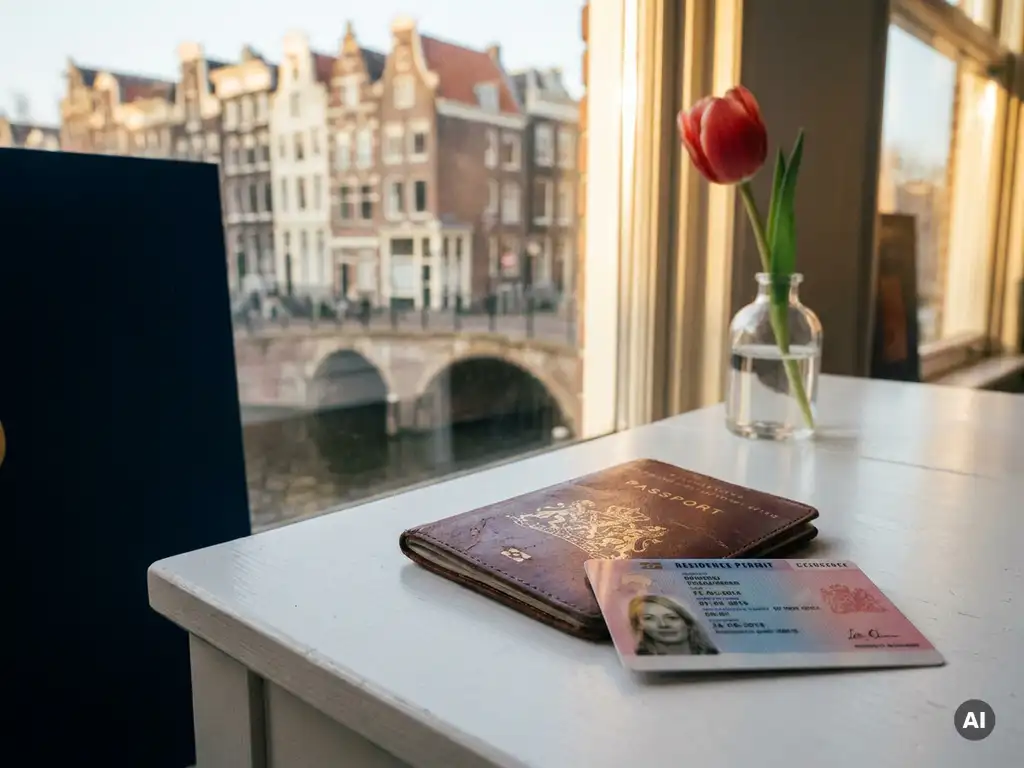
To register as an expat in the Netherlands, you must enrol in the Personal Records Database (BRP) at your local municipality within five days of arriving, if you plan to stay for more than four months. The process applies to both EU and non-EU nationals, though the documentation required differs depending on your nationality and immigration status. The sections below address the most common questions about expat registration in the Netherlands, from the paperwork involved to the legal obligations that follow.
What documents do you need to register in the Netherlands?
To register in the Personal Records Database (BRP) at your local municipality, you will generally need a valid passport or national identity card, proof of your address in the Netherlands, and a completed registration form. Non-EU nationals must also present a valid residence permit or proof that an application is in progress. The exact list of required documents can vary by municipality.
In practice, the following documents are most commonly requested:
- A valid passport or national identity card
- Proof of your residential address (such as a rental agreement or a declaration from your landlord)
- Your birth certificate, which may need to be legalised or apostilled depending on the country of issue
- A residence permit or MVV (Machtiging tot Voorlopig Verblijf) for non-EU nationals
- A marriage certificate or civil partnership certificate, if applicable
Documents issued outside the Netherlands are often required in an officially translated form. It is advisable to contact your municipality in advance to confirm precisely which documents are needed, as requirements can differ between cities. In Amsterdam, for instance, expats can also seek guidance through IN Amsterdam, the official expat centre of the municipality.
Where do you go to register as an expat in the Netherlands?
Expats register at the civil affairs department of their local municipality, known in Dutch as the gemeente. In most cities, you will need to book an appointment in advance through the municipality’s website. In Amsterdam, expats can also use IN Amsterdam as a point of contact for guidance on the registration process and other practical matters related to settling in the city.
If you are moving to a major city such as Amsterdam, Rotterdam, The Hague, or Utrecht, the municipality will have a dedicated desk or service for international residents. Smaller municipalities may handle registrations through a general civil affairs counter. Regardless of location, registration must take place at the municipality where you actually reside, not where you work or where your employer is based.
It is worth noting that some expats who do not have a fixed address in the Netherlands, for example those staying temporarily with friends or in serviced accommodation, may face additional steps. In such cases, the municipality may register you at a temporary address or, in some situations, at the address of your employer. Checking the local procedure before your appointment will save time.
What is a BSN number and when do you receive it?
A BSN (Burgerservicenummer) is a unique personal identification number issued by the Dutch government. It is the equivalent of a national insurance or social security number and is required for almost every official interaction in the Netherlands, including opening a bank account, signing an employment contract, accessing healthcare, and filing a tax return. You receive your BSN at the moment of registration with the municipality.
For most expats who register at their local municipality, the BSN is issued on the spot or within a short period after the appointment. Once you are entered into the BRP, the system generates your BSN automatically. You will typically receive confirmation of your number in writing, and it will also appear on your residence permit if you are a non-EU national.
If you are an expat who does not yet have a fixed address in the Netherlands but needs a BSN for work or tax purposes, it is possible to register at a special non-resident desk at certain municipalities. This is known as registration in the Register of Non-Residents (RNI) and provides a BSN without a residential address being recorded. This option is primarily intended for people who work in the Netherlands but live abroad, or who are in the country for a short assignment.
How long does expat registration in the Netherlands take?
The registration appointment itself typically takes between fifteen and thirty minutes. However, the time between booking an appointment and actually attending it can vary significantly depending on the municipality and the time of year. In busy cities such as Amsterdam, waiting times for an appointment can range from a few days to several weeks, particularly at the start of the academic year or during peak relocation periods.
Once the appointment has taken place and your documents are in order, your BRP registration is usually processed within a few working days. Your BSN is generally provided at the appointment or confirmed shortly afterwards. If additional verification of your documents is required, for example if a birth certificate needs to be authenticated, the process may take longer.
To avoid unnecessary delays, it is strongly advisable to book your appointment as soon as you know your move-in date, gather all required documents in advance, and confirm with the municipality whether any translations or legalisations are needed. Arriving well prepared for the appointment is the single most effective way to keep the process straightforward.
Do non-EU expats need a residence permit before registering?
Yes, non-EU nationals generally need a valid residence permit, or at minimum an MVV (provisional residence permit), before they can register with the municipality. Without a legal basis for residence, the municipality cannot complete the BRP registration. The type of residence permit required depends on the purpose and duration of your stay, whether you are coming to the Netherlands for work, study, or another reason.
The residence permit application is processed by the IND (Immigration and Naturalisation Service). For most non-EU nationals who plan to stay longer than ninety days, the process involves the following steps:
- Your employer or educational institution (as a recognised sponsor) submits an application to the IND on your behalf, or you apply directly depending on your situation.
- You apply for an MVV at the Dutch embassy or consulate in your country of residence, or your sponsor applies simultaneously for both the MVV and the residence permit through the TEV (Entry and Residence) procedure.
- Once approved, you travel to the Netherlands and collect your residence permit.
- With your residence permit in hand, you book an appointment at the municipality to register in the BRP.
EU citizens, by contrast, do not need a residence permit or work permit to live and work in the Netherlands. However, if they intend to stay for longer than four months, they are still required to register at the municipality. The registration process for EU nationals is generally more straightforward, as fewer documents are required.
For guidance on expat legal matters, including residence permits, it is advisable to seek professional legal advice, as the requirements and procedures can vary considerably depending on individual circumstances.
What legal obligations follow after registering in the Netherlands?
Once you are registered in the BRP, you take on a number of ongoing legal obligations. The most important is the duty to keep your registration up to date. You must notify the municipality of any change of address within five days of moving. You are also required to inform the IND of relevant changes to your situation if you hold a residence permit, as failing to do so can have consequences for the validity of your permit.
Beyond address registration, the following obligations are relevant for most expats:
- Tax registration: Once you have a BSN, you are registered with the Dutch Tax Administration (Belastingdienst) and are required to file an annual income tax return. Depending on your employment situation, the 30% ruling may apply, which allows eligible highly skilled migrants to receive a portion of their salary tax-free. The rules around this scheme have changed in recent years and continue to evolve.
- Health insurance: Anyone working in the Netherlands is legally required to take out Dutch basic health insurance (basisverzekering) within four months of starting work or registering as a resident.
- Residence permit renewal: If you hold a temporary residence permit, you must renew it before it expires. Failing to do so can affect your right to remain in the Netherlands and may have consequences for future applications, including permanent residency.
- Civic integration: Certain non-EU nationals are required to pass a civic integration exam (inburgeringsexamen) within a set period. This is a condition for obtaining a permanent residence permit in the future.
It is also worth noting that if your employment situation changes, for example if you change employer or position, this may affect the terms of your residence permit and any tax arrangements such as the 30% ruling. In such cases, it is important to seek timely advice to avoid unintended consequences.
How Russell Advocaten can assist expats in the Netherlands
Navigating the legal landscape as an expat in the Netherlands involves more than simply completing a registration form. Questions about residence permits, employment contracts, housing, tax arrangements, and business formation often arise simultaneously, and the answers depend heavily on individual circumstances.
Russell Advocaten is an internationally oriented law firm based in Amsterdam with extensive experience advising expats on a broad range of legal matters. The firm’s lawyers are fluent in English, German, and Dutch, which means international clients can communicate clearly from the outset without the risk of misunderstanding. Russell Advocaten is also an official partner of IN Amsterdam, the expat centre of the municipality of Amsterdam, reflecting the firm’s longstanding commitment to the international community in the city.
The firm’s expat services cover, among other areas:
- Advice on residence and work permits, and the conditions attached to them
- Employment law, including contract review, dismissal, and the 30% ruling
- Setting up a business in the Netherlands, including company formation and regulatory requirements
- Real estate and rental law, including the diplomat clause and lease negotiations
- Family law matters relevant to international residents
Whether you are relocating to the Netherlands for the first time or dealing with a specific legal question that has arisen during your stay, professional legal guidance can make a significant difference. For personalised advice tailored to your situation, contact Russell Advocaten directly.
This information is general in nature and does not constitute legal advice for your specific situation. Please consult a lawyer at Russell Advocaten for advice tailored to your circumstances.
Veelgestelde vragen
What happens if I miss the five-day registration deadline after arriving in the Netherlands?
Missing the five-day registration window does not automatically result in a penalty, but it can create complications, particularly for non-EU nationals whose residence permit conditions may require timely registration. It is best to register as soon as possible after the deadline has passed and, if you hold a residence permit, to check with the IND or a legal adviser whether the delay has any consequences for your permit status. Proactively addressing the situation is always preferable to waiting.
Can I register in the BRP if I don't have a permanent address yet, for example if I'm staying in a hotel or with friends?
Yes, in some cases you can still register even without a fixed residential address. If you are staying temporarily in a hotel, with friends, or in serviced accommodation, you should contact your municipality directly to explain your situation, as procedures vary. Some municipalities will register you at a temporary address, while others may allow registration at your employer’s address. If you work in the Netherlands but live abroad, the Register of Non-Residents (RNI) at designated municipalities offers an alternative route to obtaining a BSN without a residential address.
How do I get my foreign documents legalised or apostilled for the BRP registration?
Legalisation and apostille are two different processes depending on the country that issued the document. If your country is a signatory to the Hague Apostille Convention, you can obtain an apostille stamp from the competent authority in that country, which is generally sufficient for use in the Netherlands. For countries not covered by the Convention, full legalisation through the Dutch embassy or consulate in the country of issue may be required. Once legalised or apostilled, documents in a language other than Dutch, English, French, or German typically also need to be translated by a sworn translator. Your municipality can confirm exactly what is required for your specific documents.
Does registering in the BRP automatically mean I am registered for Dutch taxes?
Yes, once you are registered in the BRP and have a BSN, you are automatically known to the Dutch Tax Administration (Belastingdienst) and may be required to file an annual income tax return. However, your actual tax obligations depend on your specific situation, including whether you are employed, self-employed, or working remotely for a foreign employer. If you think you may qualify for the 30% ruling, it is important to apply promptly, as there are strict deadlines and the scheme’s rules have changed in recent years. Seeking professional tax or legal advice early on can prevent costly oversights.
What should I do if my personal details in the BRP are incorrect after registration?
If you notice an error in your BRP record, such as a misspelled name, incorrect date of birth, or wrong address, you should contact your municipality as soon as possible to request a correction. You will typically need to provide supporting documents, such as your passport or birth certificate, to verify the correct information. Errors in the BRP can affect other official records, including your tax file and residence permit, so it is important to resolve them promptly rather than assuming they will be corrected automatically.
If I leave the Netherlands, do I need to formally deregister from the BRP?
Yes, if you are leaving the Netherlands permanently or for an extended period, you are legally required to deregister from the BRP by notifying your municipality. Failing to deregister can lead to continued tax obligations and complications with Dutch authorities, as the system will still treat you as a resident. Non-EU nationals should also inform the IND if their departure affects their residence permit. If you are leaving temporarily and plan to return, it is worth checking with your municipality and a legal adviser whether deregistration is appropriate for your situation.
Can my family members register in the BRP at the same time as me?
Yes, family members who are moving to the Netherlands with you and will share the same address can generally register at the same appointment or book a separate appointment at the same municipality. Each family member will need to bring their own documentation, including passports, birth certificates, and, for non-EU nationals, their own residence permits. Children are typically registered under the same household record. It is advisable to confirm with your municipality in advance whether joint appointments are available, as this can save time and ensure all family members receive their BSN numbers together.
Gerelateerde artikelen
- Does the 30% ruling affect your mortgage options in the Netherlands?
- What rights do expats have as tenants in the Netherlands?
- Which city in the Netherlands is best for expats?
- How do I move to the Netherlands from the US?
- Who qualifies for 30% ruling in the Netherlands?
Deze inhoud is gegenereerd met behulp van AI en kan fouten bevatten.