

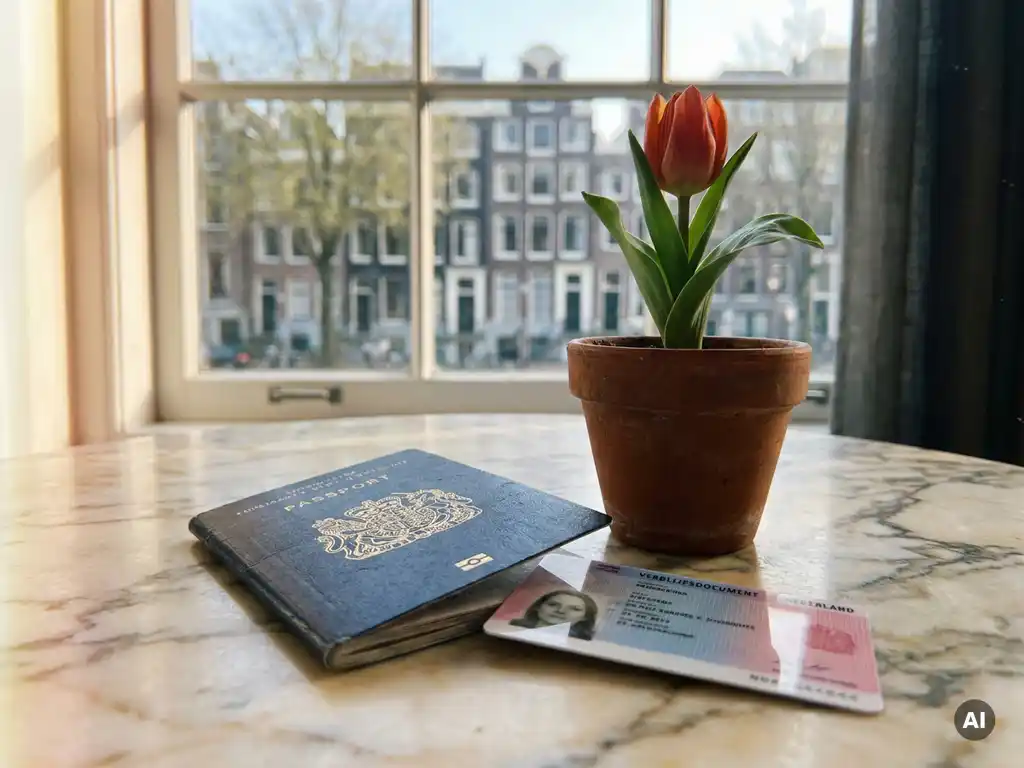
Non-EU citizens who wish to start a business in the Netherlands generally need a self-employed residence permit, issued by the IND (Immigratie- en Naturalisatiedienst), before they can legally operate as an entrepreneur. The specific requirements depend on the nature of the business, the applicant’s background, and the intended legal structure. The sections below address the most common questions that foreign founders encounter when navigating the Dutch permit landscape.
Which Dutch government bodies issue permits for foreign entrepreneurs?
The primary authority responsible for issuing residence and work permits to non-EU entrepreneurs in the Netherlands is the IND (Immigratie- en Naturalisatiedienst), the Dutch Immigration and Naturalisation Service. The IND assesses all residence permit applications, including those for self-employed persons. Depending on the type of business activity, other bodies may also be involved in the process.
Beyond the IND, foreign entrepreneurs will typically interact with the following institutions:
- KVK (Kamer van Koophandel): The Dutch Chamber of Commerce, where every business operating in the Netherlands must register. Registration with the KVK is a prerequisite for most business permit applications.
- UWV (Uitvoeringsinstituut Werknemersverzekeringen): The Employee Insurance Agency, which may be involved when a business intends to hire employees and work permit assessments are required.
- Municipality (Gemeente): Local authorities issue certain operational licences, particularly for businesses in regulated sectors such as hospitality, retail, or healthcare.
- RVO (Rijksdienst voor Ondernemend Nederland): The Netherlands Enterprise Agency, which administers certain business support schemes and may be involved in start-up visa assessments.
In practice, the IND is the central point of contact for residence-related matters, while the KVK handles business registration. Understanding which body handles which aspect of the process helps avoid unnecessary delays at the outset.
What is the self-employed residence permit and who qualifies?
The self-employed residence permit (in Dutch: verblijfsvergunning zelfstandige) is a Dutch residence permit that allows non-EU nationals to live and operate a business in the Netherlands. It is issued by the IND and is distinct from both the employed-person permit and the start-up visa. To qualify, applicants must demonstrate that their business serves a substantial Dutch economic interest.
The IND assesses applications using a points-based system that evaluates three core criteria:
- Personal experience: The applicant’s education, professional background, and entrepreneurial track record.
- Business plan: The viability, originality, and economic value of the proposed venture, assessed in terms of its contribution to the Dutch economy.
- Added value for the Netherlands: Whether the business creates employment, generates innovation, or contributes to a specific sector of strategic importance.
A minimum score is required across these three dimensions. Applicants who do not yet meet the full requirements for the self-employed permit may wish to consider the start-up visa, which is designed for entrepreneurs in the early stages of building an innovative business. The start-up visa is valid for one year and requires the applicant to work with a recognised facilitator approved by the RVO. After completing the start-up period, entrepreneurs may transition to the self-employed residence permit if they meet the criteria by that point.
It is worth noting that the requirements and scoring thresholds can change, and the outcome of any individual application depends on the specific circumstances presented. Professional legal advice is strongly recommended before submitting an application.
What documents are required to apply for a Dutch entrepreneur permit?
Applicants for a self-employed residence permit in the Netherlands are required to submit a comprehensive set of documents to the IND. The exact list may vary depending on individual circumstances, but the following are typically required for a complete application.
- A valid passport or travel document
- A detailed and substantiated business plan, including financial projections
- Proof of KVK registration (or a declaration of intent to register)
- Evidence of sufficient personal income or financial resources to support yourself during the initial period
- Diplomas, certificates, and professional references demonstrating relevant experience
- An MVV (Machtiging tot Voorlopig Verblijf), if required based on your nationality
- Proof of health insurance or the intention to obtain it
- Any sector-specific licences or qualifications relevant to the business activity
The business plan is arguably the most critical element of the application. It should clearly articulate the nature of the business, the target market, the competitive landscape, and the projected financial performance. The IND uses the business plan as the primary basis for its points-based assessment. Poorly prepared or vague business plans are a common reason for applications being refused or delayed.
Foreign documents may need to be officially translated into Dutch, English, French, or German, and in some cases legalised or apostilled. It is advisable to verify current document requirements directly with the IND or through a qualified legal adviser, as requirements can be updated.
Do non-EU founders also need a separate Dutch work permit?
In most cases, non-EU entrepreneurs who hold a valid self-employed residence permit do not need a separate work permit (in Dutch: tewerkstellingsvergunning or TWV) to operate their own business. The self-employed permit combines the right to reside and work in the Netherlands as a business owner. However, the position changes significantly if the entrepreneur also intends to take on paid employment alongside their business activities.
If a self-employed permit holder wishes to work as an employee for another organisation, a separate work permit or a combined single permit (GVVA) will generally be required. The GVVA combines the residence permit and the work permit into a single document and is the standard route for employees in paid employment.
Students in the Netherlands who wish to operate as self-employed persons are permitted to do so, provided they register with the KVK. However, if they wish to take on paid employment as an employee, a separate work permit is required. This distinction between self-employment and employed work is an important one that non-EU nationals should be clear about before commencing any commercial activity.
Entrepreneurs who hold a permanent residence permit enjoy free access to the Dutch labour market and are not subject to work permit requirements in any capacity.
What sector-specific or municipal licences apply to certain businesses?
Beyond the IND residence permit, certain types of business activity in the Netherlands require additional licences or permits issued by local authorities or sector regulators. The requirement for these licences applies to all entrepreneurs operating in the relevant sectors, regardless of nationality, and exists independently of the immigration permit process.
Common examples of sector-specific licensing requirements include:
- Hospitality and food service: A Drank- en Horecawet (DHW) licence is required to serve alcohol. The municipality also typically requires an environmental permit (omgevingsvergunning) for premises.
- Healthcare: Professionals providing individual healthcare services must register in the BIG register (Beroepen in de Individuele Gezondheidszorg), which governs regulated healthcare professions in the Netherlands.
- Financial services: Businesses providing financial products or advice are subject to licensing by the AFM (Autoriteit Financiële Markten) and, in some cases, De Nederlandsche Bank (DNB).
- Real estate and property: Certain property-related activities require registration with the appropriate professional body and compliance with sector-specific regulations.
- Retail and physical premises: Depending on the location and nature of the business, a municipal environmental permit may be required, particularly where the use of premises changes or construction work is involved.
Municipal licences are issued by the local gemeente and the requirements differ between cities. Entrepreneurs planning to operate in Amsterdam, for instance, should check with the Amsterdam municipality for any local requirements specific to their sector. Failing to obtain the correct licences before commencing operations can result in fines, forced closure, or complications with the IND permit renewal process.
How long does the permit process take and what happens after approval?
The processing time for a self-employed residence permit in the Netherlands varies depending on the complexity of the application and the current workload of the IND. As a general indication, the IND aims to reach a decision within 90 days of receiving a complete application, though this timeline can be longer in practice. Applications submitted from abroad through the TEV procedure (Entry and Residence Procedure) may take additional time.
Once an application is approved, the following steps typically follow:
- Collection of the residence document: The applicant collects the physical residence permit from an IND desk or, in some cases, from the Dutch embassy or consulate abroad.
- KVK registration: If not already completed, the business must be formally registered with the Chamber of Commerce before commercial activities commence.
- Tax registration: The entrepreneur registers with the Dutch Tax and Customs Administration (Belastingdienst) for VAT and income tax purposes.
- Permit renewal: Self-employed residence permits are initially granted for a fixed period. Renewal is subject to demonstrating that the business continues to meet the relevant criteria.
After a period of continuous lawful residence in the Netherlands, non-EU entrepreneurs may become eligible to apply for a permanent residence permit or, in due course, Dutch citizenship, subject to meeting the applicable requirements at that time. The path from a temporary self-employed permit to permanent residence is a multi-year process and depends on consistent compliance with permit conditions.
It is important to note that any material changes to the business, such as a significant shift in activities or income, should be reported to the IND, as permit conditions are tied to the circumstances declared at the time of application.
How Russell Advocaten can assist foreign entrepreneurs in the Netherlands
Navigating Dutch immigration and business law as a non-EU founder involves multiple overlapping processes, from IND permit applications and KVK registration to sector-specific licensing and ongoing compliance. Russell Advocaten Amsterdam is an internationally oriented law firm with long-standing experience in assisting expats and foreign entrepreneurs across precisely these areas.
Russell Advocaten’s lawyers communicate fluently in English, German, and Dutch, which is a practical advantage for international clients who need reliable legal guidance without language barriers. The firm’s services for foreign entrepreneurs cover a broad and practical range:
- Advice on the most appropriate permit route for your specific business structure and nationality
- Guidance on preparing a business plan that meets IND assessment criteria
- Support with setting up a legal entity in the Netherlands, including BV structures and shareholder arrangements
- Assistance with employment law matters when hiring staff in the Netherlands
- Advice on commercial and residential lease agreements, including expat-specific provisions
- Ongoing legal support for contracts, liability, and corporate governance
Russell Advocaten is an official partner of IN Amsterdam, the expat centre of the City of Amsterdam, which reflects the firm’s deep commitment to the international business community in the Dutch capital. The firm is also part of the Primerus network of independent law firms across more than 40 countries, enabling cross-border legal support where needed. For legal advice for expats in Amsterdam, Russell Advocaten offers a trusted and experienced point of contact.
If you are planning to set up a business in the Netherlands as a non-EU citizen and wish to understand your options, contact Russell Advocaten to arrange a consultation with one of our lawyers.
This information is general in nature and does not constitute legal advice for your specific situation. Please consult a lawyer at Russell Advocaten for advice tailored to your circumstances.
Veelgestelde vragen
Can I apply for a Dutch self-employed residence permit while still living outside the Netherlands?
Yes, you can apply from abroad through the TEV procedure (Toegang en Verblijf, or Entry and Residence Procedure), which involves submitting your application via the Dutch embassy or consulate in your home country. Once approved, you will receive an MVV (provisional residence permit) that allows you to travel to the Netherlands and collect your full residence permit. Bear in mind that this route may add to the overall processing time, so planning well in advance of your intended start date is strongly advisable.
What is the minimum income or financial requirement for the self-employed residence permit?
The IND requires applicants to demonstrate that they have sufficient financial means to support themselves during the initial period of their residence, which typically means meeting a minimum income threshold set by the Dutch government. This threshold is updated periodically and is linked to social assistance levels in the Netherlands. Your business plan’s financial projections play a key role here, as the IND will assess whether your venture is realistically expected to generate sufficient income. It is worth consulting a legal adviser to ensure your financial documentation aligns with the current requirements before submitting your application.
What happens if my self-employed residence permit application is refused?
If the IND refuses your application, you will receive a written decision explaining the grounds for refusal, and you generally have the right to lodge an objection (bezwaar) within four weeks of receiving that decision. If the objection is also unsuccessful, you may appeal to an administrative court. Common grounds for refusal include an insufficiently substantiated business plan, failure to meet the points threshold, or incomplete documentation — all of which can often be addressed in a revised application or during the objection procedure. Engaging a qualified immigration lawyer as early as possible significantly improves your chances of a successful outcome.
Can I bring my family to the Netherlands on a self-employed residence permit?
Yes, once you hold a valid self-employed residence permit, your spouse or registered partner and dependent children may be eligible to join you in the Netherlands under a family reunification permit. To qualify, you must demonstrate that you meet the income requirement for family reunification, which is set at a level above the basic self-sufficiency threshold. Family members granted a residence permit under this route are generally entitled to work in the Netherlands without a separate work permit, which is an important practical benefit for households where both partners wish to be professionally active.
Is the Dutch start-up visa a good option if I'm not yet ready to apply for the full self-employed permit?
The start-up visa can be an excellent stepping stone if your business is still in its early stages and you cannot yet demonstrate the track record or financial viability required for the full self-employed residence permit. It is valid for one year and requires you to develop your business under the guidance of a recognised RVO-approved facilitator, who provides mentorship and helps validate your concept. At the end of the start-up year, you will need to transition to the self-employed permit, so it is important to use that period actively to build the evidence base — revenue, clients, and operational structure — that the IND will assess in your subsequent application.
Do I need to register with the KVK before or after my permit is approved?
In most cases, you are expected to register with the KVK as part of the permit application process, or at least provide a declaration of intent to register. Full KVK registration and the commencement of commercial activities should only take place once your residence permit has been granted, as operating a business without the correct immigration status can jeopardise your application and future permit renewals. Your legal adviser can help you sequence these steps correctly to ensure you are compliant at every stage of the process.
What are the most common mistakes foreign entrepreneurs make when applying for a Dutch business permit?
The most frequent pitfalls include submitting a business plan that is too generic or lacks credible financial projections, underestimating the points required under the IND’s assessment framework, and failing to obtain or translate supporting documents correctly. Many applicants also overlook sector-specific licences, which, while separate from the immigration process, can affect the credibility of the business plan if not addressed. Working with an experienced immigration lawyer and, where relevant, a business plan specialist familiar with IND requirements can help you avoid these costly and time-consuming errors.
Gerelateerde artikelen
- How do expats build a social network when moving to Amsterdam?
- What cultural differences should expats expect when living in the Netherlands?
- Can foreigners rent a house in the Netherlands without a job?
- Why is finding housing so difficult for expats in Amsterdam?
- Can I buy a house in the Netherlands as a US citizen?
Deze inhoud is gegenereerd met behulp van AI en kan fouten bevatten.