

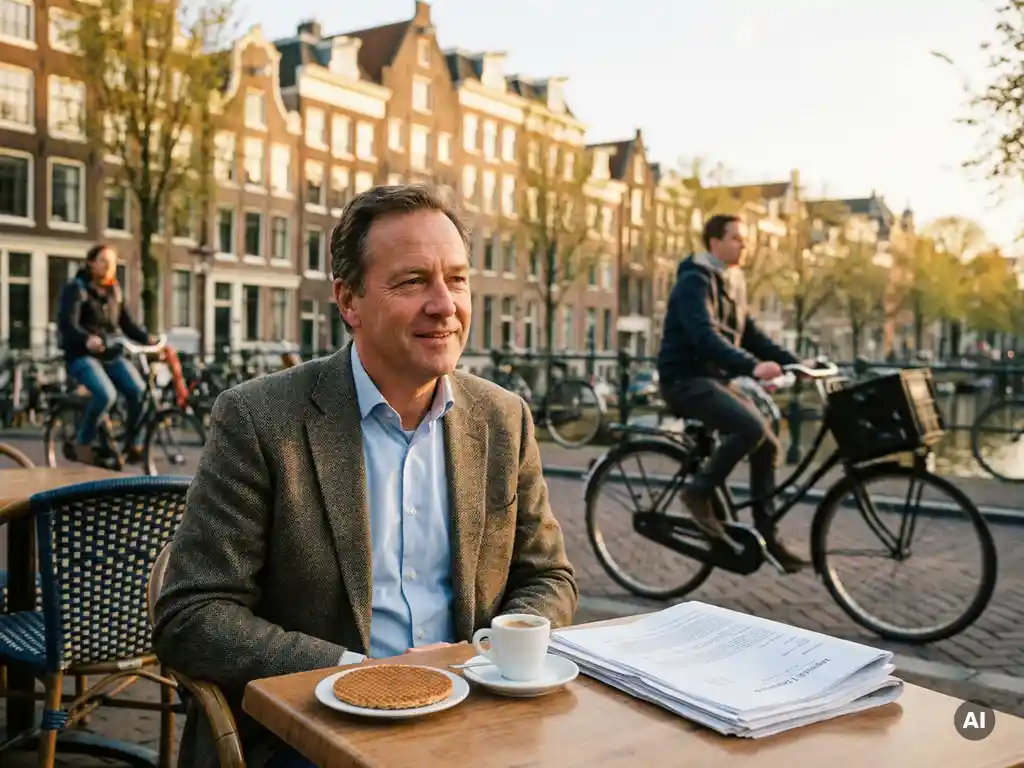
Expats moving to the Netherlands encounter a culture that is open, pragmatic, and internationally minded, yet governed by social norms and practical customs that can feel unfamiliar at first. Dutch society places a high value on directness, equality, and personal autonomy, qualities that shape everything from workplace dynamics to social relationships. Understanding these cultural expectations before you arrive makes the transition considerably smoother.
The sections below address the most common questions expats ask about daily life, social integration, financial customs, housing, and legal support when relocating to the Netherlands.
How direct is Dutch communication compared to other cultures?
Dutch communication is notably direct by international standards. People in the Netherlands tend to say what they mean without softening their words with diplomatic preamble. This applies in professional settings, social situations, and even casual conversation. For expats accustomed to more indirect communication styles, this straightforwardness can initially feel blunt or even abrasive, but it is rarely intended as such.
In practice, a Dutch colleague who disagrees with your proposal will say so plainly, often in a group setting. A Dutch landlord will point out the condition of a property without flattery. This culture of openness is rooted in a broader social value known as doe maar gewoon, roughly translated as “just act normally”, which discourages pretension and encourages honest, egalitarian exchange.
For expats navigating professional environments, this directness has a practical upside: expectations are clear, feedback is honest, and decisions are rarely obscured by vague pleasantries. Adjusting to this style typically takes a few weeks, after which most expats find it refreshing rather than confrontational.
What are the Dutch norms around work-life balance and working hours?
The Netherlands is widely regarded as one of the better countries in Europe for work-life balance. Standard working hours are typically 36 to 40 hours per week, and it is common for employees to work part-time, including in senior roles. The Dutch approach to working hours reflects a cultural belief that productivity does not require long hours, and that personal time, family, and leisure are legitimate priorities.
Presenteeism, the expectation that employees remain visible at the office beyond their contracted hours, is far less prevalent in the Netherlands than in many other countries. Leaving the office on time is not viewed negatively. Equally, taking full holiday entitlement is considered normal and expected, not a sign of disengagement.
For expats arriving from cultures where long hours signal commitment, this can require a genuine mindset shift. Managers in the Netherlands generally judge performance by output rather than hours logged. Remote and hybrid working arrangements are also widely accepted, having become standard practice across many sectors.
How does the Dutch social culture affect expat integration?
Integrating socially in the Netherlands can take longer than expats expect, despite the country’s international reputation and widespread English proficiency. Dutch social life tends to be structured around long-established networks, school friendships, neighbourhood ties, and family circles, which can be difficult for newcomers to enter. The Dutch are friendly and helpful, but forming close personal friendships often requires sustained effort and patience.
Several cultural factors influence this dynamic:
- Planned socialising: The Dutch typically schedule social engagements well in advance. Dropping by unannounced is uncommon and can be unwelcome. Spontaneous plans are less the norm than in many southern European or Latin American cultures.
- Privacy and personal space: Dutch people tend to keep a clear boundary between professional and personal relationships. Colleagues may be collegial and helpful at work without extending that relationship into their private lives.
- Expat communities: Amsterdam and other major cities have well-established international communities. Organisations such as IN Amsterdam, of which Russell Advocaten is an official partner, provide practical support and social connection for newly arrived expats.
- Language: While the Dutch speak excellent English, making an effort to learn basic Dutch is appreciated and can meaningfully accelerate social integration.
Most expats find that integration becomes considerably easier after the first six to twelve months, once routines are established and local networks begin to form.
What financial and practical customs should expats be aware of?
The Netherlands has a number of financial customs that differ from what expats may be used to. Understanding these early helps avoid misunderstandings and unnecessary costs.
One of the most important financial considerations for qualifying expats is the 30% ruling, now formally referred to as the Expat Scheme. This is a tax facility that allows eligible employees recruited from abroad to receive a portion of their salary tax-free, in recognition of the additional costs associated with relocating to the Netherlands. As of 2026, the maximum untaxed allowance under the scheme is €78,600 per year. Eligibility depends on several criteria, including salary thresholds and the distance from the Dutch border at which the employee previously resided. Specific expertise and a minimum salary of €48,013 (in 2026) are among the key requirements for most applicants.
Beyond the Expat Scheme, the following practical customs are worth noting:
- Going Dutch: Splitting bills equally, whether at a restaurant, for shared accommodation costs, or in social settings, is standard practice. Do not assume one person will cover the group.
- Bank transfers over cash: The Netherlands is a highly cashless society. iDEAL bank transfers and debit card payments dominate. Opening a Dutch bank account promptly after arrival is strongly advisable.
- Municipal registration: Registering with the municipality (gemeente) and obtaining a BSN (citizen service number) is a legal requirement and a practical prerequisite for almost everything else, from opening a bank account to signing a rental contract.
- Health insurance: Basic health insurance (basisverzekering) is compulsory for all residents. This must be arranged within four months of registering in the Netherlands.
Depending on individual circumstances, the specific financial steps required will vary. Professional advice is recommended for complex situations, particularly regarding tax residency and the Expat Scheme application process.
How does Dutch housing culture differ from what expats expect?
The Dutch housing market is competitive, particularly in Amsterdam and other major cities. Expats frequently underestimate how quickly properties are taken and how much preparation is required before entering the market, whether renting or buying.
Renting in the Netherlands as an expat is common, but the rental market in the private sector is tight. Landlords typically require proof of income, employment contracts, and sometimes a guarantor. Rents in Amsterdam and Utrecht are among the highest in the country. One legal provision that is particularly relevant to expats renting in the Netherlands is the diplomat clause (diplomatenbeding), which allows a landlord to terminate a rental agreement if they need to return to the property. Expats in diplomatic roles or those on fixed-term assignments should be aware of this clause and seek legal clarity before signing.
For those considering buying a house in the Netherlands as a foreigner, it is worth knowing that all foreign nationals are in principle eligible to purchase property, regardless of their residence permit status. However, the mortgage options available to you will depend on the security of your residency position. Property prices remain high: as of late 2024, the average price per square metre for apartments in Amsterdam was approximately €9,500, though this figure varies significantly by neighbourhood and property type.
Practical tips for house-hunting as an expat include viewing properties during daylight hours, keeping detailed notes across viewings, and avoiding becoming emotionally attached to a single property in a competitive market. Engaging a local real estate agent (makelaar) can save considerable time and reduce the risk of procedural complications.
What legal support is available to expats navigating life in the Netherlands?
Expats in the Netherlands have access to a range of legal support services, covering everything from employment contracts and housing disputes to business formation and family law. The complexity of Dutch law, combined with the practical challenges of navigating it in a second language, means that professional legal advice is often the most efficient path forward, particularly for high-stakes decisions.
Common legal questions that expats encounter include the terms of their employment contract under Dutch law, their rights and obligations as a tenant or property buyer, the requirements for setting up a business in the Netherlands as a foreign national, and the legal implications of the Expat Scheme for their tax position. Each of these areas is governed by specific Dutch legislation, and the applicable rules can differ meaningfully from what expats are familiar with in their home countries.
How Russell Advocaten supports expats in the Netherlands
Russell Advocaten is an internationally oriented law firm based in Amsterdam, with more than 80 years of experience advising clients on Dutch and cross-border legal matters. The firm’s lawyers communicate fluently in English, German, and Dutch, a practical advantage for expats who need clear, reliable legal advice without language barriers.
Russell Advocaten is an official partner of IN Amsterdam, the expat centre of the City of Amsterdam, and has long-standing experience supporting the international community in the Netherlands. The firm offers legal assistance across the full range of issues that expats commonly face, including:
- Employment law: Reviewing and negotiating employment contracts, advising on the Expat Scheme, and representing clients in employment disputes.
- Real estate and tenancy law: Advising on rental agreements (including the diplomat clause), property purchases, and landlord-tenant disputes.
- Business formation: Guiding foreign nationals through the process of setting up a company in the Netherlands, including corporate structure, shareholder agreements, and compliance.
- Immigration and residence: Providing an overview of permit requirements and connecting clients with the appropriate authorities.
- Family law and personal matters: Advising on matters such as international family situations, inheritance, and personal legal arrangements.
Russell Advocaten is recommended by the Legal 500, the leading guide to top-quality law firms in Europe, and is connected to the Primerus international network of 3,000 lawyers across 40 countries, providing access to cross-border legal support where needed.
If you are relocating to the Netherlands and would like to discuss your specific legal situation, contact Russell Advocaten to arrange a consultation with one of the firm’s experienced lawyers.
This information is general in nature and does not constitute legal advice for your specific situation. Please consult a lawyer at Russell Advocaten for advice tailored to your circumstances.
Veelgestelde vragen
How long does it typically take to get a BSN after registering with the municipality?
In most cases, you will receive your BSN (Burgerservicenummer) on the spot during your in-person registration appointment at the gemeente, or within a few days if processed by post. However, wait times for registration appointments in larger cities like Amsterdam can be several weeks, so it is strongly advisable to book your appointment as soon as possible after arrival. Without a BSN, you cannot open a Dutch bank account, sign a rental contract, or arrange health insurance, so prioritising this step is essential.
Can I apply for the 30% ruling (Expat Scheme) if my employer did not mention it during the hiring process?
Yes, you can still apply for the Expat Scheme even if your employer did not raise it initially, but both you and your employer must submit a joint application to the Dutch Tax Authority (Belastingdienst). The application must generally be submitted within four months of starting your employment in the Netherlands to benefit from the ruling from your first working day; applications submitted after this window will only apply from the month of submission. If you believe you may be eligible, it is worth consulting a legal or tax professional promptly, as the financial benefit can be substantial.
What are the most common mistakes expats make when signing a rental contract in the Netherlands?
One of the most frequent mistakes is signing a contract without fully understanding the clauses it contains, particularly provisions like the diplomat clause, service cost arrangements, and deposit conditions. Expats also sometimes overlook the distinction between the social housing sector and the private rental market, which have very different rules and rent protections. Having a lawyer or a trusted local advisor review your rental agreement before signing can prevent costly disputes down the line.
Is it realistic to get by in the Netherlands speaking only English, or is learning Dutch essential?
For day-to-day life in major cities like Amsterdam, Rotterdam, and The Hague, English is sufficient for most practical purposes, including work, shopping, and accessing services. However, learning basic Dutch makes a meaningful difference to your social integration and is genuinely appreciated by Dutch people, even if they switch to English the moment they detect an accent. For legal documents, government correspondence, and navigating official processes, having someone who reads Dutch fluently, whether a lawyer, a colleague, or a language-savvy friend, is a real advantage.
What should I do if my employer's contract terms differ significantly from Dutch employment law standards?
Dutch employment law provides strong protections for employees, and certain rights, such as notice periods, severance entitlements, and dismissal procedures, cannot be contractually waived below the statutory minimum. If your contract terms seem unusual or less favourable than what Dutch law guarantees, you should have the contract reviewed by an employment lawyer before signing. An experienced lawyer can identify discrepancies, negotiate improved terms on your behalf, and ensure you understand your full rights and obligations under Dutch law.
Are there specific cultural dos and don'ts expats should know before attending a Dutch social event for the first time?
A few key points go a long way: always arrive on time, as punctuality is taken seriously in the Netherlands, and bring a small gift such as flowers or wine if invited to someone’s home. Do not expect a large, spontaneous gathering; Dutch social events tend to be planned, intimate, and structured. Avoid overly personal questions early in a relationship, but do not be surprised if your Dutch host is refreshingly candid about topics that might be considered taboo elsewhere, such as money, politics, or personal opinions.
What is the best first step for an expat who needs legal help but is not sure which area of law applies to their situation?
The most practical first step is to arrange an initial consultation with a law firm that specialises in expat matters, such as Russell Advocaten, where lawyers can assess your situation across multiple legal areas in one conversation. Many expat legal issues overlap, for example, an employment dispute may also have immigration or tax implications, so working with a firm that covers a broad range of practice areas is particularly efficient. Coming to the consultation with any relevant documents, such as your employment contract, rental agreement, or correspondence with authorities, will help the lawyer give you the most targeted advice from the outset.
Gerelateerde artikelen
- Do expats need a lawyer to review a rental contract in the Netherlands?
- What is the difference between a work permit and a residence permit in the Netherlands?
- Can expats bring their family when relocating to the Netherlands?
- Does Dutch law apply to expats who marry in the Netherlands?
- How long do you have to live somewhere to be considered an expat?
Deze inhoud is gegenereerd met behulp van AI en kan fouten bevatten.