

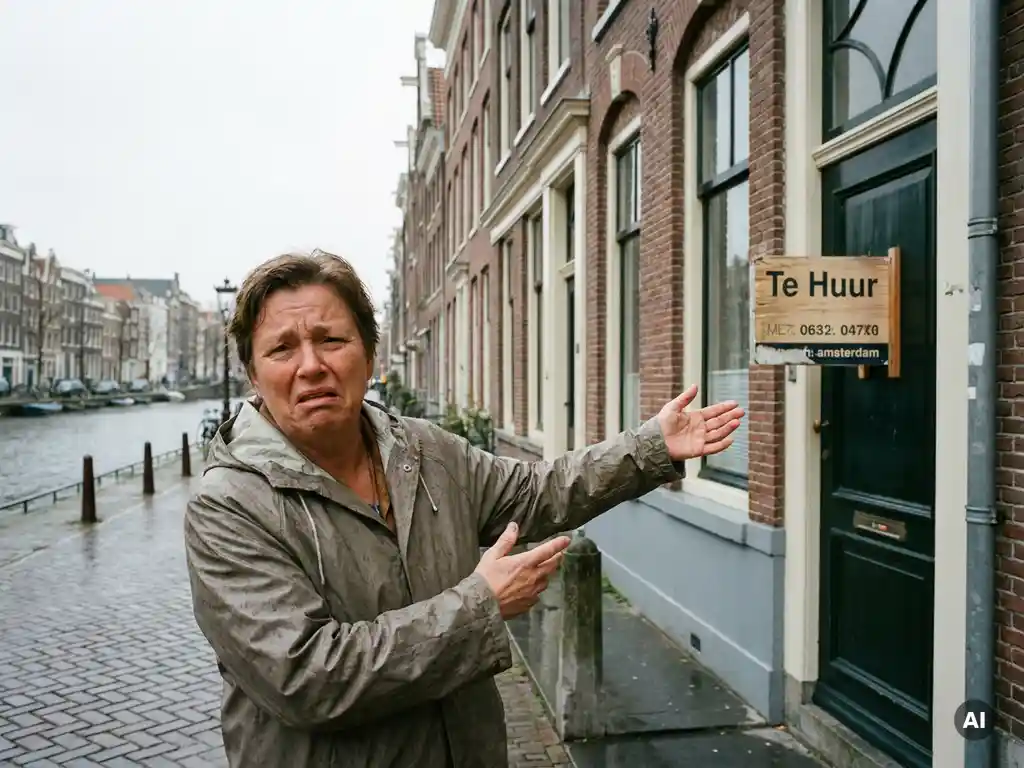
Finding housing as an expat in Amsterdam is genuinely difficult, and the challenge has intensified considerably in recent years. The city’s rental market is structurally undersupplied, landlords apply strict screening criteria that frequently disadvantage foreign nationals, and navigating Dutch tenancy law without local knowledge adds another layer of complexity. The sections below address the most pressing questions expats face, from market dynamics and landlord preferences to legal protections and when professional advice becomes essential.
What makes the Amsterdam rental market so competitive?
Amsterdam’s rental market is among the most competitive in Europe because demand for housing significantly outpaces supply. The city has a large social housing sector that is inaccessible to most newly arrived expats, a private rental sector that has shrunk due to regulatory changes, and a population that continues to grow. The result is that available private rental properties attract multiple applicants within hours of being listed.
Several structural factors drive this imbalance. Amsterdam has historically allocated a large proportion of its housing stock to social housing, which operates through a waiting list system that can take many years. Newly arrived expats in the Netherlands are rarely eligible for this route. The private rental sector, which is the realistic option for most internationals, has contracted as a result of rent regulation measures introduced in recent years that have made buy-to-let less attractive for smaller landlords. Fewer properties are therefore available at any given moment.
At the same time, Amsterdam remains a primary destination for international talent, with major multinationals, technology companies, and financial institutions headquartered in or near the city. This creates sustained demand from expats in Amsterdam who need housing quickly, often before or shortly after arriving in the Netherlands. The combination of constrained supply and high, time-sensitive demand pushes rents upward and gives landlords significant leverage in selecting tenants.
Why do Amsterdam landlords reject expat applicants?
Amsterdam landlords frequently reject expat applicants because they perceive a higher financial or administrative risk compared to Dutch nationals. The most common reasons are the absence of a Dutch credit history, short-term or probationary employment contracts, unfamiliarity with Dutch tenancy obligations, and uncertainty about how long the applicant intends to stay in the Netherlands.
From a landlord’s practical perspective, verifying the financial reliability of an expat applicant is more difficult. Dutch landlords typically request payslips, an employer’s statement, and a credit check. Expats who have recently arrived may have none of these in a Dutch format, or their income documentation may be in a foreign language. Landlords who are unfamiliar with international employment structures may simply decline rather than invest time in verification.
Employment contract type also plays a significant role. Many expats arrive on fixed-term contracts, which landlords view as a risk indicator. A landlord who signs a standard open-ended rental agreement with a tenant on a one-year contract faces the possibility of a difficult and costly eviction process if the tenant loses their right to remain in the Netherlands. Dutch tenancy law is strongly protective of tenants, which means landlords are cautious about whom they accept in the first place.
Language barriers and unfamiliarity with Dutch administrative requirements can further complicate matters. Landlords may also request a guarantor based in the Netherlands, which most expats cannot provide. In practice, expats renting a house in the Netherlands often need to demonstrate stronger financial credentials than a comparable Dutch applicant would be expected to provide.
What are the legal protections for expats renting in Amsterdam?
Expats renting in Amsterdam benefit from the same legal protections under Dutch tenancy law as any other tenant, regardless of nationality or immigration status. Dutch law provides strong tenant protections, including restrictions on rent increases, limitations on grounds for termination by the landlord, and the right to a habitable property. These protections apply automatically and cannot be waived by contract.
Dutch tenancy law distinguishes between social housing and private sector rentals, with different rules applying to each. For private sector rentals above the liberalisation threshold, landlords and tenants have more freedom to agree on rent levels, but the core protections remain. A landlord cannot simply terminate a rental agreement because it suits them. Grounds for termination are defined by law and include urgent personal use, persistent non-payment, or serious nuisance, among others.
One provision that is particularly relevant for expats and international tenants is the diplomat clause (diplomatenbeding). This clause can be included in a rental agreement to allow the landlord to reclaim the property if they need to return to it, for example after a posting abroad. For expats, understanding whether a diplomat clause is present in their agreement is important, as it affects the security of their tenancy. The clause must be explicitly agreed upon and recorded correctly to be enforceable.
Tenants who believe their rights have been violated, for instance through unlawful rent increases, failure to carry out repairs, or improper termination, can submit a complaint to the Huurcommissie (Rent Tribunal) for certain categories of dispute, or pursue the matter through the civil courts. The specific route available depends on the type of rental and the nature of the dispute. Given the complexity of Dutch tenancy law, it is advisable to seek legal advice for expats in the Netherlands before signing a rental agreement or responding to a landlord’s notice.
How does the 30% ruling affect housing options for expats?
The 30% ruling, now formally restructured as the expat scheme, can improve an expat’s housing options by increasing their net income and, in some cases, allowing their employer to reimburse certain housing costs tax-free. A higher net salary makes it easier to meet landlords’ income requirements and to afford Amsterdam’s rental prices, which are among the highest in the Netherlands.
Under the expat scheme, employers can compensate employees for extraterritorial costs, which are the additional costs of living and working in a country other than one’s home country. Housing costs are explicitly recognised as a potential extraterritorial cost. Specifically, initial housing costs that exceed 18% of the employee’s wages from current employment may qualify as extraterritorial costs and can be reimbursed tax-free by the employer. This can meaningfully reduce the financial burden of renting in Amsterdam during the initial period of relocation.
To qualify for the expat scheme in 2026, an employee must meet several conditions. They must be in paid employment, must have been recruited from outside the Netherlands, and must have lived more than 150 kilometres from the Dutch border for at least 16 of the 24 months prior to their first working day in the Netherlands. There are also salary thresholds: for 2026, the annual salary must exceed €48,013 (or €36,497 for employees under 30 with a qualifying Dutch master’s degree or equivalent). The scheme applies for a maximum period of five years.
It is worth noting that the expat scheme does not directly influence a landlord’s decision to accept or reject an applicant. However, the higher net income it produces can help expats meet the financial requirements that landlords set, typically a gross monthly income of three to four times the monthly rent. Expats should discuss eligibility for the scheme with their employer and, where appropriate, with a qualified adviser, as the conditions and implications depend on individual circumstances.
What are the alternatives when the private rental market is inaccessible?
When the private rental market proves inaccessible, expats in Amsterdam have several practical alternatives to consider. These include corporate housing arranged through an employer, serviced apartments for short-term stays, relocation agencies that have established relationships with landlords, and, for those with the financial means and long-term plans, purchasing property in the Netherlands.
- Employer-arranged accommodation: Many multinationals and larger companies that relocate staff to Amsterdam maintain relationships with housing providers or offer temporary accommodation as part of a relocation package. Expats should raise this with their employer before or immediately upon arrival.
- Serviced apartments and short-term rentals: These provide a bridge solution while a longer-term rental is secured. They are more expensive per month but do not require the same level of documentation as a standard rental agreement.
- Relocation agencies: Professional relocation agents in Amsterdam have networks of landlords and can present expat applicants more effectively than individuals applying independently. They understand what landlords require and can help prepare documentation in the expected format.
- Buying property in the Netherlands: Foreigners are in principle eligible to purchase property in the Netherlands regardless of nationality or visa status. Buying a house in the Netherlands as a foreigner removes dependence on a landlord’s approval and can be a sound long-term investment. The average price per square metre in Amsterdam was approximately €9,500 in late 2024, which is considerably higher than the national average. A Dutch mortgage is available to expats, though the terms and maximum borrowing amount depend on factors including employment contract type, income, and residency status.
- Shared housing and co-living: Sharing a property with other tenants is a practical short-term option, particularly for expats who arrive without a permanent employment contract in place.
Each of these alternatives carries its own legal and financial implications. For those considering international relocation to the Netherlands and a property purchase, consulting a legal adviser before signing any agreement is a prudent step.
When should an expat seek legal advice about a housing dispute in Amsterdam?
An expat should seek legal advice about a housing dispute in Amsterdam as soon as a serious disagreement arises with a landlord, particularly before taking any formal action or responding to a legal notice. Common situations that warrant professional advice include unlawful termination of a rental agreement, disputes over deposit deductions, rent increases that appear to exceed legal limits, and disagreements about the scope of a diplomat clause.
Dutch tenancy law is detailed and, in many respects, favourable to tenants. However, exercising those rights correctly requires an understanding of the applicable procedures, deadlines, and forums. An expat who receives a notice to vacate, for example, needs to know quickly whether that notice is legally valid and what their options are. Acting on incorrect assumptions, or failing to respond within the required timeframe, can significantly affect the outcome.
Disputes about the condition of a property, service charges in apartment buildings, or the landlord’s failure to carry out necessary repairs are also situations where legal guidance can clarify what remedies are available and which route is most appropriate. The Huurcommissie handles certain categories of dispute, but its jurisdiction depends on the type of rental agreement and the rent level. Civil court proceedings may be necessary in other cases.
For expats who are also dealing with related matters, such as a change in employment status that affects their right to remain in the Netherlands, or a dispute that has implications for their tenancy, the legal issues can overlap in ways that are difficult to navigate without specialist support. In those circumstances, early advice is considerably more effective than seeking help after a situation has escalated.
How Russell Advocaten can help expats with housing in Amsterdam
Russell Advocaten Amsterdam is an internationally oriented law firm with extensive experience advising expats on a wide range of legal matters, including real estate, contracts, employment, and immigration-related questions. The firm’s lawyers communicate fluently in English, Dutch, and German, which means expats can discuss their situation clearly without language barriers. Russell Advocaten is an official partner of IN Amsterdam, the expat centre of the City of Amsterdam, and has been recommended by The Legal 500 for many years.
For expats dealing with housing challenges in Amsterdam, Russell Advocaten offers practical legal support across several areas:
- Reviewing and advising on rental agreements, including diplomat clauses and other provisions that carry significant legal consequences
- Advising on tenant rights under Dutch tenancy law and the options available when a landlord acts unlawfully
- Assisting with disputes over deposit deductions, rent increases, or termination notices
- Providing guidance on purchasing property in the Netherlands as a foreigner, including the legal aspects of the buying process
- Advising on the legal implications of the expat scheme and extraterritorial cost reimbursements in the context of housing
- Supporting expats who are setting up a business in the Netherlands and need to understand how their legal status affects their housing and contractual position
If you are an expat in Amsterdam facing a housing dispute or seeking advice before signing a rental or purchase agreement, contact Russell Advocaten to discuss your situation with an experienced lawyer.
This information is general in nature and does not constitute legal advice for your specific situation; for personal advice, please consult a lawyer at Russell Advocaten.
Veelgestelde vragen
How much income do I typically need to qualify for a private rental in Amsterdam as an expat?
Most Amsterdam landlords require a gross monthly income of three to four times the monthly rent. For example, if you are renting an apartment at €2,000 per month, you would generally need to demonstrate a gross monthly income of €6,000–€8,000. Expats benefiting from the 30% ruling (expat scheme) should note that landlords typically assess gross income before the tax benefit is applied, so it is worth clarifying with your employer how your income is structured on paper.
What documents should I prepare before applying for a rental property in Amsterdam?
To give yourself the best chance of success, prepare a complete application package in advance: recent payslips (ideally three months), an employer’s statement confirming your contract type and salary, a copy of your passport, proof of registration or your BSN (citizen service number) if you already have one, and a reference letter from a previous landlord if available. If your documents are not in Dutch or English, consider having them translated by a certified translator, as landlords may decline to process foreign-language paperwork.
Can my employer's rental subsidy or housing allowance count toward the income threshold landlords set?
This depends on how the allowance is structured. If the housing contribution is paid as part of your gross salary, it will typically count toward your verifiable income. However, if it is paid as a separate tax-free reimbursement under the expat scheme’s extraterritorial cost provisions, it may not appear on standard payslips and landlords may not factor it in. Ask your employer’s HR or payroll team for a written statement that clearly explains your total compensation package, and bring this to viewings as supporting documentation.
What is the difference between a temporary and a permanent rental contract in the Netherlands, and which is better for expats?
Since the introduction of the Fixed-term Tenancy Act (Wet vaste huurcontracten) in July 2024, landlords in the Netherlands can generally no longer offer short fixed-term contracts that end automatically. Most new contracts are now open-ended, which gives tenants significantly stronger security of tenure. For expats, this is largely positive — it means you cannot simply be asked to leave when a fixed term expires — but it also means landlords are more selective upfront. If you are offered a temporary contract, seek legal advice to understand the specific conditions under which it can be terminated.
What should I watch out for when signing a rental agreement in Amsterdam as an expat?
Pay close attention to the following: whether a diplomat clause (diplomatenbeding) is included and what it allows the landlord to do; the service costs (servicekosten) listed alongside the base rent and whether they are reasonable and itemised; the deposit amount (legally capped at three months’ rent for private sector rentals); and any clauses that attempt to waive your statutory tenant rights, which are unenforceable under Dutch law. Having a lawyer review the contract before you sign is strongly advisable, particularly if the agreement is in Dutch and you are not fully comfortable with the language.
What can I do if my landlord refuses to return my deposit after I move out?
Under Dutch law, a landlord must return your deposit within a reasonable period after the end of the tenancy, minus any deductions that are properly documented and justified. If your landlord withholds the deposit without valid grounds, you can send a formal written demand (ingebrekestelling) requesting repayment within a set deadline. If this is ignored, you can pursue the matter through the civil court (kantonrechter), which handles tenancy disputes. Keeping a detailed move-in and move-out inspection report, signed by both parties, is the single most effective way to protect yourself against unjustified deposit deductions.
Is it possible to negotiate rent in Amsterdam, or is the asking price always fixed?
Negotiation is possible but limited in practice, given how competitive the Amsterdam rental market is. In a market where a property receives dozens of applications within hours, landlords have little incentive to reduce the asking rent. That said, you may have more room to negotiate on other terms — such as the lease start date, the inclusion of furniture, or the scope of permitted alterations — rather than the rent itself. For private sector rentals above the liberalisation threshold, rent levels are freely agreed between landlord and tenant, so there is no legal ceiling, but the Huurcommissie can still assess whether service charges are reasonable.
Gerelateerde artikelen
- What do expats need to know before moving to the Netherlands?
- What is the highly skilled migrant visa in the Netherlands?
- Can a non-EU citizen start a startup in the Netherlands?
- Do I have to pay US taxes if I live in the Netherlands?
- Can I buy a house in the Netherlands as a US citizen?
Deze inhoud is gegenereerd met behulp van AI en kan fouten bevatten.