

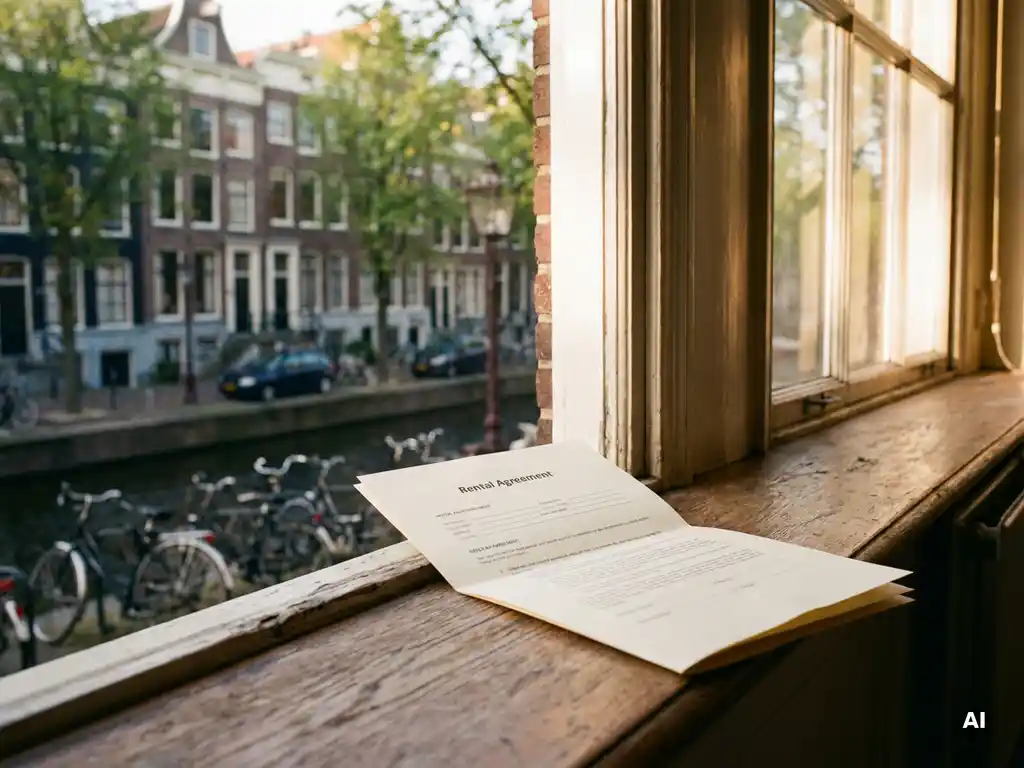
Expats renting in the Netherlands have the same fundamental legal protections as Dutch nationals under Dutch tenancy law. The law does not distinguish between foreign and domestic tenants; your rights to fair rent, security of tenure, and protection against unlawful eviction apply regardless of your nationality or residency status. Understanding those rights is particularly important when renting a house in the Netherlands as an expat, as the Dutch rental market has its own rules that differ significantly from those in many other countries. The sections below address the most common questions expats face when navigating Dutch tenancy law.
What protections does Dutch tenancy law offer to foreign renters?
Dutch tenancy law offers foreign renters the same statutory protections as Dutch nationals. The law does not create a separate category for expat tenants. Whether you are renting a house in the Netherlands as an expat or as a Dutch citizen, you are protected by the same rules governing rent levels, eviction, maintenance obligations, and dispute resolution.
The core framework is set out in the Dutch Civil Code (Burgerlijk Wetboek), which governs all residential rental agreements. Key protections include:
- The right to a written rental agreement that clearly sets out the terms of your tenancy
- Protection against arbitrary rent increases, with rules on how and when a landlord may raise the rent
- The right to a habitable property; landlords are legally obliged to carry out necessary maintenance and repairs
- Protection against unlawful eviction; a landlord cannot simply terminate your tenancy without a legally recognised ground
- Access to the Rent Tribunal (Huurcommissie), an independent body that resolves disputes between landlords and tenants
One practical consideration for expats is the diplomat clause (diplomatenbeding), which is sometimes included in rental contracts. This clause allows a landlord to terminate the tenancy if they need to return to the property themselves. If your contract contains this clause, it is important to understand its implications before signing. Legal advice for expats in the Netherlands on this point can prevent costly misunderstandings at a later stage.
What is the difference between social housing and private sector rental rights?
The distinction between social housing and private sector rentals is one of the most important in Dutch tenancy law, as it determines which rent protections apply to your tenancy. Social housing (sociale huurwoning) is subject to strict rent controls, while private sector rentals offer landlords more pricing freedom, though not unlimited freedom.
Social housing
Social housing in the Netherlands is allocated based on a points system (woningwaarderingsstelsel), which assigns a score to a property based on factors such as size, facilities, and energy efficiency. Properties below a certain points threshold fall within the social sector and are subject to a maximum rent set by law. As of 2026, access to social housing is generally reserved for lower-income households, and waiting lists in cities such as Amsterdam can be extremely long. Most expats in the Netherlands, particularly those in international relocation situations, will not qualify for social housing or will not wish to wait for it.
Private sector rentals
The private rental sector (vrije sector) covers properties above the social housing threshold. Landlords in this sector have more freedom to set rents, but the law still imposes important limits. Since 2024, the Dutch government has extended rent regulation to a portion of the mid-market private sector through the Affordable Rent Act (Wet betaalbare huur); this is a significant development that expats renting in the Netherlands should be aware of. Properties in the regulated mid-market segment are subject to maximum rent levels, even if they are not classified as social housing. For properties clearly in the free market, rent is largely determined by agreement, but other protections, such as those relating to service charges and deposits, continue to apply.
Can a landlord evict an expat tenant without legal grounds?
No. A landlord in the Netherlands cannot evict a tenant, including an expat tenant, without a legally recognised ground for termination. Dutch tenancy law provides strong security of tenure, and a landlord who wishes to end a tenancy must either obtain the tenant’s agreement or seek a court order.
The law sets out a limited number of grounds on which a landlord may seek termination, including:
- The tenant has failed to fulfil their obligations, for example by not paying rent
- The landlord urgently needs the property for their own use (dringend eigen gebruik)
- The tenant has refused a reasonable offer to enter into a new rental agreement
- The use of the property conflicts with a valid zoning plan (bestemmingsplan)
- The landlord has a reasonable interest in termination that outweighs the tenant’s interest in continuing the tenancy
Even where one of these grounds exists, the landlord must follow a formal legal procedure. Simply changing the locks, removing the tenant’s belongings, or cutting off utilities constitutes unlawful eviction and exposes the landlord to significant legal liability. If you receive a notice to vacate that you believe is unjustified, you are not obliged to leave. Seeking legal advice promptly is advisable in that situation.
One exception worth noting is the diplomat clause mentioned above. If your rental agreement contains a valid diplomat clause, the landlord may have a contractual right to terminate the tenancy on shorter notice. The enforceability of such clauses depends on the specific wording and circumstances, and this is an area where professional advice is particularly valuable.
What can expat tenants do if their rent is unlawfully high?
If your rent is unlawfully high, meaning it exceeds the maximum permitted under the applicable rent regulation rules, you have the right to challenge it. The primary route is to submit a complaint to the Rent Tribunal (Huurcommissie), which can assess whether your rent is in line with the legal maximum and order a reduction if it is not.
This right applies in the social housing sector and, since the introduction of the Affordable Rent Act, also to properties in the regulated mid-market segment. For properties genuinely in the free market, the scope for challenging rent levels is more limited, though it is not entirely absent, for example, if a landlord has misrepresented the classification of a property.
The process for challenging an unlawfully high rent generally involves the following steps:
- Determine whether your property falls within the regulated sector using the points system
- Compare the maximum permitted rent for your property’s points score with the rent you are actually paying
- Submit a complaint to the Rent Tribunal within the relevant time limit; this is typically within six months of the start of the tenancy for new agreements
- The Rent Tribunal will assess the property and issue a binding decision on the maximum rent
Expats in the Netherlands should be aware that some landlords in the private market charge rents that exceed what is legally permissible, particularly in high-demand cities such as Amsterdam. This is an area where understanding your rights before signing, rather than after, can make a significant difference.
What are an expat tenant’s rights regarding deposits and service charges?
Dutch law regulates both security deposits and service charges, and expat tenants have clear rights in both areas. A landlord cannot retain a deposit without justification, and service charges must be transparent and proportionate to actual costs.
Security deposits
There is no statutory maximum on the amount of a security deposit in the private sector, though in practice deposits are typically equivalent to one to three months’ rent. At the end of the tenancy, the landlord must return the deposit within a reasonable period, generally within one month, after deducting any amounts that are legitimately owed, such as unpaid rent or costs to repair damage beyond normal wear and tear. If a landlord refuses to return the deposit without valid grounds, the tenant can seek recovery through the courts or, in some cases, through the Rent Tribunal.
Service charges
Service charges (servicekosten) cover costs such as gas, water, electricity, and building maintenance that are billed on top of the base rent. Landlords are required to provide a clear breakdown of service charges and, at least once a year, to settle the actual costs against the amounts paid. If the actual costs are lower than the charges collected, the landlord must refund the difference. If service charges are opaque or disproportionate, a tenant can challenge them before the Rent Tribunal.
When should an expat tenant seek legal advice on a rental dispute?
An expat tenant should seek legal advice as soon as a rental dispute arises that cannot be resolved through direct communication with the landlord. Early legal advice is particularly important because certain rights, such as the right to challenge an unlawfully high rent, are subject to time limits, and delay can result in losing a claim that would otherwise have succeeded.
Situations in which legal advice is strongly recommended include:
- Receiving a notice to vacate or an eviction threat that you believe is unjustified
- A landlord refusing to return your deposit without adequate explanation
- Discovering that your rent may exceed the legally permitted maximum
- Disputes over service charges or maintenance obligations
- Uncertainty about the diplomat clause or other unusual contractual provisions before signing
- Any situation involving a landlord who is unresponsive or acting in bad faith
Expats face an additional layer of complexity in rental disputes: navigating Dutch legal procedures in a language that may not be your own, within a legal system that may operate very differently from that of your home country. This is where specialist legal advice for expats in the Netherlands adds particular value, not only in resolving the immediate dispute, but in ensuring that you understand your position and options at every stage.
How Russell Advocaten can help expat tenants in the Netherlands
Russell Advocaten Amsterdam is an internationally oriented law firm with long-standing experience advising expats on a wide range of legal matters in the Netherlands, including real estate and tenancy law, immigration, employment, contracts, and setting up a business. The firm’s lawyers communicate fluently in English, German, and Dutch, which means expat clients can discuss their situation clearly and without the risk of misunderstanding that can arise when working through a language barrier.
For expat tenants facing rental disputes or seeking to understand their rights before signing a lease, Russell Advocaten offers practical, tailored legal support. This includes:
- Reviewing rental agreements, including diplomat clauses and service charge provisions, before you sign
- Advising on whether your rent falls within the legally permitted range
- Representing tenants in proceedings before the Rent Tribunal (Huurcommissie)
- Assisting with deposit recovery and disputes over maintenance obligations
- Providing guidance on eviction procedures and your rights as a tenant
- Supporting international clients relocating to the Netherlands with broader legal questions around housing, employment, and residency
Russell Advocaten is an official partner of IN Amsterdam, the expat centre of the City of Amsterdam, and has been recommended by The Legal 500 for many years. The firm is also part of the Primerus network, giving clients access to legal support across 40 countries when cross-border matters arise.
If you are an expat in the Netherlands dealing with a tenancy issue or seeking advice before entering into a rental agreement, contact Russell Advocaten to discuss your situation with an experienced lawyer.
This information is general in nature and does not constitute legal advice for your specific situation. Please consult a lawyer at Russell Advocaten for advice tailored to your circumstances.
Veelgestelde vragen
Can my landlord include a clause in my rental contract that waives my rights under Dutch tenancy law?
In most cases, no. Many of the protections under Dutch tenancy law are mandatory and cannot be contracted out of, even if both parties agree in writing. For example, a landlord cannot include a clause that allows them to evict you without legal grounds or that strips you of your right to approach the Rent Tribunal. If a clause in your contract conflicts with mandatory statutory protections, that clause is generally unenforceable. Before signing any rental agreement, it is worth having a lawyer review it to identify any provisions that may be legally invalid or that could disadvantage you.
What should I do if my landlord refuses to carry out necessary repairs?
Start by putting your repair request in writing — email is sufficient — so that you have a clear record of the request and the date it was made. If the landlord fails to respond or refuses to act, you can submit a complaint to the Rent Tribunal (Huurcommissie), which has the authority to order a temporary rent reduction until the repairs are completed. In more serious cases involving habitability issues, you may also be able to seek a court order compelling the landlord to carry out the work. Documenting the defect with photographs and written correspondence from the outset significantly strengthens your position.
I'm on a temporary or fixed-term rental contract — do I have the same protections as tenants on open-ended contracts?
Fixed-term rental contracts of up to two years (for independent dwellings) are permitted under Dutch law, and during that period you have the same core protections as tenants on open-ended contracts, including protection against unlawful eviction and the right to challenge excessive rent. However, once the fixed term expires, the landlord is entitled to end the tenancy without needing to provide a specific legal ground, provided they give you the required notice. If the landlord allows you to stay beyond the fixed term without a new agreement, the contract automatically converts to an open-ended tenancy, which carries stronger security of tenure.
How do I find out whether my rental property falls under the social sector, the regulated mid-market, or the free market?
The classification is determined by the points score assigned to your property under the residential valuation system (woningwaarderingsstelsel). You can request a points assessment from the Rent Tribunal (Huurcommissie), or use the online tools available on the Dutch government’s website to calculate an indicative score based on your property’s characteristics. As of 2024, properties scoring up to 186 points fall within the regulated mid-market segment under the Affordable Rent Act, while those scoring higher are generally in the free market. If you are unsure how your property is classified, a lawyer or the Rent Tribunal can help you determine this before you decide whether to challenge your rent.
What happens to my tenancy if my employer arranged my rental housing and my employment contract ends?
Your tenancy rights are generally independent of your employment relationship, meaning your landlord cannot automatically terminate your rental agreement simply because your employment has ended. However, if your employer is also your landlord — for example, in tied housing arrangements — the situation is more complex, and the terms of both your employment and rental contracts will be relevant. It is important to review whether your rental agreement contains any clauses linking the tenancy to your employment status. If your housing is at risk following a change in employment, seeking legal advice promptly gives you the best chance of understanding your options and protecting your position.
Are there any common mistakes expats make when signing a rental contract in the Netherlands that I should avoid?
Several pitfalls come up regularly. First, many expats sign contracts without realising they contain a diplomat clause, which can allow the landlord to terminate the tenancy on relatively short notice. Second, some tenants agree to service charge arrangements without requesting a breakdown, making it difficult to challenge overcharging later. Third, failing to document the condition of the property at move-in — ideally with a signed inspection report and photographs — can lead to unjustified deposit deductions at the end of the tenancy. Finally, paying a deposit without receiving a written receipt or confirmation of the agreed terms creates unnecessary risk. Having a lawyer review the contract before you sign is the most effective way to avoid these issues.
Can I sublet my rental property in the Netherlands, and what are the rules around this?
Subletting without your landlord’s permission is generally not permitted and can give the landlord grounds to terminate your tenancy. Some rental agreements explicitly prohibit subletting, while others may allow it with prior written consent from the landlord. If you wish to sublet — for example, during a temporary absence — you should review your contract carefully and request permission in writing. Short-term holiday letting platforms such as Airbnb are a particular area of risk, as many landlords and municipalities in cities like Amsterdam have strict rules against this type of use. If you are unsure whether subletting is permitted in your situation, seek legal advice before proceeding.
Gerelateerde artikelen
- What is a diplomat clause in a Dutch rental agreement?
- What are the language requirements for Dutch citizenship in 2026?
- Can a foreigner buy a house in the Netherlands?
- Can expats choose which country's law governs their marriage in the Netherlands?
- What is the difference between an expat or an immigrant?
Deze inhoud is gegenereerd met behulp van AI en kan fouten bevatten.