

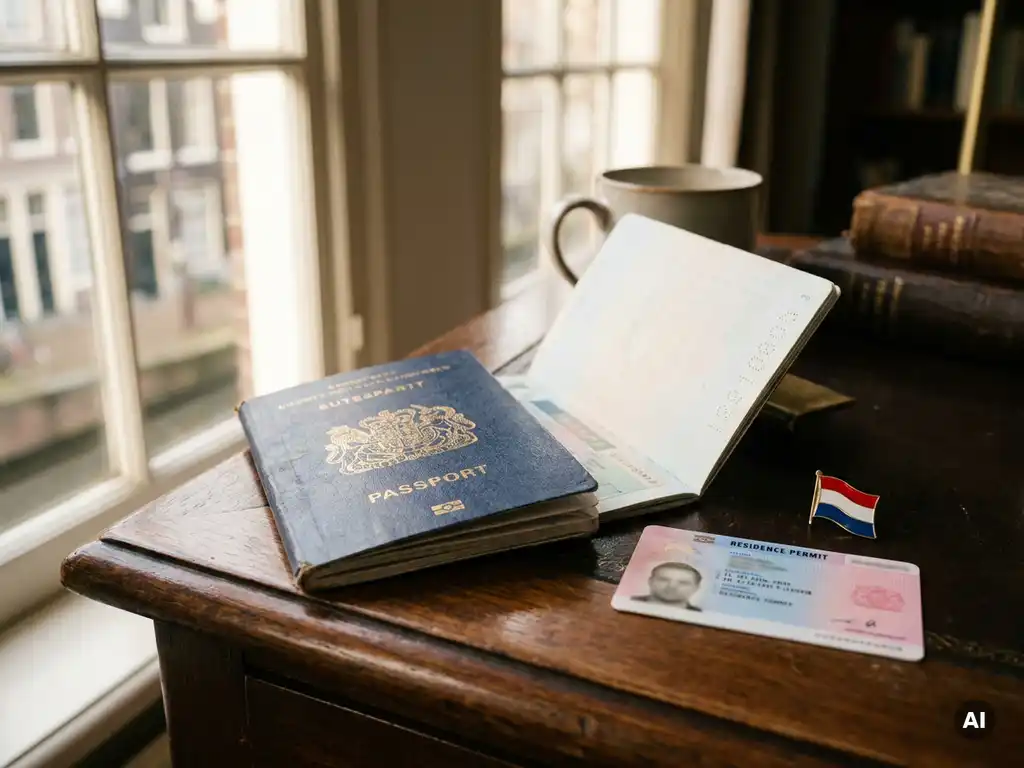
EU citizens do not need a work permit to work in the Netherlands. As members of the European Union, they benefit from the principle of free movement of workers, which grants them the right to take up employment in any EU member state without prior authorisation from Dutch immigration authorities. This freedom applies to nationals of all EU member states, as well as those of the European Economic Area (EEA), which includes Norway, Iceland, and Liechtenstein, and Switzerland. The sections below address the most common practical questions EU citizens and their employers encounter when starting work in the Netherlands.
Are EU citizens free to work in the Netherlands without restrictions?
Yes. EU, EEA, and Swiss nationals have an unrestricted right to work in the Netherlands under EU free movement law. They do not require a work permit (known in Dutch as a tewerkstellingsvergunning or TWV), and their employer does not need to obtain one on their behalf. This right applies regardless of the type of employment, whether full-time, part-time, self-employed, or temporary.
In practice, this means an EU citizen can accept a job offer in the Netherlands and begin working without waiting for any immigration approval. The employer is equally free to hire EU nationals without going through the permit procedures that apply to workers from outside the EU. This is one of the most significant practical advantages of EU citizenship for those considering international relocation to the Netherlands.
It is worth noting that while there is no work permit requirement, EU citizens are still subject to Dutch employment law once they are working in the Netherlands. This includes rules on minimum wage, working hours, health and safety, and collective labour agreements where applicable.
Do EU citizens need to register when working in the Netherlands?
EU citizens who intend to stay in the Netherlands for more than four months are required to register with the municipality (gemeente) where they live. This registration is recorded in the Personal Records Database (Basisregistratie Personen, or BRP). While registration is not a precondition for working, it is a legal obligation for residents staying longer than the short-stay threshold.
Upon registration, EU citizens receive a Citizen Service Number (Burgerservicenummer, or BSN). This number is essential for practical purposes in the Netherlands:
- Opening a Dutch bank account
- Registering with a general practitioner (GP)
- Filing a Dutch tax return
- Enrolling children in school
- Accessing public services
Employers will typically request the BSN before processing payroll, as it is required for wage tax administration. EU citizens who plan to work in the Netherlands, even for a relatively short period, are therefore advised to complete municipal registration promptly upon arrival.
What documents does an EU citizen need to start working in the Netherlands?
An EU citizen needs a valid national identity card or passport to work in the Netherlands. No additional immigration documents are required. The employer is legally obliged to verify and retain a copy of this identity document as part of their record-keeping obligations under Dutch law.
Beyond the identity document, the following are typically needed in practice:
- BSN (Citizen Service Number): Required for payroll processing and tax purposes. Obtained upon registering with the local municipality.
- Proof of address: Required for municipal registration and opening a bank account.
- Dutch bank account: Most Dutch employers pay salaries directly into a Dutch or SEPA bank account.
- Health insurance: Once working in the Netherlands, EU citizens are generally required to take out Dutch basic health insurance (basisverzekering).
Depending on the nature of the role, an employer may also request proof of qualifications or professional registration, particularly in regulated professions such as medicine, law, or engineering, where EU-wide recognition of qualifications may still require a formal assessment by a Dutch competent authority.
Do family members of EU citizens also have the right to work in the Netherlands?
Family members of EU citizens, including spouses, registered partners, and dependent children, have a derived right to work in the Netherlands, provided the EU citizen themselves is exercising free movement rights (i.e. is living and working in the Netherlands). This derived right applies regardless of whether the family member is themselves an EU national.
Non-EU family members must apply for a residence permit based on their family relationship with the EU citizen. Once that permit is granted, they are entitled to work in the Netherlands without a separate work permit. The application is processed by the Immigration and Naturalisation Service (IND).
It is important to note that the family member’s right to work is linked to the EU citizen’s continued residence in the Netherlands. Depending on the specific circumstances, for example, if the EU citizen leaves the Netherlands or the relationship ends, the family member’s right to remain and work may be affected. The rules in this area can be complex, and the outcome depends on the individual situation. Professional legal advice is recommended where there is any uncertainty.
When does an EU citizen working in the Netherlands need additional permits or approvals?
In most employment situations, EU citizens require no additional permits. However, certain specific circumstances may trigger additional requirements or considerations.
Posting of workers
If an EU citizen is posted to the Netherlands by a foreign employer, rather than directly employed by a Dutch company, the employer may be subject to the Dutch Posted Workers in the European Union (Implementation) Act (Wet arbeidsvoorwaarden gedetacheerde werknemers in de Europese Unie). This requires the foreign employer to notify Dutch authorities before the posting begins and to comply with Dutch employment conditions, including minimum wage and working time rules.
Regulated professions
EU citizens working in regulated professions, such as doctors, lawyers, architects, or accountants, may need to have their professional qualifications formally recognised by the relevant Dutch competent authority before they can practise. The EU Directive on the recognition of professional qualifications provides a framework for this, but the process and timelines vary by profession.
EU citizens who are self-employed and wish to set up a business in the Netherlands do not need a work permit, but they will need to register their business with the Dutch Chamber of Commerce (Kamer van Koophandel, or KvK). Depending on the business structure chosen, additional corporate and tax obligations will apply.
How does Brexit affect the right of British nationals to work in the Netherlands?
Since the United Kingdom left the European Union, British nationals are no longer EU citizens and no longer benefit from EU free movement rights. As of 2026, British nationals who wish to work in the Netherlands are treated as third-country nationals and must obtain the appropriate residence and work authorisation before starting employment.
There is an important exception for British nationals who were already lawfully residing in the Netherlands before the end of the Brexit transition period (31 December 2020) and who registered under the Dutch Withdrawal Agreement scheme. These individuals retain rights broadly equivalent to those they held as EU citizens, including the right to work, subject to certain conditions.
For British nationals arriving in the Netherlands after the transition period, the standard immigration routes for non-EU workers apply. The most common route for skilled workers is the highly skilled migrant permit (kennismigrant), which requires a recognised sponsor (typically the Dutch employer) and a minimum salary threshold. In 2026, that threshold is €48,013 gross per year for migrants aged 30 and over, and €36,497 for those under 30 with a relevant master’s degree.
British nationals considering relocation to the Netherlands are strongly advised to seek legal advice on their specific situation, as the applicable route and requirements depend on individual circumstances, including employment type, salary, and prior residence history.
How Russell Advocaten supports expats working in the Netherlands
Russell Advocaten is an internationally oriented law firm based in Amsterdam with decades of experience advising expats on the legal aspects of living and working in the Netherlands. The firm’s lawyers are fluent in English, German, and Dutch, making them well placed to assist international clients navigating Dutch law. Russell Advocaten is an official partner of IN Amsterdam, the expat centre of the City of Amsterdam.
For expats and international employers, Russell Advocaten provides practical legal support across a broad range of matters, including:
- Advice on employment contracts and Dutch labour law obligations
- Guidance on residence permits and immigration procedures for non-EU nationals and family members
- Support with setting up a business in the Netherlands, including corporate structure and registration
- Advice on real estate and rental agreements, including the diplomat clause in tenancy contracts
- Assistance with the 30% ruling (Expat Scheme) and other tax-related employment matters in conjunction with tax advisers
- Family law matters relevant to expats, including international family situations
Whether you are an EU citizen starting a new role in Amsterdam, a British national navigating post-Brexit immigration requirements, or an international employer seeking to understand your obligations under Dutch law, Russell Advocaten can provide clear, professional guidance tailored to your situation. Contact Russell Advocaten to discuss your specific circumstances with one of our lawyers.
This information is general in nature and does not constitute legal advice for your specific situation. Please consult a lawyer at Russell Advocaten for advice tailored to your circumstances.
Veelgestelde vragen
Can an EU citizen start working in the Netherlands before completing municipal registration?
Yes, municipal registration is not a legal precondition for starting work in the Netherlands. However, without a BSN — which you only receive upon registering with your local municipality — your employer cannot process payroll correctly. It is therefore strongly advisable to register with the gemeente as soon as possible after arriving, ideally before your first working day or within the first week.
What happens if I work in the Netherlands for less than four months — do I still need to register?
If your stay is four months or shorter, you are not required to register in the BRP as a resident. However, you may still need a BSN for tax and payroll purposes, which you can obtain through a lighter registration process at certain municipalities or the Dutch Tax Authority (Belastingdienst). Check with your employer and local municipality about the most appropriate route for your specific situation.
I work remotely for a foreign employer while living in the Netherlands — does this affect my tax or social security obligations?
Yes, this is an area that catches many expats off guard. If you are physically residing in the Netherlands while working remotely for a foreign employer, you may become liable for Dutch income tax and social security contributions, regardless of where your employer is based. The Netherlands may be considered your country of residence for tax purposes, and your employer may have obligations to withhold Dutch wage tax. It is highly recommended to seek professional tax and legal advice to assess your specific situation and avoid unexpected liabilities.
Can an EU citizen work as a freelancer or self-employed professional in the Netherlands without any permits?
EU citizens are free to work on a self-employed basis in the Netherlands without a work permit. However, you must register your business with the Dutch Chamber of Commerce (KvK), which will also trigger registration with the Dutch Tax Authority for VAT and income tax purposes. Depending on your profession, you may also need to comply with sector-specific regulations or obtain professional recognition, particularly in regulated fields such as healthcare or law.
What are the most common mistakes EU citizens make when starting work in the Netherlands?
The most frequent pitfalls include delaying municipal registration (which delays receiving a BSN and setting up payroll), failing to arrange Dutch basic health insurance (basisverzekering) promptly — which is legally required once you start working in the Netherlands — and assuming that EU free movement means there are no administrative steps at all. Another common mistake is overlooking the need for formal qualification recognition when entering a regulated profession, which can delay the start of practice significantly.
My non-EU spouse wants to join me in the Netherlands and also work — how long does the process typically take?
The timeline for a non-EU family member to obtain a residence permit through the IND can vary, but applicants should generally allow several months from the date of application. Processing times depend on the IND’s current workload and the completeness of the application. During this period, your spouse may not be legally entitled to work until the permit is granted, so it is important to plan ahead and submit the application as early as possible. A lawyer can help ensure the application is complete and correctly submitted to avoid unnecessary delays.
Does working in the Netherlands as an EU citizen automatically build up rights to permanent residency?
Yes, EU citizens who have legally resided in the Netherlands for five continuous years — including through employment — generally acquire a permanent right of residence under EU free movement law. This right is not a formal permit but is recognised under Dutch law. After five years of legal residence, you can also apply for a permanent residence document from the IND, which serves as official confirmation of your status and can be useful for practical purposes such as long-term rental agreements or mortgage applications.
Gerelateerde artikelen
- What happens to an expat's assets if they divorce in the Netherlands?
- How do Dutch tenant protection laws affect expats?
- What rights do expats have as tenants in the Netherlands?
- Can expats transfer their pension when leaving the Netherlands?
- How do you register as an expat in the Netherlands?
Deze inhoud is gegenereerd met behulp van AI en kan fouten bevatten.