

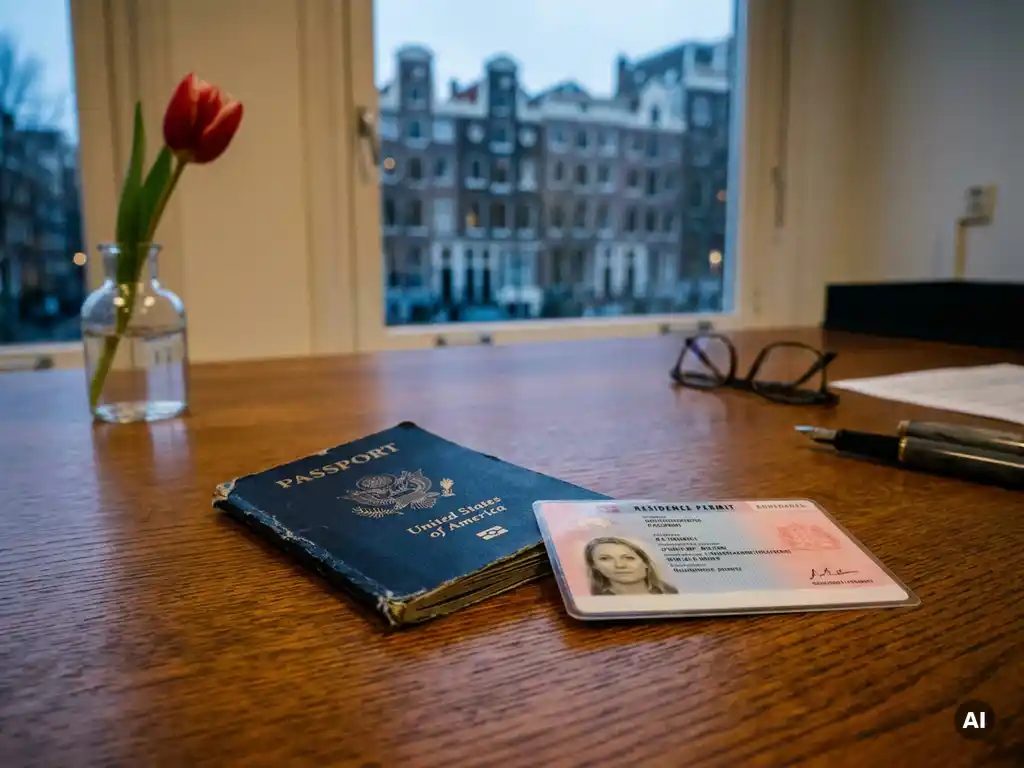
Moving to the Netherlands from the United States is entirely possible, and Americans benefit from a relatively straightforward starting position: US citizens do not need a visa for short stays, and several well-established permit routes exist for those intending to live and work there long term. The key variable is your purpose of stay, whether you are relocating for employment, to start a business, to study, or to join family already living in the Netherlands. The sections below address the most common questions Americans have when planning a move to the Netherlands.
Do US citizens need a visa to live in the Netherlands?
US citizens do not need a visa to enter the Netherlands for short stays of up to 90 days within any 180-day period. However, if you intend to live, work, or study in the Netherlands for longer than 90 days, you will need a residence permit. The specific permit you require depends on your purpose of stay, employment, self-employment, study, or family reunification.
Unlike citizens of most non-EU countries, Americans are exempt from the MVV (Machtiging tot Voorlopig Verblijf), which is the provisional residence authorisation that many nationalities must obtain before travelling to the Netherlands. This means US citizens can travel to the Netherlands and apply for their residence permit from within the country, rather than having to go through a Dutch embassy or consulate abroad before departure.
The Immigration and Naturalisation Service (IND) is the Dutch authority responsible for processing residence permit applications. Common permit categories for Americans include:
- Highly skilled migrant permit – for those with a job offer from a recognised IND sponsor employer
- EU Blue Card – for highly qualified professionals meeting specific income and qualification thresholds
- Self-employed or freelancer permit – for those starting or running their own business
- Start-up visa – for entrepreneurs launching an innovative business with a recognised facilitator
- Student residence permit – for those enrolling in an accredited Dutch university or higher education institution
- Family reunification – for those joining a partner or family member already residing in the Netherlands
Regardless of which route applies to your situation, it is important to ensure that your documentation is in order before submitting an application. Foreign documents must be legalised or carry an apostille stamp, and must be in Dutch, English, French, or German. Documents in other languages require a certified translation by a sworn translator in the Netherlands.
What is the 30% ruling and does it apply to Americans?
The 30% ruling, formally known as the Expat Scheme, is a Dutch tax facility that allows qualifying international employees to receive up to 30% of their gross salary tax-free. It is intended to compensate highly skilled migrants for the additional costs of relocating to the Netherlands. American nationals working in the Netherlands can qualify for this scheme, provided they meet the relevant conditions.
To benefit from the 30% ruling, you must generally satisfy the following criteria:
- You are recruited from abroad or transferred to the Netherlands by your employer.
- You have specific expertise that is scarce in the Dutch labour market.
- In the 24 months prior to the start of your employment in the Netherlands, you lived more than 150 kilometres from the Dutch border for at least 16 of those 24 months.
- Your salary meets the applicable minimum income threshold (as of 1 January 2026, the general threshold is set by the Dutch tax authority; your employer can confirm the current figure).
- Your employer is a recognised sponsor registered with the IND.
The scheme is applied for by your employer, not by you individually. It is valid for up to five years, though the duration may be reduced if you have previously worked or resided in the Netherlands. Holders of a PhD may be eligible under slightly different conditions, and there are specific provisions for those who previously benefited from the scheme and then returned to the Netherlands.
It is worth noting that the 30% ruling has undergone legislative changes in recent years, and the conditions and percentages may be subject to further adjustment. Given the complexity of Dutch tax law and the interaction between the Expat Scheme and US tax obligations, Americans are subject to US taxation on worldwide income regardless of where they live, it is strongly advisable to consult both a Dutch tax adviser and a specialist familiar with US-Dutch tax treaty provisions before relying on this facility.
How do you register with the municipality when moving to the Netherlands?
All internationals who intend to stay in the Netherlands for more than four months must register at their local municipality (gemeente). This registration enters your details into the BRP (Basisregistratie Personen, the Personal Records Database) and results in the issuance of a BSN (Burgerservicenummer), which is the Dutch citizen service number required for almost all official and administrative purposes, including opening a bank account, signing a rental agreement, and accessing healthcare.
Registration at the gemeente is one of the first practical steps to complete after arriving in the Netherlands. The process generally involves the following:
- Making an appointment at your local municipality (most municipalities require this – walk-in registration is generally not possible)
- Providing a valid passport or identity document
- Providing proof of your address in the Netherlands (for example, a rental contract or a declaration from your landlord)
- Providing your residence permit, if applicable
In Amsterdam, expats in the Netherlands can also make use of IN Amsterdam, the city’s official expat centre, which assists with registration and other administrative formalities. Russell Advocaten is an official partner of IN Amsterdam, which reflects the firm’s long-standing engagement with Amsterdam’s international community.
Once registered, you will receive your BSN, which you will need for virtually every subsequent administrative step, from registering with a general practitioner to filing Dutch tax returns. If you are staying for fewer than four months, a lighter registration process (as a non-resident) may apply, but this depends on your specific circumstances.
What legal issues should Americans anticipate when relocating to the Netherlands?
Americans relocating to the Netherlands frequently encounter legal complexities that are specific to their situation as both US nationals and Netherlands residents. Understanding these issues in advance helps avoid costly mistakes and ensures a smoother transition.
US tax obligations
Unlike most other countries, the United States taxes its citizens on worldwide income, regardless of where they live. This means that even after moving to the Netherlands and becoming a Dutch tax resident, Americans remain obligated to file US federal tax returns each year. The US-Netherlands tax treaty helps prevent double taxation in many cases, but the interaction between the two systems, particularly in relation to Dutch benefits such as the 30% ruling, can be complex. Professional advice from advisers familiar with both jurisdictions is essential.
Employment contracts and Dutch labour law
Dutch employment law is significantly more protective of employees than US law. Americans taking up employment in the Netherlands should be aware that Dutch law governs their employment relationship if they work in the Netherlands, regardless of what their contract states. This affects notice periods, dismissal procedures, non-compete clauses, and entitlements such as holiday allowance (vakantiegeld). Reviewing your employment contract against Dutch legal standards before signing is strongly recommended.
Housing and rental agreements
The Dutch rental market is highly regulated, and tenant protections are extensive. Rental agreements, particularly in the private sector, are subject to Dutch tenancy law, which places obligations on landlords and grants tenants significant rights. Americans who are new to the market may be unfamiliar with concepts such as rent liberalisation thresholds, service costs, and the rules around deposit returns. Understanding your rights as a tenant when renting a house in the Netherlands as an expat can prevent disputes further down the line.
Can Americans buy property in the Netherlands?
Yes, Americans can buy property in the Netherlands. There are no nationality-based restrictions on property ownership for non-EU citizens, including US nationals. However, the practical and legal process of purchasing Dutch real estate involves several steps that differ from the US system, and there are financial considerations specific to American buyers.
Key points to be aware of include:
- Mortgage access: Obtaining a Dutch mortgage as a US citizen can be more challenging than for EU nationals, particularly if you are self-employed or do not yet have a stable Dutch income history. Some lenders are also cautious about lending to US persons due to FATCA (Foreign Account Tax Compliance Act) reporting requirements.
- Transfer tax (overdrachtsbelasting): Buyers of residential property in the Netherlands pay transfer tax, the rate of which depends on the buyer’s circumstances and the type of property. This is a one-time cost payable at the time of transfer.
- The role of the notary: In the Netherlands, property transactions must be completed before a civil-law notary (notaris). The notary prepares the deed of transfer and registers the transaction. Unlike in the US, the notary plays a neutral, legally required role rather than representing either party.
- Pre-purchase agreement (voorlopig koopcontract): Dutch property transactions typically begin with a preliminary purchase agreement, which is legally binding. It is advisable to have this reviewed by a legal adviser before signing.
Americans who also retain US assets or income streams should consider the broader cross-border implications of Dutch property ownership, including how it may affect their US tax position.
Where can Americans in the Netherlands get official support and legal advice?
Americans living in or relocating to the Netherlands have access to several official support channels, as well as specialist legal advisers who understand the specific needs of the international community.
Relevant official resources include:
- The US Embassy in The Hague – provides consular services to American citizens in the Netherlands, including passport renewal, notarial services, and assistance in emergencies
- IN Amsterdam – the official expat centre of the City of Amsterdam, offering guidance on registration, permits, and settling in Amsterdam
- The IND (Immigration and Naturalisation Service) – the Dutch authority for residence permit applications and immigration queries (reachable on +31 88 0430 430)
- DUO (the Dutch Ministry of Education, Culture and Science) – relevant for those subject to integration requirements
How Russell Advocaten supports Americans relocating to the Netherlands
Russell Advocaten is an internationally oriented law firm based in Amsterdam with more than 80 years of experience. The firm has long-standing expertise in advising expats and international clients on a wide range of legal matters relevant to living and working in the Netherlands. Russell Advocaten’s lawyers communicate fluently in English, German, and Dutch, which is a practical and important advantage for Americans navigating Dutch legal processes.
For Americans relocating to the Netherlands, Russell Advocaten can provide legal support across the following areas:
- Immigration and residence permits – guidance on which permit route applies to your situation and what documentation is required
- Employment contracts – reviewing and advising on employment agreements under Dutch labour law
- Setting up a business – legal support for Americans starting a company or working as a self-employed professional in the Netherlands
- Real estate and rental agreements – advice on purchasing property or entering into rental agreements in the Netherlands
- Family law – guidance on matters such as family reunification and international family situations
- Contracts – review and negotiation of commercial or personal contracts under Dutch law
Russell Advocaten is an official partner of IN Amsterdam and is recommended by the Legal 500, the leading guide to top-quality law firms in Europe. Through the international Primerus network, 3,000 lawyers across 40 countries, the firm can also assist with cross-border legal questions that span multiple jurisdictions.
If you are planning a move to the Netherlands from the United States and would like to discuss your specific situation, contact Russell Advocaten for a consultation.
This information is general in nature and does not constitute legal advice for your specific situation. Please consult a lawyer at Russell Advocaten for advice tailored to your circumstances.
Veelgestelde vragen
How long does it typically take to get a residence permit in the Netherlands as an American?
Processing times vary depending on the permit type. The highly skilled migrant permit is generally processed within two weeks once your employer (as a recognised IND sponsor) submits the application. Other permit categories, such as the self-employed or family reunification permits, can take anywhere from a few weeks to several months. To avoid delays, ensure all required documents are complete, correctly legalised or apostilled, and translated into an accepted language before submission.
Can I bring my American spouse or children to the Netherlands under a family reunification permit?
Yes, your spouse, registered partner, and dependent children can join you in the Netherlands under a family reunification permit, provided you hold a valid residence permit yourself and meet the income requirements set by the IND. Your family members will each need to apply for their own residence permit, and the process requires documentation such as marriage certificates or birth certificates, which must be legalised or apostilled and translated if not in Dutch, English, French, or German. It is advisable to start this process early, as gathering and authenticating foreign documents can be time-consuming.
Do I need to speak Dutch to live and work in the Netherlands as an American?
Dutch language skills are not a formal requirement for most residence permit categories, and English is widely spoken in professional and daily life in the Netherlands, particularly in Amsterdam. However, if you are subject to the civic integration (inburgering) requirement — which applies to some permit holders — you will be legally obligated to pass a Dutch language and civic knowledge exam within a set timeframe. Your specific permit type determines whether this obligation applies to you, so it is worth confirming this with the IND or a legal adviser early on.
What is FATCA and why does it matter for Americans living in the Netherlands?
FATCA (Foreign Account Tax Compliance Act) is a US law that requires foreign financial institutions to report account information for US persons to the IRS. In practice, this means Dutch banks and investment firms must identify and report on accounts held by American clients, which has led some Dutch financial institutions to be reluctant to open accounts for US nationals or to offer them limited services. When setting up your finances in the Netherlands, it is worth researching which banks are accommodating to US persons and seeking advice from a cross-border financial or tax specialist to navigate both your Dutch and US reporting obligations.
What are the most common mistakes Americans make when relocating to the Netherlands?
The most frequent pitfalls include underestimating the importance of registering with the gemeente promptly (without a BSN, nearly every administrative step stalls), signing a rental or employment contract without having it reviewed under Dutch law, and failing to seek specialist advice on US-Dutch tax obligations early enough. Many Americans also assume that legal concepts familiar from the US — such as at-will employment or the role of a notary — work the same way in the Netherlands, when in fact they differ significantly. Taking legal and tax advice before you arrive, rather than after problems emerge, is consistently the most cost-effective approach.
Can I work as a freelancer or independent contractor in the Netherlands as an American?
Yes, Americans can work as self-employed professionals (ZZP’ers) in the Netherlands, but you will need a self-employed residence permit from the IND, and your business plan must demonstrate that your activities serve a Dutch economic interest. You will also need to register your business with the Dutch Chamber of Commerce (KVK) and comply with Dutch tax obligations, including VAT registration if applicable. Given that self-employment income is also taxable in the US, working with advisers who understand both Dutch and US tax law is particularly important in this scenario.
When is the right time to contact a Dutch lawyer when planning a move to the Netherlands?
Ideally, you should consult a Dutch lawyer before you finalise your relocation plans, not after you have already arrived or signed documents. Early legal advice helps you identify the most appropriate permit route for your circumstances, understand your employment or business contract rights under Dutch law, and plan for the tax implications on both sides of the Atlantic. Engaging a lawyer at the planning stage is significantly more efficient than addressing complications after the fact, particularly given the interaction between Dutch and US legal and tax systems.
Gerelateerde artikelen
- What legal advice do expats need when moving to the Netherlands?
- Can a foreigner buy a house in the Netherlands?
- Can I get a free consultation with an immigration lawyer in the Netherlands?
- Is moving to the Netherlands a good idea?
- Does the Netherlands tax foreign income?
Deze inhoud is gegenereerd met behulp van AI en kan fouten bevatten.