

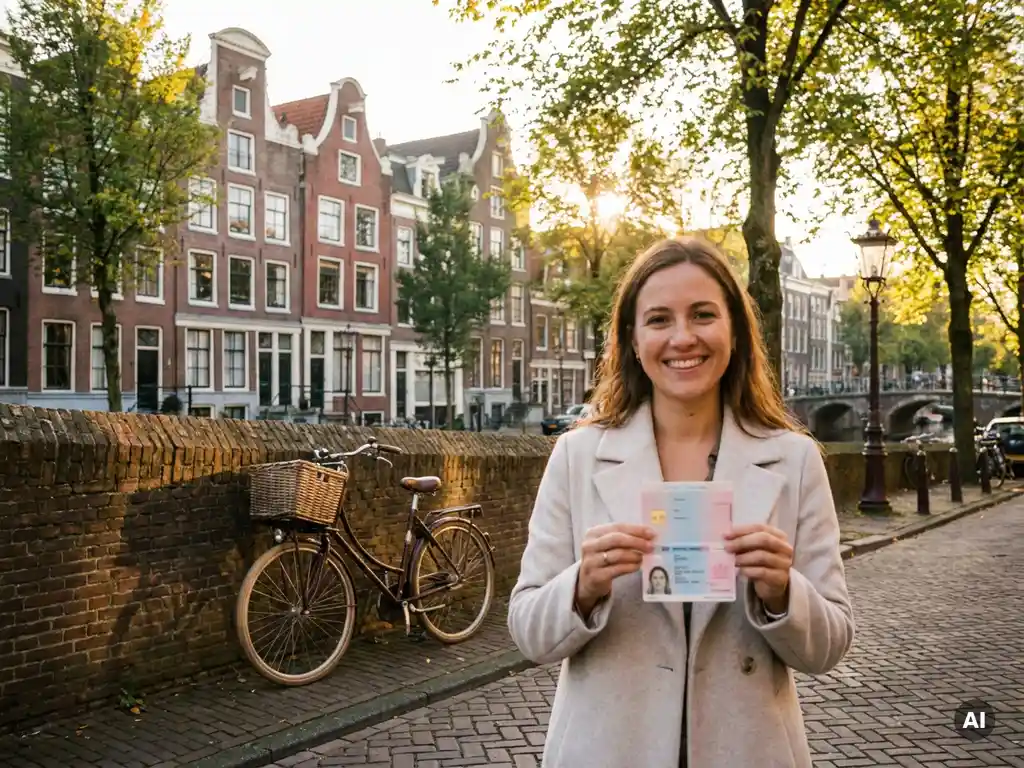
IN Amsterdam is the official expat centre of the City of Amsterdam, providing a single point of contact where internationals can access government services, practical guidance, and referrals to support their relocation to the Netherlands. It operates as a partnership between the municipality of Amsterdam and a network of public and private organisations, including law firms, housing advisers, and international schools, that collectively help expats settle into life in the city. The sections below address the most common questions about what IN Amsterdam does, who qualifies, and where its remit ends.
What services does IN Amsterdam provide to expats?
IN Amsterdam provides a coordinated range of practical services designed to help internationals navigate the administrative and logistical aspects of relocating to Amsterdam. Its core offering is a one-stop-shop model: rather than directing expats to multiple government offices, IN Amsterdam brings key services together under one roof and connects newcomers with vetted partner organisations for matters it does not handle directly.
The services available through IN Amsterdam typically include:
- Municipal registration (BRP, the Personal Records Database), which is required for anyone staying in the Netherlands for more than three months
- DigiD application support, the digital identification system used to access Dutch government services online
- BSN (citizen service number) issuance, which is essential for employment, banking, and healthcare
- Information on housing, healthcare, education, and childcare in Amsterdam
- Referrals to partner organisations for legal advice, tax matters, and financial services
- Guidance on the expat scheme (formerly known as the 30% ruling), which allows qualifying employees to receive a tax-free allowance for extraterritorial costs
- Workshops and information sessions on living and working in the Netherlands
IN Amsterdam also serves as an information hub for employers who are bringing international talent to the Netherlands, offering guidance on the administrative steps involved in onboarding employees from abroad. For expats relocating to the Netherlands, this coordination role can significantly reduce the time and complexity involved in getting established.
Who is eligible to use IN Amsterdam?
IN Amsterdam is available to all internationals who are relocating to or living in the Amsterdam metropolitan area, as well as to the employers and organisations that support them. There is no strict eligibility threshold based on nationality, income, or visa type; the centre is designed to assist the full spectrum of the international community, from highly skilled migrants and corporate transferees to students, diplomats, and their families.
That said, certain services within IN Amsterdam are linked to specific eligibility criteria set by Dutch law or government policy. For example:
- Expat scheme (formerly the 30% ruling): To benefit from this tax facility, an employee must be recruited from outside the Netherlands, possess specific expertise that is scarce in the Dutch labour market, and meet a minimum salary threshold. As of 2026, that threshold is €48,013 per year for most applicants, or €36,497 for those under 30 with a Dutch academic master’s degree or equivalent. The maximum untaxed allowance in 2026 is €78,600.
- Municipal registration (BRP): Required for anyone staying in the Netherlands for more than three months, regardless of nationality or employment status.
- Highly skilled migrant scheme: This is a separate residence permit issued by the IND (Immigration and Naturalisation Service) and is distinct from the expat scheme. Eligibility is determined by the IND, not IN Amsterdam.
Employers who hire international staff can also use IN Amsterdam as a resource, particularly for understanding the administrative obligations that arise when moving to the Netherlands involves bringing employees from outside the European Union.
How does IN Amsterdam differ from the IND?
IN Amsterdam and the IND (Immigratie- en Naturalisatiedienst) serve fundamentally different functions. The IND is the Dutch government body responsible for assessing and issuing residence permits and visas; it is an immigration authority with legal decision-making powers. IN Amsterdam, by contrast, is a service and information centre that helps expats navigate life in Amsterdam once they have arrived or are preparing to arrive; it does not issue permits or make immigration decisions.
In practical terms, the distinction matters considerably for expats in the Netherlands:
- If you need a residence permit, a highly skilled migrant visa, or an MVV (authorisation for temporary stay), you must apply through the IND. The IND has up to 90 days to assess an application and will issue a formal decision in writing.
- If you need to register with the municipality, obtain a BSN, or find out which organisations can assist with housing or legal matters, IN Amsterdam is the appropriate starting point.
- The IND operates nationally; IN Amsterdam is specific to the Amsterdam region, though its guidance is broadly applicable to international relocation in the Netherlands more generally.
Both organisations play a role in the expat journey, but at different stages and for different purposes. IN Amsterdam can point you toward the IND when a residence permit is needed, but it cannot influence or expedite the IND’s decision-making process.
What legal matters does IN Amsterdam not cover?
IN Amsterdam is an information and coordination centre, not a legal services provider. It does not offer legal advice, draft contracts, represent clients in disputes, or advise on the specific legal implications of an individual’s circumstances. For any matter that requires professional legal analysis or representation, expats need to engage a qualified lawyer independently.
Legal matters that fall outside IN Amsterdam’s remit include:
- Employment disputes: Issues such as wrongful dismissal, contract interpretation, or non-compete clauses require specialist employment law advice.
- Rental and property law: Questions about the diplomat clause in a rental agreement, lease termination, or buying a house in the Netherlands as a foreigner involve legal nuances that go beyond general information.
- Business formation: While IN Amsterdam can signpost resources, setting up a business in the Netherlands as a foreigner, including choosing the right legal entity, drafting shareholder agreements, or understanding director liability, requires dedicated legal counsel.
- Immigration appeals and complex permit situations: If an IND application is rejected or a permit situation is complicated, legal representation may be necessary.
- Family law: Matters such as international divorce, child custody across jurisdictions, or inheritance questions are outside IN Amsterdam’s scope.
- Tax advice: Although IN Amsterdam can provide general information about the expat scheme, specific tax planning and compliance questions require a qualified tax adviser or lawyer.
Recognising these boundaries is important. IN Amsterdam is an excellent first port of call for practical orientation, but it is not a substitute for legal advice for expats in the Netherlands when the stakes are high or the situation is complex.
How can a Dutch law firm support expats beyond IN Amsterdam?
A Dutch law firm provides the substantive legal expertise that IN Amsterdam, by design, does not offer. Where IN Amsterdam helps expats understand the landscape and access public services, a law firm advises on the specific legal implications of an individual’s situation, whether that involves negotiating a lease, structuring a business, resolving an employment dispute, or navigating a cross-border family matter.
For expats in Amsterdam, the practical areas where legal support adds the most value include:
- Renting a house in the Netherlands as an expat: Understanding the diplomat clause in a rental agreement, which allows certain tenants to terminate a lease early if they are required to relocate, is a detail that can have significant financial consequences if overlooked.
- Buying a house in the Netherlands as a foreigner: The Dutch property market involves specific legal steps, including the preliminary purchase agreement (voorlopig koopcontract) and notarial transfer, where independent legal review can protect a buyer’s interests.
- Setting up a business: Choosing between a BV (private limited company), a sole proprietorship, or another structure has legal and liability implications that vary depending on the nature of the business and the owner’s personal circumstances.
- Employment contracts and the expat scheme: Ensuring that an employment contract correctly reflects the terms of the expat scheme, and that the employer has obtained the necessary approval from the Dutch Tax Administration, requires careful legal and administrative coordination.
- International relocation to the Netherlands: Cross-border matters, such as the recognition of foreign qualifications, international contracts, or disputes involving parties in multiple jurisdictions, benefit from a firm with both Dutch law expertise and international reach.
How Russell Advocaten supports expats in the Netherlands
Russell Advocaten is an internationally oriented law firm based in Amsterdam with more than 80 years of experience advising expats, international businesses, and foreign governments on Dutch law. The firm is an official partner of IN Amsterdam, reflecting its long-standing commitment to the international community in the city.
For expats, Russell Advocaten offers practical legal support across a broad range of matters, including:
- Immigration and residence permit questions, including complex or disputed situations
- Employment law, from contract review to dismissal disputes and the expat scheme
- Real estate and rental law, including the diplomat clause and property transactions
- Setting up a business in the Netherlands, including company formation and shareholder agreements
- Family law matters with an international dimension
- Contract drafting, review, and dispute resolution
Russell Advocaten’s lawyers communicate fluently in English, Dutch, and German, a practical advantage for expats who are navigating Dutch legal processes without a background in the language. The firm is also part of the Primerus network of 3,000 lawyers across 40 countries, which means cross-border matters can be handled with coordinated international support. Russell Advocaten has been recommended by The Legal 500 for many years, reflecting its standing as a trusted adviser in the Amsterdam legal market.
The information in this article is general in nature and does not constitute legal advice for your specific situation. If you have a legal question related to your life or business in the Netherlands, contact Russell Advocaten to discuss your circumstances with one of our lawyers.
This information is general in nature and does not constitute legal advice for your specific situation; please consult a lawyer at Russell Advocaten for advice tailored to your circumstances.
Veelgestelde vragen
Can I visit IN Amsterdam without an appointment, or do I need to book in advance?
IN Amsterdam generally requires appointments for services such as municipal registration (BRP) and BSN issuance, particularly for first-time registrations. Walk-in availability can vary depending on demand and the specific service required, so it is strongly recommended to check the IN Amsterdam website and book ahead before visiting. Arriving without an appointment may result in a long wait or being turned away, especially during peak relocation periods such as the start of the academic year.
What should I bring to my IN Amsterdam appointment to register with the municipality?
For BRP registration, you will typically need a valid passport or identity document, proof of your address in Amsterdam (such as a rental contract or a declaration from your landlord), and, where applicable, your residence permit or proof of EU citizenship. If you are registering dependants, you will also need their identity documents and any relevant family documents such as birth or marriage certificates, which may need to be officially translated or apostilled. Preparing these documents in advance will help avoid delays or the need for a follow-up appointment.
What happens if my IND residence permit application is rejected — can IN Amsterdam help me appeal?
No, IN Amsterdam does not have the authority or legal capacity to assist with IND appeals or contested permit decisions. If your application is rejected, you have the right to lodge an objection (bezwaar) with the IND within four weeks of the decision, and if that is unsuccessful, you can appeal to an administrative court. Given the legal complexity and the potential consequences of a failed appeal, engaging a qualified immigration lawyer — such as those at Russell Advocaten — is strongly advisable at this stage.
My employer says I qualify for the expat scheme, but I'm not sure the terms are correctly reflected in my contract — what should I do?
This is a common and important concern: even if your employer has obtained approval from the Dutch Tax Administration (Belastingdienst) for the expat scheme, the contractual terms must accurately reflect the arrangement to ensure you actually receive the benefit. A Dutch employment lawyer can review your contract to confirm that the tax-free allowance is correctly structured, that the approval documentation is in order, and that your rights are protected if your employment situation changes. Getting this right from the outset is far easier than correcting errors after the fact.
I'm renting an apartment in Amsterdam — do I really need a lawyer to review my lease, or is a standard contract fine?
Many expats sign standard rental contracts without legal review, but this can be a costly mistake, particularly when it comes to clauses such as the diplomat clause, which may allow you to exit the lease early if you are required to relocate. Dutch rental law also provides tenants with significant statutory protections, and some landlord-drafted clauses may be unenforceable or unfavourable in ways that are not immediately obvious. A brief legal review of your lease before signing can save considerable time, money, and stress if your circumstances change during the tenancy.
I want to start a freelance business in the Netherlands as an expat — where do I begin, and what legal structure should I choose?
The most common structures for expat entrepreneurs in the Netherlands are the eenmanszaak (sole proprietorship) and the BV (besloten vennootschap, or private limited company). The sole proprietorship is simpler and cheaper to set up but offers no liability protection, meaning your personal assets are at risk if the business incurs debts. A BV provides limited liability and is often preferred for higher-revenue activities or where investors are involved, but it involves more administrative and compliance obligations. A Dutch lawyer or notary can help you assess which structure suits your business model, personal circumstances, and long-term goals before you register with the Dutch Chamber of Commerce (KVK).
Does IN Amsterdam offer services in English, and will I be able to manage the entire relocation process without speaking Dutch?
Yes, IN Amsterdam operates primarily in English and is specifically designed to serve the international community, so language is not a barrier when using its services directly. However, as your relocation progresses into areas such as lease negotiations, employment contracts, or legal proceedings, you will encounter Dutch-language documents and processes where professional support in English becomes essential. Working with English-speaking lawyers, tax advisers, and other professionals — many of whom, like Russell Advocaten, communicate fluently in English — ensures that nothing is lost in translation at a critical moment.
Gerelateerde artikelen
- What is a temporary rental contract and how does it work in the Netherlands?
- What are the biggest challenges of moving to the Netherlands?
- Can expats transfer their pension when leaving the Netherlands?
- How do I move to the Netherlands from the US?
- Is an expat considered an immigrant?
Deze inhoud is gegenereerd met behulp van AI en kan fouten bevatten.