

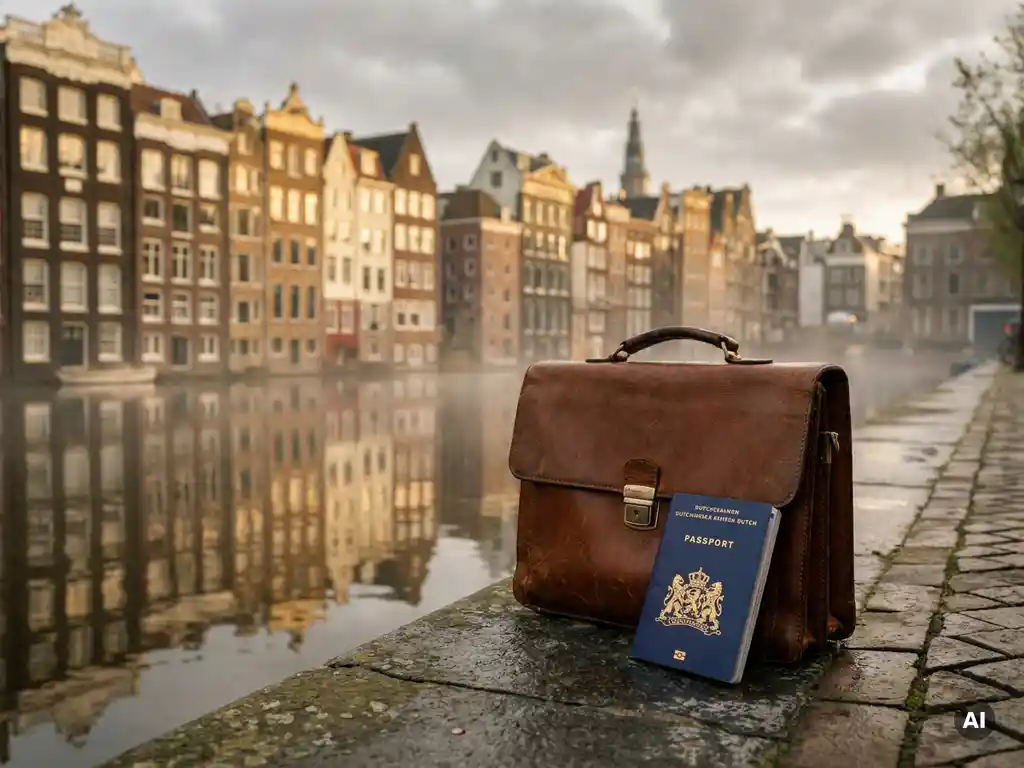
Moving to the Netherlands involves several significant challenges, particularly around immigration compliance, housing law, employment regulations, and business registration. For international professionals and companies relocating staff, the Dutch legal and administrative framework can be complex to navigate without prior knowledge. This article addresses the most common legal and practical questions that arise when relocating to the Netherlands.
What legal steps are required before relocating to the Netherlands?
Before relocating to the Netherlands, the most important legal steps are confirming your right of residence, obtaining any required visa or residence permit, and registering with the relevant Dutch authorities. The specific steps depend on your nationality, the purpose of your stay, and whether you are moving independently or as part of a company transfer.
EU and EEA nationals do not require a residence permit or work permit to live and work in the Netherlands. However, those intending to stay longer than four months must register at their local municipality (gemeente) and be entered in the Personal Records Database (BRP). Non-EU nationals face a more structured process and will generally need to apply for a Machtiging tot Voorlopig Verblijf (MVV), a provisional residence permit, before entering the Netherlands, unless they qualify for an exemption.
Key steps to address before departure include:
- Verifying whether your nationality requires an MVV and which residence permit category applies to your situation
- Ensuring your passport is valid for the intended duration of your stay
- Gathering documentation required for your permit application, including proof of income, a valid employment contract, or a business plan if self-employed
- Arranging health insurance, as this is a legal requirement in the Netherlands
- Confirming whether a tuberculosis test will be required upon arrival
For those relocating for employment, the employer often acts as a sponsor in the residence permit application. It is advisable to confirm the timeline with the IND (Immigration and Naturalisation Service), as processing times can vary and delays may affect your start date.
How does the Dutch immigration and permit system work?
The Dutch immigration and permit system is administered by the IND and operates through a range of residence permit categories, each tied to a specific purpose of stay. Common categories include permits for highly skilled migrants, employees, self-employed persons, students, partners, and start-up entrepreneurs. Each category carries its own requirements, income thresholds, and conditions.
For non-EU nationals, the process typically follows the TEV procedure (Toegang en Verblijf), in which the Dutch employer or sponsor submits an application to the IND on behalf of the applicant. Once approved, the applicant collects their MVV from the Dutch embassy or consulate in their home country, travels to the Netherlands, and then collects their residence document from an IND desk within two weeks of arrival.
The highly skilled migrant permit
One of the most relevant permit categories for international professionals is the highly skilled migrant permit (kennismigrant). This permit is available to non-EU nationals employed by a recognised IND sponsor, typically a Dutch company or institution, who meet a minimum salary threshold. The threshold varies depending on age and is updated periodically. This route is often used by multinationals relocating senior staff to the Netherlands.
The 30% ruling
Closely linked to the highly skilled migrant route is the 30% ruling, a Dutch tax facility that allows qualifying international employees to receive up to 30% of their gross salary as a tax-free allowance, intended to cover extraterritorial costs. Eligibility depends on specific conditions, including salary thresholds and the requirement that the employee was recruited from abroad. The rules around the 30% ruling in the Netherlands have been subject to legislative change, and the current conditions should be verified with a qualified adviser before relying on this facility.
What are the biggest bureaucratic hurdles for expats in the Netherlands?
The biggest bureaucratic hurdles for expats in the Netherlands are municipality registration, the DigiD digital identity system, and navigating the interaction between multiple government agencies. Each step in the settlement process tends to depend on the previous one, which means delays in one area can create a chain of complications.
In practice, expats frequently encounter the following challenges:
- BRP registration: All residents staying longer than four months must register at their local municipality. Without BRP registration, it is difficult to open a bank account, arrange health insurance, or access government services.
- DigiD: The Dutch government’s digital authentication system is required for a wide range of administrative tasks, from filing tax returns to communicating with the IND. Obtaining a DigiD requires a BSN (citizen service number), which is issued upon BRP registration.
- Health insurance: Residents are legally required to take out Dutch basic health insurance (basisverzekering) within four months of registration. Failure to do so can result in fines.
- Integration requirements: Some permit holders are required to pass an integration exam (inburgeringsexamen). Notification of this obligation comes from DUO (the Dutch Ministry of Education, Culture and Science), and there are deadlines that must be met.
- Maintaining main residence: Permit holders must maintain their main residence in the Netherlands. Extended periods abroad, the permitted duration depends on the type of permit, can trigger a review by the IND and potentially lead to the withdrawal of a residence permit.
Understanding these interdependencies in advance can significantly reduce the administrative burden of settling in the Netherlands.
What employment law issues should international hires be aware of?
International hires in the Netherlands should be aware that Dutch employment law is strongly protective of employees, and its provisions apply regardless of what the employment contract states or which law the parties have chosen to govern the agreement. Key areas of attention include contract types, notice periods, dismissal law, and the interaction between Dutch law and any home-country employment arrangements.
Dutch employment law distinguishes between fixed-term and permanent contracts, with specific rules governing the transition from one to the other. After three consecutive fixed-term contracts, or after a cumulative period of three years, an employee generally acquires a permanent contract by operation of law. Termination of a permanent contract requires either approval from the UWV (Employee Insurance Agency) or a court order, unless the parties agree to a settlement. Unilateral dismissal without following the correct procedure is not valid under Dutch law.
For internationally mobile employees, the following issues frequently arise:
- The applicability of Dutch mandatory law provisions, even where a foreign law governs the contract
- Entitlement to a transition payment (transitievergoeding) upon dismissal, which is calculated on the basis of the employee’s salary and length of service
- The treatment of equity compensation, bonuses, and benefits under Dutch law
- Works council (ondernemingsraad) rights, which may apply to companies with 50 or more employees in the Netherlands
Companies relocating staff to the Netherlands are advised to review their employment contracts carefully to ensure compliance with Dutch mandatory provisions before the employee commences work.
How does housing law in the Netherlands affect newcomers?
Housing law in the Netherlands affects newcomers primarily through the rules governing rental contracts, tenant protections, and, for those purchasing property, the legal requirements of the Dutch conveyancing process. The Dutch rental market is highly regulated, and understanding the legal framework is essential before signing any agreement.
Rental contracts in the Netherlands are governed by the Dutch Civil Code, which provides tenants with significant protections. Landlords cannot terminate a rental agreement without a legally valid ground, and certain types of rent increases are subject to statutory limits. For expats, one particularly relevant provision is the diplomat clause (diplomatenbeding). This contractual clause allows a landlord who is temporarily abroad to reclaim their property upon return, even if the tenant would otherwise have security of tenure. Expats renting from private landlords who are abroad should be aware of this clause and its implications for the security of their tenancy.
For those considering buying a house in the Netherlands as a foreigner, the process involves several legally significant steps:
- A preliminary purchase agreement (voorlopig koopcontract) is signed, which is legally binding subject to a three-day cooling-off period
- A notary (notaris) is required to transfer legal ownership; this is not optional in the Netherlands
- Mortgage applications are subject to Dutch income and affordability requirements, which may differ from those in the buyer’s home country
- Transfer tax (overdrachtsbelasting) applies to most property purchases, with the rate depending on the buyer’s circumstances and intended use of the property
The Dutch housing market, particularly in Amsterdam, is competitive. Taking time to inspect properties carefully, understanding the legal obligations attached to a purchase, and consulting a qualified real estate lawyer before committing are all prudent steps when renting a house in the Netherlands as an expat or buying a house in the Netherlands as a foreigner.
When should an expat or relocating business seek legal advice in the Netherlands?
An expat or relocating business should seek legal advice in the Netherlands as early as possible in the relocation process, ideally before signing any employment contract, lease agreement, or business registration documents. Early legal advice helps identify obligations and risks that may not be apparent from the documents themselves.
Specific situations that warrant professional legal guidance include:
- Reviewing or negotiating an employment contract that will be governed by Dutch law
- Assessing eligibility for the 30% ruling or other tax facilities for international employees
- Setting up a business in the Netherlands as a foreigner, including choosing the appropriate legal entity and understanding director liability
- Negotiating or reviewing a commercial or residential lease, particularly where a diplomat clause or break clause is involved
- Navigating a residence permit application or renewal, particularly where the circumstances are complex
- Resolving a dispute with an employer, landlord, or business partner under Dutch law
For businesses, the threshold for seeking advice should be lower still. Dutch employment law, works council obligations, and regulatory requirements can create significant exposure for companies that are unfamiliar with the local legal landscape.
How Russell Advocaten supports expats and international businesses in the Netherlands
Russell Advocaten Amsterdam is an internationally oriented law firm with decades of experience advising expats and foreign businesses operating in the Netherlands. The firm’s lawyers are fluent in English, German, and Dutch, which means international clients can communicate clearly and confidently throughout the legal process.
Russell Advocaten’s expat legal services cover the full range of issues that arise when relocating to or operating in the Netherlands, including:
- Immigration and residence permit advice
- Employment contract review and Dutch employment law compliance
- Setting up a business in the Netherlands, including company formation and director liability
- Residential and commercial real estate, including lease negotiation and the diplomat clause
- Contract drafting and dispute resolution
- Family law matters relevant to international relocations
The firm is an official partner of IN Amsterdam, the expat centre of the municipality of Amsterdam, and is consistently recommended by The Legal 500 for its quality of legal services. Russell Advocaten also organises regular workshops on Dutch law for expats, providing practical guidance on the issues that matter most to the international community in Amsterdam.
Whether you are an individual professional relocating to the Netherlands or a company establishing a Dutch presence, early legal advice can prevent costly mistakes and ensure your position is properly protected. Contact Russell Advocaten to discuss your situation with an experienced international lawyer.
This information is general in nature and does not constitute legal advice for your specific situation; for that, please consult a lawyer at Russell Advocaten.
Veelgestelde vragen
How long does it typically take to get a residence permit approved in the Netherlands?
Processing times vary depending on the permit category and the completeness of your application. For the highly skilled migrant permit submitted through a recognised IND sponsor, the IND aims to decide within two weeks. More complex applications, such as those for self-employed persons or start-up entrepreneurs, can take up to three months or longer. It is strongly advisable to begin the application process well before your intended start date to avoid disruptions to your employment or relocation timeline.
Can I work in the Netherlands while my residence permit application is still being processed?
In most cases, non-EU nationals cannot begin working in the Netherlands until their residence permit has been granted, unless a specific bridging arrangement applies. Some permit categories allow for a provisional work authorisation while the application is pending, but this depends on the circumstances and must be confirmed with the IND or a qualified immigration lawyer. Starting work without the correct authorisation can jeopardise both your permit application and your employer’s recognised sponsor status.
What happens to my residence permit if I change employers in the Netherlands?
If your residence permit is tied to a specific employer, such as the highly skilled migrant permit, changing jobs generally requires a new permit application linked to your new employer. You cannot simply transfer your existing permit to a new sponsor. Your new employer must be a recognised IND sponsor, and the application should ideally be submitted before you leave your current role to avoid a gap in your legal right to work. Failing to notify the IND of a change in employment circumstances can result in permit complications or withdrawal.
What is the difference between a fixed-term and a permanent employment contract in the Netherlands, and why does it matter for expats?
A fixed-term contract has a defined end date and expires automatically, while a permanent contract offers ongoing employment with strong dismissal protections under Dutch law. For expats, the distinction is particularly important because after three consecutive fixed-term contracts or a cumulative period of three years with the same employer, Dutch law automatically converts the arrangement into a permanent contract. This means that even if your contract is drafted under a foreign law, Dutch mandatory provisions may still apply and could significantly affect your rights and your employer’s obligations if the relationship ends.
Are there common mistakes expats make when renting a property in the Netherlands?
One of the most frequent mistakes is signing a rental contract without fully understanding its legal implications, particularly clauses such as the diplomat clause, which can allow a landlord to reclaim the property with relatively short notice. Another common error is failing to document the condition of the property at the start of the tenancy with a signed inspection report, which can lead to disputes over the deposit at the end of the lease. Expats should also verify whether the rent charged falls within the legal limits for the property type, as overcharging in the social housing sector is regulated and can be challenged.
What legal structure should I choose when setting up a business in the Netherlands as a foreigner?
The most common legal entity for foreign entrepreneurs and companies establishing a Dutch presence is the besloten vennootschap (BV), which is broadly equivalent to a private limited company. It offers limited liability for shareholders and is widely recognised by Dutch banks, clients, and government agencies. Sole traders may also register as a eenmanszaak (sole proprietorship), though this does not provide the same liability protection. The right choice depends on factors including your business model, tax position, number of shareholders, and whether you intend to employ staff, so consulting a lawyer or notary before registering is advisable.
How do I know if I qualify for the 30% ruling, and what should I do if my eligibility is uncertain?
To qualify for the 30% ruling, you must generally be recruited from abroad, hold a specific expertise that is scarce in the Dutch labour market, and meet a minimum salary threshold that is updated annually. The rules have undergone legislative changes in recent years, including a cap on the tax-free allowance and a phased reduction introduced for existing claimants, so the current conditions may differ from what you have read in older sources. If your eligibility is uncertain, particularly if you have previously lived or worked in the Netherlands or your salary is close to the threshold, you should seek advice from a Dutch tax adviser or employment lawyer before relying on this facility in your financial planning.
Gerelateerde artikelen
- What legal advice do expats need when moving to the Netherlands?
- Can expats apply for Dutch citizenship and what are the requirements?
- How do Dutch tenant protection laws affect expats?
- What rights do expats have as tenants in the Netherlands?
- Who benefits most from the 30% ruling?
Deze inhoud is gegenereerd met behulp van AI en kan fouten bevatten.