

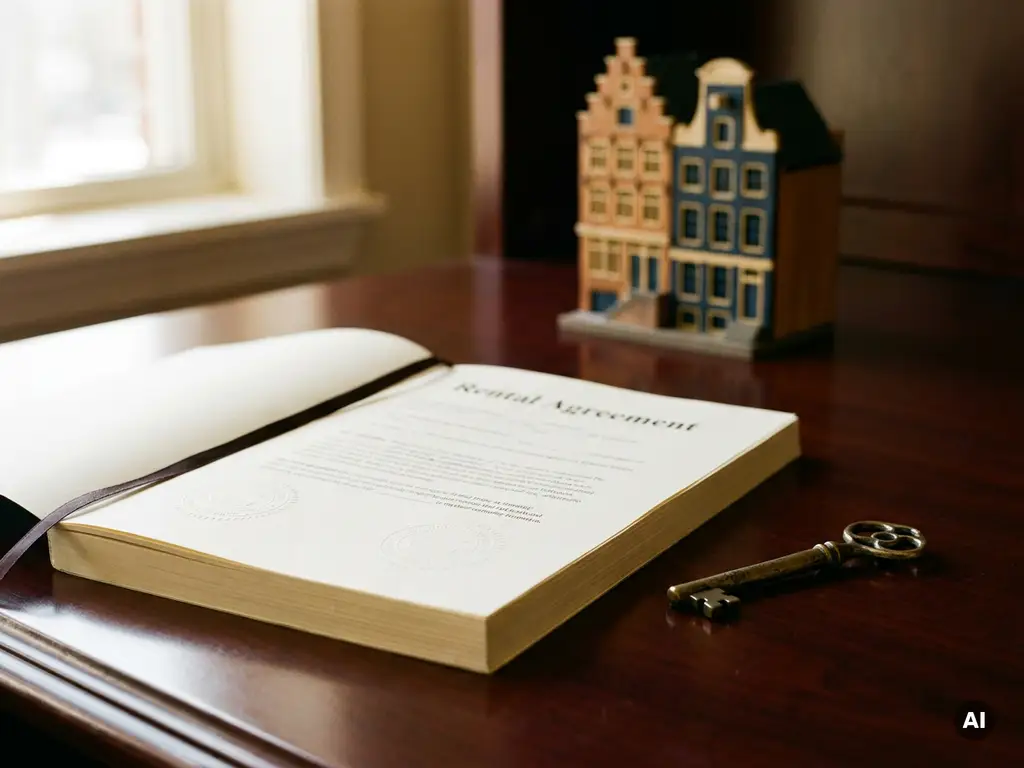
The diplomat clause is legal in Dutch rental agreements, but only under specific conditions set out in Dutch tenancy law. It is not a standard clause that landlords can insert freely into any contract, as its validity depends on the type of rental agreement, the correct wording, and compliance with the legal requirements that govern temporary tenancy. The sections below address the most common questions landlords and tenants raise about this clause.
What conditions must be met for a diplomat clause to be valid?
A diplomat clause is valid in the Netherlands when the landlord intends to return to the property for personal use and includes the clause in a fixed-term rental agreement that complies with Dutch tenancy law. The clause must be agreed upon in writing before the tenancy begins, and the landlord’s intention to reclaim the property must be genuine and demonstrable at the time of signing.
Dutch tenancy law offers tenants strong protection against eviction, which means that any clause designed to limit those protections is subject to strict scrutiny. For a diplomat clause to hold up legally, the following conditions generally apply:
- The landlord must have a concrete and credible reason for needing the property back, typically a temporary posting abroad or a period of international relocation.
- The clause must be included in a written rental agreement before the tenancy commences, not added later.
- The agreement must specify the period during which the landlord intends to be absent and the anticipated date of return.
- The clause must comply with the applicable provisions of the Dutch Civil Code (Burgerlijk Wetboek), particularly those governing temporary tenancy and tenant protection.
- The landlord must notify the tenant in writing, within the timeframe stipulated by law, of the intention to reclaim the property.
If any of these conditions are not met, a court may disregard the clause entirely and grant the tenant continued occupancy rights. Given the complexity of these requirements, the precise wording and timing of the clause are critical.
Which types of rental agreements can include a diplomat clause?
A diplomat clause can only be included in fixed-term rental agreements for residential property where the landlord has a legitimate, temporary reason for vacating the property. It is not suitable for indefinite tenancy agreements, nor can it be applied to social housing or properties where the landlord has no intention of returning to live there personally.
In practice, the diplomat clause is most commonly used in agreements for owner-occupied homes that the landlord is temporarily vacating, for example, due to an international assignment or a posting abroad. The clause is specifically designed to protect the landlord’s right to reclaim the property upon return, without the tenant being able to invoke standard security of tenure.
It is important to note that the diplomat clause is not interchangeable with other forms of temporary rental. Dutch law distinguishes between several types of fixed-term arrangements, and the legal basis for each differs. Using the wrong type of agreement, or applying a diplomat clause where it does not legally apply, can result in the clause being unenforceable. Landlords renting out investment properties, for instance, generally cannot rely on a diplomat clause, as they lack the personal occupancy requirement that underpins its legal validity.
What happens if a diplomat clause does not meet legal requirements?
If a diplomat clause does not meet the legal requirements under Dutch tenancy law, it is likely to be declared void or unenforceable by a court. In that scenario, the tenant may be entitled to remain in the property under the standard rules of tenant protection, which can make it significantly more difficult and costly for the landlord to regain possession.
The consequences for landlords can be substantial:
- The tenant may successfully contest an eviction notice, leaving the landlord unable to reclaim the property on the anticipated date.
- Court proceedings to recover the property can be lengthy and expensive.
- If the clause was included in bad faith, for example, if the landlord had no genuine intention of returning, this may further weaken the landlord’s legal position.
- In some cases, the landlord may be liable for damages if the tenant suffers loss as a result of an unlawful eviction attempt.
It is worth emphasising that Dutch courts apply tenant protection rules strictly. A poorly drafted or legally deficient diplomat clause does not simply become a minor contractual issue, it can fundamentally alter the rights and obligations of both parties for the duration of the tenancy. The outcome will always depend on the specific circumstances of the case, and professional legal advice is strongly recommended before relying on such a clause.
How does the diplomat clause differ from other temporary rental arrangements?
The diplomat clause differs from other temporary rental arrangements primarily in its legal basis and purpose. While other fixed-term agreements may limit tenancy duration on general grounds, the diplomat clause is specifically tied to the landlord’s personal intention to return to the property. This makes it a narrower and more specific instrument, with stricter conditions attached to its use.
Dutch tenancy law provides several mechanisms for temporary rental, each with its own legal framework:
- Fixed-term tenancy under Article 7:271a of the Dutch Civil Code: Allows a landlord to rent out a property for a maximum of two years (for independent dwellings) without the tenant acquiring security of tenure, provided the agreement is not renewed. This does not require a personal occupancy reason.
- Diplomat clause: Requires a genuine, demonstrable intention by the landlord to return and occupy the property personally. It is not subject to the same two-year cap, but the conditions for its validity are more demanding.
- Vacancy law (Leegstandwet): Applies to properties that are for sale or awaiting demolition or renovation, and requires a permit from the local authority. It is not relevant where the landlord intends to return to live in the property.
The diplomat clause is therefore not a general-purpose tool for short-term letting. Its use is justified only in a specific factual context, typically where an owner-occupier is temporarily abroad and wishes to rent out their home in the interim. Landlords who do not meet that profile should consider which alternative legal mechanism is appropriate for their situation.
When should landlords seek legal advice before including a diplomat clause?
Landlords should seek legal advice before including a diplomat clause whenever there is any uncertainty about whether the conditions for its valid use are met. Given that an invalid clause can result in the loss of the right to reclaim the property, obtaining professional guidance before signing the rental agreement is far more cost-effective than attempting to remedy a defective clause after the fact.
In particular, legal advice is advisable in the following situations:
- The landlord is unsure whether their reason for vacating the property qualifies as a legitimate basis for the clause.
- The intended rental period is uncertain or may need to be extended.
- The property is located in a regulated rental market, where additional rules may apply.
- The tenant is an expat or international professional, and the agreement involves cross-border elements, for example, where the tenant is renting a house in the Netherlands as part of an international relocation.
- The landlord has previously rented out the property and is unsure whether earlier agreements affect the current tenancy.
The specific circumstances of each rental situation can significantly affect whether a diplomat clause will be enforceable. Dutch tenancy law is detailed and subject to ongoing development, which means that general information, however thorough, cannot substitute for advice tailored to the landlord’s individual position.
How Russell Advocaten can assist with the diplomat clause
Russell Advocaten is an internationally oriented law firm based in Amsterdam, with extensive experience in real estate and tenancy law, contracts, and matters involving international clients. The firm’s lawyers communicate equally fluently in English, German, and Dutch, a practical advantage for landlords and tenants navigating Dutch rental law in an international context.
For landlords and tenants with questions about the diplomat clause, Russell Advocaten offers:
- Assessment of whether a diplomat clause is legally valid in a specific rental situation
- Drafting and reviewing rental agreements to ensure the clause meets all statutory requirements
- Advice on alternative temporary rental arrangements where the diplomat clause is not appropriate
- Assistance in disputes arising from a contested or invalid diplomat clause
- Legal support for expats and international clients dealing with tenancy issues as part of their relocation to the Netherlands
With more than 80 years of experience and a longstanding recommendation by the Legal 500, Russell Advocaten provides reliable, high-quality legal counsel to businesses, directors, and international clients. Whether you are a landlord preparing to rent out your home during a posting abroad, or a tenant seeking clarity on your rights, the firm’s specialists can provide the guidance you need. Contact Russell Advocaten to discuss your situation.
This information is general in nature and does not constitute legal advice for your specific situation. Please consult a lawyer at Russell Advocaten for advice tailored to your circumstances.
Veelgestelde vragen
Can a tenant challenge a diplomat clause after the rental agreement has already been signed?
Yes, a tenant can challenge a diplomat clause at any point during the tenancy, including after signing, if they believe the clause does not meet the legal requirements under Dutch tenancy law. A court will assess whether the clause was validly included at the time of signing, whether the landlord’s stated reason was genuine, and whether all procedural requirements were followed. If the clause is found to be defective, the tenant may be entitled to continued occupancy regardless of what the agreement states. Tenants who have doubts about the validity of a diplomat clause in their agreement should seek legal advice promptly, particularly if they have received a notice to vacate.
What written notice must a landlord give a tenant when invoking the diplomat clause?
When invoking a diplomat clause, the landlord must notify the tenant in writing within the timeframe specified in the rental agreement and in accordance with Dutch tenancy law, typically at least three months before the intended end date of the tenancy. The notice must clearly state the landlord’s intention to reclaim the property for personal use and should reference the diplomat clause as the legal basis. Failing to provide timely or properly worded notice is one of the most common reasons a diplomat clause fails in practice. Landlords should ensure the notice is sent by registered post or another verifiable method to avoid disputes about whether it was received.
What happens if the landlord's circumstances change and they no longer need to return to the property?
If the landlord’s circumstances change — for example, if the posting abroad is extended indefinitely or the landlord decides not to return — this can significantly affect the enforceability of the diplomat clause and the landlord’s right to reclaim the property. Dutch courts will assess whether the landlord’s original intention to return was genuine and whether the change in circumstances is credible. In some cases, the landlord may need to negotiate a new agreement with the tenant or accept that the tenancy continues under standard protection rules. It is strongly advisable to inform the tenant promptly and seek legal advice before taking any steps to end the tenancy in such situations.
Can a diplomat clause be used for a property that is rented out furnished versus unfurnished?
The furnished or unfurnished nature of the property does not in itself determine whether a diplomat clause can be used — what matters is whether the legal conditions for the clause are met, particularly the landlord’s genuine intention to return and personally occupy the property. However, furnished rentals are common in diplomat clause situations, as owner-occupiers typically leave their belongings in the home during a temporary absence abroad. It is worth noting that furnished and unfurnished rentals may be subject to different rent regulation rules, particularly under the Dutch points-based rent assessment system, which can affect other aspects of the agreement. A lawyer can advise on how these factors interact in your specific situation.
Is a diplomat clause enforceable if the tenant is an expat on a short-term assignment?
The enforceability of a diplomat clause depends on whether the clause itself meets all legal requirements under Dutch tenancy law, not on the nationality or employment status of the tenant. However, renting to an expat on a short-term international assignment can introduce additional complexities, such as cross-border elements, language considerations, and the possibility that the tenant may need to leave the Netherlands earlier than expected. These factors should be addressed clearly in the rental agreement to avoid disputes. Landlords and expat tenants alike benefit from having the agreement reviewed by a lawyer familiar with both Dutch tenancy law and the practical realities of international relocations.
What are the most common mistakes landlords make when drafting a diplomat clause?
The most common mistakes include using a generic or template clause that does not reflect the landlord’s specific circumstances, failing to specify the anticipated period of absence and return date, and inserting the clause into an agreement type where it is not legally applicable, such as an indefinite tenancy. Another frequent error is not providing the required written notice to the tenant within the legally prescribed timeframe when the time comes to reclaim the property. Landlords sometimes also underestimate the importance of being able to demonstrate their genuine intention to return, which courts will scrutinise closely if the clause is contested. Having the agreement professionally drafted or reviewed before signing is the most effective way to avoid these pitfalls.
How far in advance should a landlord start preparing the rental agreement if they plan to use a diplomat clause?
Ideally, a landlord should begin preparing the rental agreement — including the diplomat clause — several weeks before the intended start of the tenancy, to allow sufficient time for legal review, negotiation with the prospective tenant, and any necessary adjustments to the wording. Rushing the process increases the risk of errors in the clause that could render it unenforceable later. If the landlord is preparing for an international posting, it is practical to initiate the legal process at the same time as other relocation arrangements, so that the rental agreement is finalised before departure. Starting early also allows time to explore alternative arrangements if the diplomat clause turns out not to be the most appropriate option for the landlord’s situation.
Gerelateerde artikelen
- What is the cost of living for expats in Amsterdam in 2026?
- When can a landlord use the diplomat clause in the Netherlands?
- Why is finding housing so difficult for expats in Amsterdam?
- Can I get a job in the Netherlands if I only speak English?
- Can a US citizen move to the Netherlands?
Deze inhoud is gegenereerd met behulp van AI en kan fouten bevatten.