

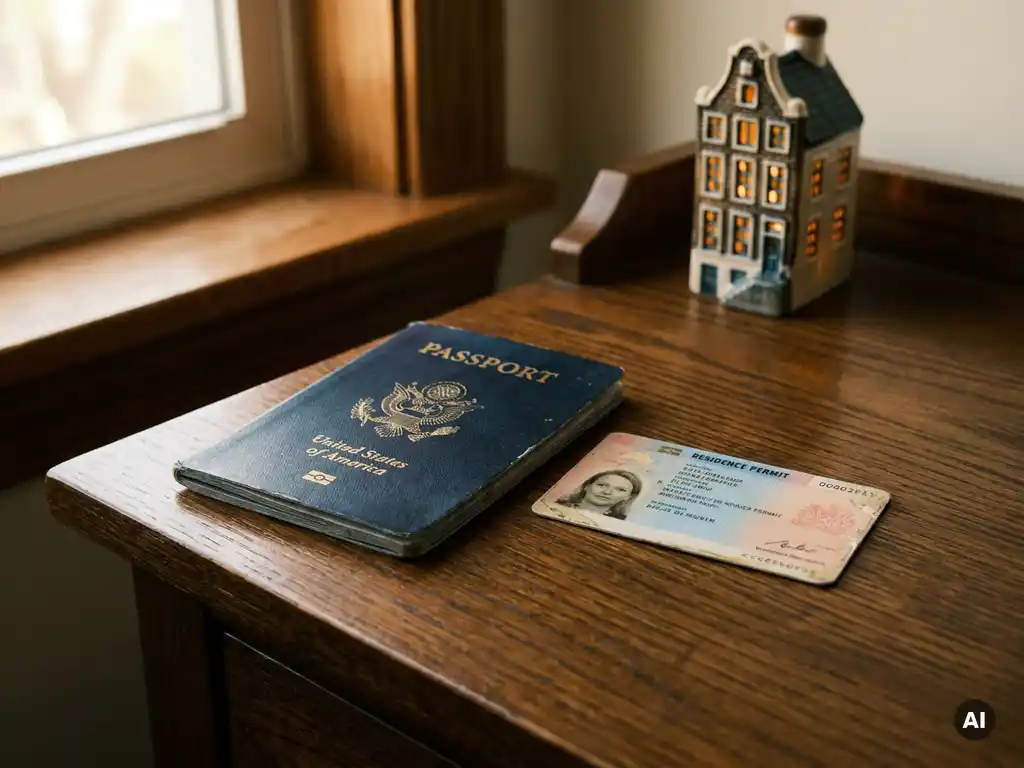
Yes, a US citizen can move to the Netherlands. Unlike many non-EU nationals, Americans benefit from a visa-free entry arrangement that allows them to enter the Netherlands without a short-stay visa, though a residence permit is required for stays longer than 90 days. The pathway available to you depends primarily on your purpose of stay, whether you are relocating for work, to start a business, or to join a partner. The sections below address the most common questions American nationals ask when planning a move to the Netherlands.
Do US citizens need a visa to live in the Netherlands?
US citizens do not need a short-stay visa to enter the Netherlands for visits of up to 90 days within any 180-day period. However, anyone intending to live, work, or study in the Netherlands for longer than 90 days must apply for a Dutch residence permit. Americans are exempt from the MVV (Machtiging tot Voorlopig Verblijf), the entry visa that many other nationalities must obtain before travelling to the Netherlands, which simplifies the initial step considerably.
Once in the Netherlands, the residence permit application is submitted to the Immigration and Naturalisation Service (IND). The type of permit required depends on your purpose of stay: employment, self-employment, study, family reunification, or another recognised category. Regardless of the permit type, all applicants must hold a valid passport, must not pose a risk to public order or national security, and are generally required to demonstrate sufficient and sustainable income.
After arriving, all internationals who intend to stay longer than three months must register at their local municipality (gemeente) and be entered in the Personal Records Database (BRP). Some permit holders are also required to take a tuberculosis test within three months of arrival.
What is the highly skilled migrant route for Americans?
The highly skilled migrant (kennismigrant) route is one of the most accessible pathways for US citizens relocating to the Netherlands for employment. Under this scheme, a Dutch employer who is a recognised IND sponsor recruits a qualifying foreign national and applies for the residence permit on their behalf. The permit is tied to that employment relationship, meaning the employer plays a central role throughout the process.
To qualify as a highly skilled migrant in 2026, your gross annual salary must meet the applicable threshold set by the IND. These thresholds are updated annually. Highly skilled migrants who qualify may also be eligible for the 30% ruling (officially the expat scheme), a significant tax facility discussed separately below.
For Americans who have recently graduated from a university, the orientation year (zoekjaar) offers an alternative route. This residence permit allows highly educated recent graduates to live in the Netherlands for up to one year while searching for suitable employment. If employment is secured during that period, the permit can be converted to a highly skilled migrant permit, provided all conditions are met.
Can a US citizen start a business or freelance in the Netherlands?
A US citizen can start a business or work as a freelancer in the Netherlands, but doing so requires a specific residence permit. The two most relevant options are the self-employment residence permit and the start-up visa, depending on the stage and nature of the business.
Self-employment residence permit
The self-employment permit is intended for established entrepreneurs and freelancers. Applicants must demonstrate that their business activity provides a substantial benefit to the Dutch economy. This assessment is carried out by the Netherlands Enterprise Agency (RVO), which evaluates points across three areas: personal experience (training, entrepreneurship, and work history), business value (market analysis, product or service viability, and financing), and added value for the Netherlands (such as innovation, employment creation, or investment). Applicants must also meet the applicable income requirements and register their business with the Dutch Chamber of Commerce (KvK).
Start-up visa
The start-up visa is designed for innovative entrepreneurs at an earlier stage. It is valid for one year and requires applicants to work with a recognised facilitator, an experienced business mentor organisation approved by the RVO. The product or service must be demonstrably innovative, and the applicant must be an active participant in the company rather than a passive investor. A solid business plan, sufficient personal financial resources, and registration with the Chamber of Commerce are all required. After the start-up year, entrepreneurs who have built a viable business may transfer to a self-employment permit.
For expats in the Netherlands considering self-employment, it is worth noting that freelancers working in regulated professions, such as healthcare, must also meet sector-specific registration requirements, such as enrolment in the BIG register.
How long does the Dutch residence permit process take?
Processing times for Dutch residence permits vary depending on the type of permit and individual circumstances. For highly skilled migrant permits submitted by a recognised sponsor employer, the IND typically processes applications within two to four weeks. For self-employment and start-up permits, the timeline is longer, as the RVO assessment adds additional steps. Family reunification applications, including those for partners joining a US citizen already residing in the Netherlands, are processed within approximately three months on average.
Once a permit is approved, the applicant collects their residence document from an IND Desk within two weeks of arriving in the Netherlands. Residence permits are issued for a maximum duration of five years. Renewal notifications are generally sent three months before expiry, and it is essential to initiate the renewal process before the current permit lapses to avoid any period of unlawful stay.
It is also important to maintain your main residence in the Netherlands throughout the permit period. The IND may assume that you have relocated your main residence abroad, and may withdraw or decline to renew your permit, if, for example, you are absent from the Netherlands for longer than permitted, are deregistered from the BRP, or your home has been let to others.
What are the tax implications of moving to the Netherlands as a US citizen?
Moving to the Netherlands as a US citizen involves a dual layer of tax considerations. The Netherlands levies income tax on residents, while the United States taxes its citizens on worldwide income regardless of where they live. This means that American expats in the Netherlands are generally required to file tax returns in both countries, though tax treaties and foreign tax credits are designed to mitigate double taxation in many situations.
One particularly relevant arrangement for qualifying expats in Amsterdam and elsewhere in the Netherlands is the 30% ruling (expat scheme). This facility allows eligible employees to receive up to 30% of their gross salary as a tax-free allowance, intended to compensate for the additional costs of relocating from abroad. To qualify in 2026, the following general conditions apply:
- You are in paid employment with a Dutch employer who is a recognised sponsor.
- Your specific expertise is scarce on the Dutch labour market, evidenced by a gross annual salary exceeding €48,013 (2026 threshold for standard cases).
- If you are under 30 and hold a Dutch academic master’s degree or equivalent, the salary threshold is €36,497 for 2026.
- You have been recruited from outside the Netherlands and lived more than 150 kilometres from the Dutch border for at least 16 of the 24 months prior to your first working day in the Netherlands.
- You hold a valid decision from the Dutch Tax and Customs Administration (Belastingdienst) approving the scheme, which is applied for jointly by you and your employer.
The 30% ruling is valid for up to five years. Researchers at designated facilities and doctors in specialist training may qualify regardless of their salary level. Given the complexity of US-Dutch tax obligations, it is strongly advisable to seek specialist advice from both a Dutch tax adviser and a US tax professional familiar with expatriate taxation before and after relocating.
How Russell Advocaten can help US citizens relocating to the Netherlands
Russell Advocaten is an internationally oriented law firm based in Amsterdam, with extensive experience advising expats on the legal aspects of living, working, and doing business in the Netherlands. The firm’s lawyers communicate equally fluently in English, German, and Dutch, a practical advantage for US citizens navigating an unfamiliar legal system. Russell Advocaten is an official partner of IN Amsterdam, the expat centre of the Municipality of Amsterdam, which reflects the firm’s long-standing commitment to the international community in the city.
For US citizens considering a move to the Netherlands, Russell Advocaten offers legal support across a broad range of relevant areas, including:
- Immigration and residence permits – guidance on the applicable permit category, eligibility conditions, and the overall process.
- Setting up a business – legal advice on business structures, the self-employment permit, and the start-up visa route.
- Employment law – support for both employees and employers on Dutch employment contracts, working conditions, and the 30% ruling application process.
- Renting a house in the Netherlands as an expat – advice on lease agreements, tenant and landlord rights, and real estate transactions.
- Contracts and family law – assistance with a wide range of personal and commercial legal matters that arise when relocating internationally.
Every situation is different, and the legal pathway that suits one American relocating to Amsterdam may not be appropriate for another. Russell Advocaten provides tailored advice based on your specific circumstances rather than generic guidance. If you are planning a move to the Netherlands and would like to understand your legal position, contact Russell Advocaten to arrange a consultation.
This information is general in nature and does not constitute legal advice for your specific situation. Please consult a lawyer at Russell Advocaten for advice tailored to your circumstances.
Veelgestelde vragen
Can I bring my spouse or children to the Netherlands when I relocate?
Yes, US citizens holding a valid Dutch residence permit can apply for family reunification to bring their spouse, registered partner, or dependent children to the Netherlands. The main applicant must meet specific income requirements — generally earning at least 100% of the Dutch social assistance norm — to sponsor family members. Family members who are granted a residence permit under family reunification are typically issued a permit tied to the main applicant’s permit, so it is important to maintain your own permit status to protect theirs as well.
What happens if I lose my job in the Netherlands while on a highly skilled migrant permit?
If you lose your job while on a highly skilled migrant permit, you have a grace period of up to three months to find a new qualifying employer before your permit is at risk of being withdrawn. During this period, you must notify the IND of the change in your employment situation. It is strongly advisable to begin searching for a new recognised sponsor employer immediately and to seek legal advice promptly, as the IND must be kept informed and the transition to a new employer requires a new permit application.
Do I need to speak Dutch to get a residence permit or live in the Netherlands?
Dutch language proficiency is not a requirement for obtaining most residence permits, including the highly skilled migrant, self-employment, and start-up permits. However, if you later apply for a permanent residence permit or Dutch citizenship, you will generally need to demonstrate Dutch language skills at the B1 level of the Common European Framework of Reference (CEFR). Starting language classes early in your stay is a practical step that will also ease day-to-day life and integration into Dutch society.
Can I travel freely within Europe once I have a Dutch residence permit?
A Dutch residence permit does not automatically grant you the right to live or work in other EU member states, but it does allow you to travel within the Schengen Area for short stays of up to 90 days within any 180-day period without an additional visa. Keep in mind that as a US citizen you are still required to file US tax returns regardless of where you travel or reside, so extended stays in other countries can have additional tax and legal implications worth discussing with a specialist.
What is the path to permanent residency or Dutch citizenship for a US citizen?
After living in the Netherlands continuously and legally for five years, US citizens may be eligible to apply for a permanent residence permit (EU long-term residence permit or Dutch permanent residence), provided they meet conditions including sufficient income, integration requirements, and an uninterrupted legal stay. Dutch citizenship through naturalisation is generally available after five years of continuous legal residence, though it typically requires renouncing your US citizenship, as the Netherlands does not broadly permit dual nationality — a significant consideration that deserves careful legal advice before proceeding.
Are there any common mistakes US citizens make when applying for a Dutch residence permit?
One of the most frequent mistakes is underestimating how critical the employer’s recognised sponsor status is for the highly skilled migrant route — if your employer is not a registered IND sponsor, you cannot use this pathway regardless of your salary or qualifications. Another common error is failing to register with the local municipality (gemeente) and the BRP promptly after arrival, which can create complications with your permit and access to services. Finally, many Americans overlook the importance of maintaining continuous residence in the Netherlands and are caught off guard when extended absences abroad lead the IND to question whether the Netherlands remains their main place of residence.
Can I buy property in the Netherlands as a US citizen with a residence permit?
Yes, US citizens with a valid Dutch residence permit are generally permitted to purchase property in the Netherlands, and there are no nationality-based restrictions on property ownership for legal residents. However, the process involves specific legal steps, including a notarial deed of transfer, and US citizens should be aware that property ownership in the Netherlands may have reporting obligations in the United States under FBAR and FATCA rules. Consulting both a Dutch legal adviser and a US tax professional before completing any property purchase is strongly recommended.
Gerelateerde artikelen
- What legal advice do expats need when moving to the Netherlands?
- What are the legal risks of setting up a business in the Netherlands without advice?
- What international schools are available for expat families in Amsterdam?
- What is the difference between an expat or an immigrant?
- What are the tax breaks available for expats in the Netherlands?
Deze inhoud is gegenereerd met behulp van AI en kan fouten bevatten.