

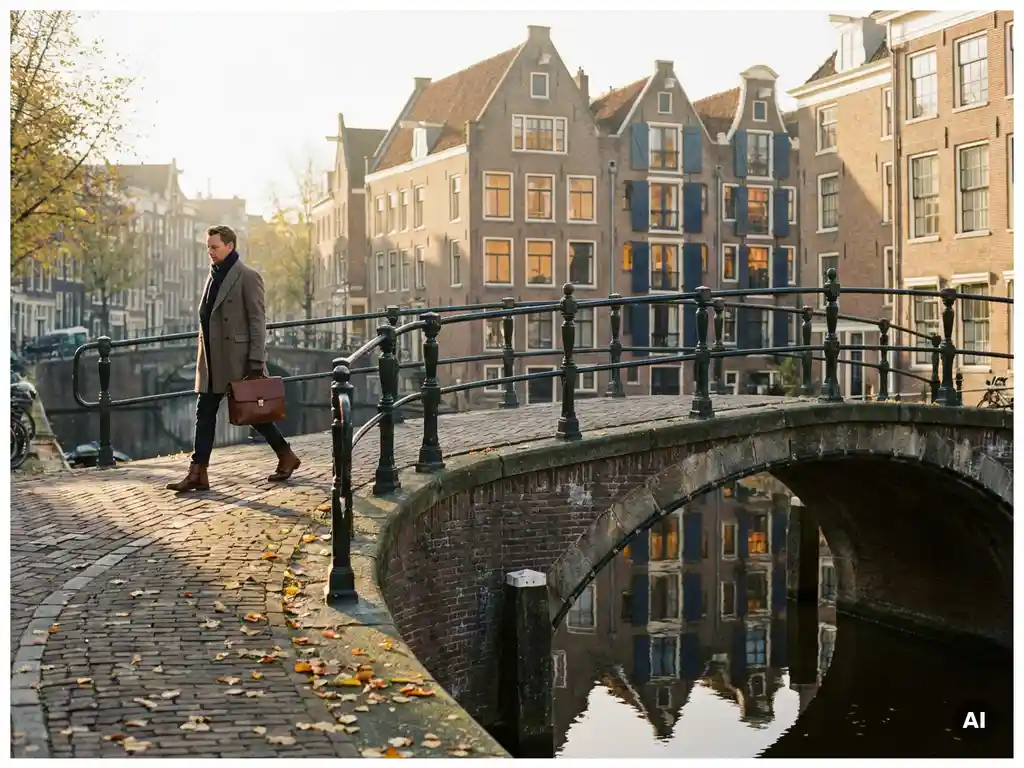
Finding a job in the Netherlands is achievable for international candidates, but the ease depends heavily on your field, qualifications, and nationality. The Dutch labour market is open and internationally oriented, with strong demand for skilled professionals in several key sectors. The questions below address what international candidates and expats in the Netherlands need to know before and after starting work.
What sectors are actively hiring in the Netherlands?
The Netherlands has consistent demand for skilled workers across a number of industries, making it one of the more accessible European labour markets for qualified international professionals. Technology, logistics, life sciences, agriculture, and financial services are among the sectors with the most sustained hiring activity in 2026.
The IT and technology sector remains particularly active, with Dutch employers regularly recruiting software engineers, data analysts, and cybersecurity specialists from abroad. The life sciences and healthcare sectors also face ongoing shortages, especially in clinical research and specialist medical roles. Amsterdam, as a major European business hub, attracts international companies in finance, media, and professional services, all of which create regular openings for English-speaking candidates.
For expats in the Netherlands, Amsterdam and the surrounding Randstad region offer the densest concentration of international employers. Roles in logistics and supply chain management are spread more broadly across the country, given the Netherlands’ position as Europe’s leading distribution hub through the Port of Rotterdam and Amsterdam Airport Schiphol.
How competitive is the Dutch job market for international candidates?
The Dutch job market is competitive but genuinely open to international talent, particularly for candidates with specialist skills or higher education qualifications. Dutch employers are accustomed to hiring from abroad, and English is widely used as a working language in many sectors, especially in Amsterdam.
That said, competition can be significant for roles that do not require scarce expertise. Dutch and EU candidates generally have easier access to the labour market, as employers recruiting from outside the EU face additional administrative requirements. For non-EU nationals, the practical competitiveness of the market is shaped in part by whether a prospective employer is willing to sponsor a work permit or highly skilled migrant status.
Language can be a meaningful factor in certain roles. While many international companies operate entirely in English, positions in the public sector, retail, or client-facing roles in smaller Dutch businesses will typically require Dutch proficiency. Candidates who are flexible about sector and geography, and who have qualifications that are in short supply in the Dutch labour market, will generally find the job search more straightforward.
Do you need a work permit to work in the Netherlands?
Whether you need a work permit to work in the Netherlands depends on your nationality. EU, EEA, and Swiss nationals do not require a work permit or residence permit to work in the Netherlands. Non-EU nationals generally do need authorisation to work, though the specific route depends on the nature and duration of their employment.
EU and EEA nationals
EU citizens enjoy full freedom of movement and may work in the Netherlands without any permit. If they plan to stay longer than four months, they are required to register with their local municipality. No employer sponsorship is required.
Non-EU nationals
For non-EU nationals, the most common routes to working in the Netherlands include:
- Highly skilled migrant permit (kennismigrant): For professionals meeting the minimum salary threshold, currently set at a gross monthly salary of €5,937 for most applicants in 2026. The employer must be a recognised sponsor with the IND (Immigration and Naturalisation Service).
- Single permit (GVVA): A combined residence and work permit, tied to a specific employer. The employer must demonstrate that recruitment efforts within the Netherlands and the EU did not produce a suitable candidate before looking outside the EU.
- EU Blue Card: For highly qualified professionals with a relevant higher education diploma (at least three years of study) and at least five years of relevant work experience, or three years in IT. The minimum income requirement is €5,937 gross per month in 2026. Unlike the highly skilled migrant route, the employer does not need to be a recognised IND sponsor.
- Self-employed residence permit: For those wishing to start a business or work as a freelancer, subject to a business plan assessment and income requirements.
The specific permit required, and the conditions attached to it, can vary considerably depending on individual circumstances. It is advisable to seek legal guidance before beginning an application, particularly for non-EU nationals navigating the IND process for the first time.
What qualifications do Dutch employers typically look for?
Dutch employers generally prioritise relevant work experience, a higher education qualification, and demonstrable specialist skills. For roles that qualify under the highly skilled migrant scheme, a bachelor’s degree is typically the minimum educational level required, alongside some years of professional experience and a recognisable specialisation.
Beyond formal credentials, Dutch employers tend to value practical competence and direct communication. The Dutch working culture is notably flat in terms of hierarchy, and candidates who can demonstrate initiative and independent judgement are generally well regarded. For senior or specialist roles, a track record of delivering results in comparable environments carries considerable weight.
For candidates seeking to qualify under the 30% ruling (the Expat Scheme), salary thresholds serve as a proxy for specific expertise. In 2026, the general threshold is an annual salary exceeding €48,013, while candidates under 30 with a Dutch academic master’s degree or equivalent qualification must earn more than €36,497 annually. Scientific researchers and doctors in specialist training are exempt from these salary requirements entirely.
Foreign qualifications may need to be evaluated by Nuffic, the Dutch organisation for internationalisation in education, particularly for regulated professions or for applications under the EU Blue Card scheme.
Where do most people find job vacancies in the Netherlands?
Most candidates find positions in the Netherlands through a combination of online job platforms, professional networks, and direct employer outreach. LinkedIn is widely used by Dutch employers and recruiters, and is one of the most effective channels for professional roles, particularly in Amsterdam and the Randstad region.
The following channels are commonly used by job seekers, including expats in Amsterdam and across the Netherlands:
- LinkedIn: Dominant for professional and corporate roles; many Dutch employers post vacancies here first and actively search for candidates.
- Indeed Netherlands and Glassdoor: Broad coverage across sectors and experience levels.
- Intermediaries and recruitment agencies: Widely used in the Netherlands, particularly for temporary contracts and specialist placements. Agencies such as Randstad, Manpower, and sector-specific firms play a significant role in the Dutch labour market.
- Company career pages: Many larger Dutch and international employers post vacancies directly on their own websites before listing them elsewhere.
- Expat-specific platforms: Sites such as IAmExpat and DutchNews publish English-language job listings aimed specifically at the international community.
- Professional networks and events: Networking remains important in the Netherlands, particularly for senior roles. Industry events, chambers of commerce, and expat community organisations can open doors that online applications do not.
For candidates who have recently graduated and are searching for their first Dutch role, the orientation year residence permit (zoekjaar) offers up to twelve months to look for suitable employment, with no restrictions on working during that period.
What legal protections apply once you start working in the Netherlands?
Once you begin working in the Netherlands under an employment contract, Dutch labour law provides a comprehensive framework of protections regardless of your nationality. These protections apply from the first day of employment and cover areas including minimum wage, working hours, dismissal procedures, and health and safety obligations.
Before signing a Dutch employment contract, it is important to review it carefully. Key elements to check include:
- Role description and responsibilities
- Probation period (proeftijd) and its conditions
- Salary, bonuses, and any 13th-month payment
- Overtime expectations and flexible working arrangements
- Non-competition clause (concurrentiebeding), which can restrict your options after leaving
- Conditions for contract termination
- Company confidentiality and privacy policies
There is no obligation to sign immediately. Employers typically allow a few days to review the contract, and any terms that are unclear or contentious should be discussed before signing. Seeking advice from an employment law specialist before signing is a prudent step, particularly for senior roles or contracts containing restrictive clauses.
Dutch law also governs the type of contract you receive. Fixed-term contracts, permanent contracts, zero-hours contracts, and freelance agreements each carry different rights and obligations. Employees on fixed-term contracts are entitled to a transition payment (transitievergoeding) if the employer does not renew the contract, subject to conditions under Dutch law.
The 30% ruling, where applicable, can provide a meaningful tax benefit for qualifying expats in the Netherlands. Under this scheme, up to 30% of gross salary may be paid as a tax-free allowance, provided all eligibility conditions are met. Eligibility is assessed individually and depends on factors including salary level, place of recruitment, and prior residence.
How Russell Advocaten Supports Expats Working in the Netherlands
Navigating the Dutch labour market involves more than finding the right vacancy. From understanding your work permit options to reviewing an employment contract before you sign, the legal dimension of working in the Netherlands can be complex, particularly for international candidates unfamiliar with Dutch law.
Russell Advocaten is an internationally oriented law firm based in Amsterdam, with long-standing experience advising expats on the full range of legal matters that arise when living and working in the Netherlands. The firm’s lawyers communicate fluently in English, German, and Dutch, making them well placed to support international clients at every stage. Areas of expertise relevant to working expats include:
- Employment contracts and negotiation
- Residence and work permit guidance
- The 30% ruling (Expat Scheme) and eligibility questions
- Setting up a business or working as a self-employed professional
- Real estate and renting a house in the Netherlands as an expat
- Family law and related personal matters
Russell Advocaten is an official partner of IN Amsterdam, the expat centre of the City of Amsterdam, and has been recommended by The Legal 500 for many years. The firm regularly organises workshops on Dutch law for expats and provides practical, personalised legal support to international clients across the Netherlands.
If you have questions about your employment situation, contract, or legal position as an expat in the Netherlands, contact Russell Advocaten for a consultation with one of their experienced lawyers.
This information is general in nature and does not constitute legal advice for your specific situation. Please consult a lawyer at Russell Advocaten for advice tailored to your circumstances.
Veelgestelde vragen
Can I start working in the Netherlands while my work permit application is still being processed?
In most cases, you cannot legally begin working in the Netherlands until your permit has been approved. For the highly skilled migrant route, the IND aims to process applications within two weeks once a recognised sponsor employer has submitted the request, but work should not commence before the permit is granted. Some exceptions apply, such as for EU nationals who have freedom of movement, so it is important to confirm your specific situation with a legal adviser before your start date.
What happens to my work permit if I change jobs or employers in the Netherlands?
If you hold a highly skilled migrant permit or a single permit (GVVA), your authorisation to work is tied to your sponsoring employer, meaning you cannot simply transfer it to a new company. When changing jobs, your new employer must apply for a new or amended permit before you begin working for them. The transition period between employers can carry legal risk if not managed carefully, so seeking advice from an immigration or employment lawyer before resigning is strongly recommended.
How does the 30% ruling actually work in practice, and how do I apply for it?
The 30% ruling allows qualifying expats to receive up to 30% of their gross salary as a tax-free allowance, effectively reducing their Dutch income tax burden significantly. To be eligible, you must have been recruited from abroad, meet the applicable salary threshold, and must not have lived within 150 kilometres of the Dutch border for more than 16 of the 24 months prior to starting work in the Netherlands. Your employer applies jointly with you to the Dutch Tax Authority (Belastingdienst), and if approved, the benefit can be applied from your first payslip — though applications must be submitted within four months of your start date to avoid losing retroactive entitlement.
What is a non-competition clause (concurrentiebeding) and should I be worried about signing one?
A non-competition clause restricts your ability to work for a competitor or start a competing business for a defined period after leaving your employer, and they are relatively common in Dutch employment contracts. These clauses are legally enforceable in the Netherlands, though courts can moderate or nullify them if they are deemed disproportionately restrictive. Before signing a contract containing such a clause, it is worth having a lawyer review its scope, duration, and geographic reach — particularly if you work in a specialised field where your next role is likely to be with a direct competitor.
Is it possible to work as a freelancer or self-employed professional in the Netherlands as a non-EU national?
Yes, but the requirements are more demanding than for salaried employment. Non-EU nationals wishing to work independently must apply for a self-employed residence permit, which involves a points-based assessment of your business plan, the economic value your activities bring to the Netherlands, and your personal and financial situation. The process is handled by the IND and can be complex, so working with a lawyer who has experience in this area is advisable before submitting an application.
What common mistakes do international candidates make when applying for jobs in the Netherlands?
One of the most frequent mistakes is applying for roles without checking whether the employer is a recognised IND sponsor — a prerequisite for non-EU candidates pursuing the highly skilled migrant route. Another common error is underestimating the importance of LinkedIn as a primary recruitment channel, or neglecting to tailor a CV to Dutch conventions, which typically favour concise, results-focused formats over lengthy narrative CVs. Finally, many candidates overlook the value of networking, which remains a significant factor in the Dutch job market, especially for mid-to-senior level roles.
If my Dutch employment contract is terminated, what are my rights regarding severance or compensation?
Under Dutch law, employees are generally entitled to a transition payment (transitievergoeding) when their employer terminates their contract or chooses not to renew a fixed-term agreement, provided they have been employed for any duration. The amount is calculated based on your length of service and monthly salary. Dismissal in the Netherlands is also subject to strict procedural rules — employers must follow a lawful dismissal route, either through the UWV (Employee Insurance Agency) or the courts, depending on the grounds for termination — meaning unlawful dismissal can give rise to additional compensation claims.
Gerelateerde artikelen
- What neighbourhoods in Amsterdam are most popular with expats?
- What is a diplomat clause in a Dutch rental agreement?
- When should an expat hire a lawyer in the Netherlands?
- Can I get a free consultation with an immigration lawyer in the Netherlands?
- Is it hard to relocate to the Netherlands?
Deze inhoud is gegenereerd met behulp van AI en kan fouten bevatten.