

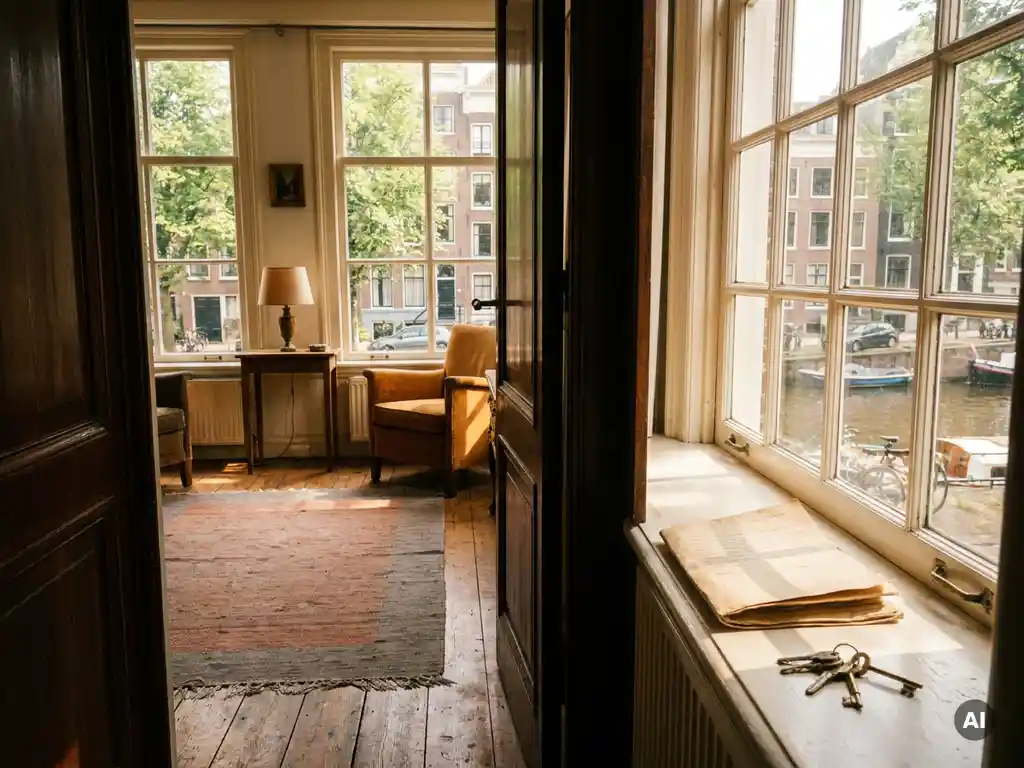
In 2026, expats renting in Amsterdam typically pay between €1,500 and €3,500 per month for a furnished apartment, depending on size, location, and property type. The Amsterdam rental market remains one of the most competitive in Europe, driven by high demand and limited housing supply. The sections below address the most common questions expats face when navigating the Amsterdam rental market.
How much has Amsterdam rent increased in recent years?
Amsterdam rents have risen sharply over the past several years, with average monthly rents in the private sector increasing by roughly 30 to 50 percent since 2019. In 2026, a furnished one-bedroom apartment in a central neighbourhood typically starts at around €1,800 per month, while comparable properties cost considerably less in other Dutch cities. The primary driver is a persistent imbalance between housing supply and demand, particularly in the private rental sector.
Several structural factors have contributed to this upward pressure. Amsterdam’s population has grown steadily, while new residential construction has not kept pace. At the same time, regulatory changes introduced in recent years have reduced the number of properties available in the mid-range rental segment, as some landlords have exited the market or converted rental properties to owner-occupied homes. For expats relocating to the Netherlands, this means that budgeting carefully and acting quickly when a suitable property becomes available are both essential.
It is also worth noting that the Dutch government has introduced rent regulation measures affecting properties below a certain valuation threshold. Properties above that threshold remain in the liberalised, or free-market, rental sector, which is where most expat housing is found. Within this segment, rents are determined by market conditions rather than statutory caps, so prices can fluctuate significantly depending on neighbourhood and property quality.
What are the typical rent ranges by neighbourhood in Amsterdam?
Rent in Amsterdam varies considerably by neighbourhood. As a general guide for 2026, monthly rents for furnished apartments in the private sector fall into the following ranges:
- Canal Ring (Grachtengordel) and Jordaan: €2,200 to €4,000+ for a two-bedroom apartment, among the most sought-after and expensive areas in the city.
- De Pijp and Oud-Zuid: €2,000 to €3,500 per month, popular with international professionals and families, close to Vondelpark and the Rijksmuseum.
- Amsterdam-Noord and Nieuw-West: €1,500 to €2,200 per month, more affordable options, increasingly attractive due to improved transport links.
- Zuidas (Amsterdam’s financial district): €2,500 to €4,500 per month, premium pricing driven by proximity to multinational offices and international schools.
- Oost (East Amsterdam): €1,800 to €2,800 per month, a diverse and vibrant area that has seen significant gentrification in recent years.
These figures are indicative and can vary based on the size, condition, and furnishing of the property. Expats working in the financial or professional services sectors often gravitate towards Zuidas or Oud-Zuid, while those seeking a more residential atmosphere tend to favour De Pijp or Amsterdam-Noord. Proximity to international schools is another key factor for families, which tends to push demand, and rents, higher in certain catchment areas.
What types of rental properties are available to expats in Amsterdam?
Expats in Amsterdam can choose from several types of rental accommodation, each with different cost profiles, lease structures, and suitability depending on personal circumstances. The most common options are furnished apartments, unfurnished apartments, serviced apartments, and shared housing.
Furnished apartments are the most popular choice for newly arrived expats. They come equipped with furniture, white goods, and often kitchenware, making them practical for those who have relocated without their own belongings. Rents are higher than for unfurnished equivalents, but the convenience is significant during the initial period of settling in.
Unfurnished apartments are generally less expensive and are better suited to expats planning a longer stay who intend to furnish the property themselves. Lease terms tend to be more flexible, and these properties are often found in residential neighbourhoods outside the immediate city centre.
Serviced apartments and short-stay accommodation are available for expats who need temporary housing while searching for a longer-term rental. These are typically priced at a premium but offer maximum flexibility, often with weekly or monthly billing and included utilities.
Shared housing is less common among professional expats but is an option for those on tighter budgets. It is more prevalent among younger professionals and students. Note that Dutch tenancy law applies to all rental arrangements, regardless of the type of property or the nature of the agreement.
What additional costs should expats budget for beyond rent?
Beyond the monthly rent, expats renting in Amsterdam should budget for a range of additional costs that can add meaningfully to the overall cost of housing. These costs are not always clearly communicated upfront, so it is important to clarify them before signing a lease.
The most common additional costs include:
- Security deposit: Typically one to three months’ rent, held by the landlord and returned at the end of the tenancy, subject to the condition of the property.
- Agency fees: If a rental agent is involved on the tenant’s side, fees may apply. Legislation introduced in recent years has restricted landlords from charging tenants for their own agent, but tenants who engage their own agent independently may still incur costs.
- Utilities: Gas, electricity, and water are often not included in the rent for unfurnished properties. Monthly utility costs in Amsterdam can range from €150 to €300 depending on the size of the property and energy efficiency.
- Service costs (servicekosten): Many apartment buildings charge monthly service costs covering communal area maintenance, building insurance, and sometimes heating or hot water. These can range from €50 to €300 per month.
- Municipal taxes: Amsterdam levies local taxes on residents, including waste collection charges. These are billed annually and vary by household size.
- Contents insurance: Landlords typically insure the building, but tenants are responsible for insuring their own belongings. Annual premiums for a standard policy are generally modest.
Expats who qualify for the expat scheme (formerly known as the 30% ruling) may be able to offset some housing costs through their employer’s extraterritorial cost reimbursement. Under the current rules, initial housing costs that exceed 18% of gross salary may qualify as extraterritorial costs and can be reimbursed tax-free by the employer. The maximum untaxed allowance under the expat scheme in 2026 is €78,600, applicable to those earning €262,000 or more who use the scheme for the full year. Specific eligibility conditions apply, and it is advisable to discuss the details with a qualified adviser.
What legal protections do expats have as tenants in Amsterdam?
Expats renting in Amsterdam are protected by Dutch tenancy law, which applies equally to Dutch nationals and foreign residents. The Netherlands has a strongly tenant-protective legal framework, and landlords cannot simply terminate a lease or raise rent without following the procedures set out in law.
Key protections for tenants in the private rental sector include:
- Security of tenure: Landlords cannot terminate an indefinite lease without a legally recognised ground, such as urgent personal use of the property or persistent non-payment of rent. Tenants have the right to challenge termination notices.
- Deposit protection: The security deposit must be returned within a reasonable period after the tenancy ends, minus any justified deductions for damage beyond normal wear and tear.
- Rent review limitations: In the liberalised sector, rent increases are subject to statutory caps on the annual percentage increase, even where no rent regulation applies to the base rent level.
- Habitable condition: Landlords are legally obliged to maintain the property in a habitable condition and to carry out necessary repairs.
One clause that is particularly relevant to expats is the diplomat clause (diplomatenbeding). This clause, when included in a rental agreement, allows a landlord to terminate the lease if they need to return to the property themselves, without needing to demonstrate other grounds. Expats should be aware of whether this clause is present in their contract, as it affects the security of their tenancy. Reviewing a lease agreement carefully before signing, ideally with legal advice for expats, is strongly recommended.
It is also worth noting that verbal agreements and informal arrangements carry legal weight in the Netherlands, but written leases provide far greater clarity and protection in the event of a dispute.
Where can expats find legitimate rental listings in Amsterdam?
Finding a legitimate rental property in Amsterdam requires using reliable platforms and exercising caution, as the competitive market has given rise to fraudulent listings. The most commonly used and trustworthy sources include:
- Funda (funda.nl): The Netherlands’ leading property portal, listing both sales and rental properties. Listings are submitted by registered estate agents, which provides a degree of quality assurance.
- Pararius (pararius.nl/pararius.com): A dedicated rental platform widely used by expats, with listings from professional landlords and agents. An English-language interface makes it particularly accessible.
- Expatica and IamExpat: Online communities and property portals specifically targeting the international community in the Netherlands, with rental listings and practical relocation guidance.
- Real estate agents (makelaars): Engaging a registered NVM (Dutch Association of Real Estate Agents) member provides additional assurance. Agents can assist with viewings, negotiations, and lease review.
- IN Amsterdam: The official expat centre of the municipality of Amsterdam, which provides guidance on housing, registration, and local services for international residents.
Expats should be cautious of listings on general classified platforms that request payment before a viewing or ask for personal financial details upfront. Legitimate landlords and agents will not ask for a deposit before a lease has been signed. If a deal appears unusually favourable given current market conditions, it warrants careful scrutiny.
How Russell Advocaten Supports Expats in Amsterdam
Navigating the Amsterdam rental market involves more than finding the right property, it requires understanding Dutch tenancy law, reviewing lease agreements, and knowing your rights as a tenant. Russell Advocaten is an internationally oriented law firm based in Amsterdam, with long-standing experience advising expats on a wide range of legal matters, including real estate, employment, contracts, immigration, setting up a business, and family law. Their lawyers communicate fluently in English, German, and Dutch, making them a natural point of contact for the international community in Amsterdam.
As an official partner of IN Amsterdam, the expat centre of the municipality of Amsterdam, Russell Advocaten has a well-established relationship with the international community in the city. For expats dealing with housing-related legal questions, the firm can assist with:
- Reviewing and advising on rental agreements, including the implications of the diplomat clause
- Advising on tenant rights and landlord obligations under Dutch law
- Resolving disputes with landlords regarding deposits, repairs, or lease termination
- Providing guidance on the legal aspects of purchasing property in the Netherlands
- Advising on employment contracts and the expat scheme in the context of relocation
Whether you are arriving in Amsterdam for the first time or have been living here for years, having access to reliable legal advice can prevent costly misunderstandings. Contact Russell Advocaten to discuss your specific situation with an experienced adviser.
This information is general in nature and does not constitute legal advice for your specific situation. For advice tailored to your circumstances, please consult a lawyer at Russell Advocaten.
Veelgestelde vragen
How far in advance should I start looking for a rental property in Amsterdam before my move date?
Ideally, you should begin your search at least two to three months before your intended move date, as desirable properties in Amsterdam are typically let within days of being listed. Given the competitiveness of the market, it is also worth arranging virtual viewings if you are still abroad, and having your documentation — such as proof of employment, income statements, and identification — ready to submit immediately. Being prepared to act quickly can make the difference between securing a property and losing it to another applicant.
What documents will I typically need to provide to a landlord or rental agent in Amsterdam?
Most landlords and agents in Amsterdam will require proof of identity (passport or EU ID card), a recent employment contract or letter from your employer confirming your position and salary, recent payslips (usually the last one to three months), and sometimes a reference from a previous landlord. If you are self-employed or relocating before starting a new role, you may need to provide additional documentation such as a bank statement or a letter from your future employer. Having these documents translated into English or Dutch and ready in advance will significantly speed up the application process.
Can I negotiate the rent or lease terms with a landlord in Amsterdam?
Yes, negotiation is possible in the Amsterdam rental market, though the degree of flexibility depends heavily on how much demand there is for a particular property. In a highly competitive situation with multiple applicants, landlords have little incentive to reduce the asking rent, but you may have more success negotiating on other terms, such as the length of the lease, the inclusion of certain furnishings, or the timing of the move-in date. If you are working with a tenant’s agent (a makelaar acting on your behalf), they can advise on what is realistic to negotiate given current market conditions and handle discussions with the landlord or their agent directly.
What should I look out for when reviewing a rental contract in Amsterdam?
Beyond the obvious terms such as rent amount, lease duration, and deposit, pay close attention to whether the diplomat clause (diplomatenbeding) is included, as this gives the landlord the right to reclaim the property for personal use with relatively limited notice. You should also check the terms around annual rent increases, what is and is not included in the service costs, the procedure for reporting and resolving maintenance issues, and the conditions under which the deposit can be withheld at the end of the tenancy. Because Dutch lease agreements are legally binding and often contain technical language, having the contract reviewed by a lawyer experienced in Dutch tenancy law — before you sign — is a worthwhile investment.
What happens if my landlord refuses to return my security deposit at the end of the tenancy?
Under Dutch law, a landlord must return the security deposit within a reasonable period after the tenancy ends, typically within one to two months, and can only make deductions for damage that goes beyond normal wear and tear. If your landlord refuses to return the deposit or makes deductions you consider unjustified, you can first attempt to resolve the matter in writing by formally requesting the return and providing evidence such as move-in and move-out inspection reports or photographs. If this does not resolve the dispute, you can submit a claim to the Huurcommissie (Rent Tribunal) or pursue the matter through the Dutch civil courts, and a lawyer specialising in tenant rights can advise you on the most appropriate course of action.
Is it worth using a tenant's agent (makelaar) to find a rental property in Amsterdam, and who pays for it?
For expats who are unfamiliar with the Dutch rental market, using a tenant’s agent can be genuinely valuable — they have access to listings before they appear on public platforms, can conduct viewings on your behalf if you are still abroad, and can advise on fair pricing and contract terms. Since recent legislation prohibits landlords from passing their own agent’s fees on to tenants, any costs associated with a tenant’s agent are typically borne by the tenant who engages them. Fees vary but are often equivalent to one month’s rent plus VAT, which many expats find worthwhile given the time saved and the risk of costly mistakes avoided.
Are there any common scams or red flags I should watch out for when searching for rentals in Amsterdam?
The most common scam involves fraudulent listings — often copied from legitimate platforms — where a fake landlord requests a deposit or personal financial information before any viewing has taken place, sometimes claiming to be abroad and unable to show the property in person. Legitimate landlords and registered agents will never ask for payment before a lease is signed and a viewing has been conducted. Additional red flags include rents that are significantly below the market rate for the area, pressure to make a decision or transfer funds immediately, and requests to communicate exclusively via messaging apps rather than email or phone. Always verify listings through trusted platforms such as Funda or Pararius, and if in doubt, seek independent legal advice before transferring any money.
Gerelateerde artikelen
- What permits do you need to start a business in the Netherlands as a non-EU citizen?
- What should expats check before signing a rental contract in the Netherlands?
- Can a US citizen move to the Netherlands?
- Can I get a free consultation with an immigration lawyer in the Netherlands?
- What is the 5-year rule in the Netherlands?
Deze inhoud is gegenereerd met behulp van AI en kan fouten bevatten.