

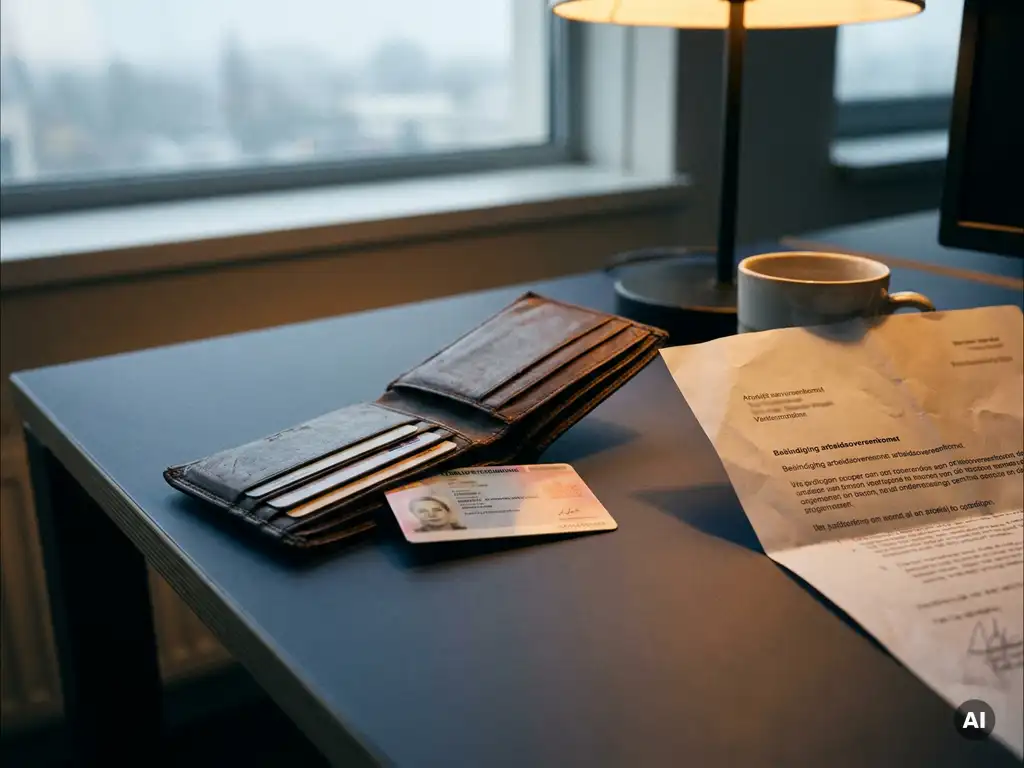
Losing your job in the Netherlands does not automatically end your right to stay in the country, but it does trigger a series of obligations and deadlines that can directly affect your residence status. The consequences depend primarily on the type of residence permit you hold and how quickly you act after employment ends. The sections below address the most pressing questions expats and foreign nationals face when their employment situation changes unexpectedly.
Can you stay in the Netherlands after losing your job?
Whether you can remain in the Netherlands after losing your job depends on the type of residence permit you hold. In many cases, your permit does not expire the moment your employment ends, but job loss is treated by the IND as a significant change in circumstances that may affect your right of residence. Acting promptly and understanding your specific permit conditions is essential.
For holders of a highly skilled migrant permit (kennismigrant), there is generally a grace period during which you may search for new employment before your permit is affected. For those holding a single permit (GVVA), the situation is more immediate, as that permit is typically tied to a specific employer. In either case, the IND must be informed of the change, and your continued stay depends on whether you can meet the conditions of your current permit or transition to another one.
It is also worth noting that the IND monitors a range of signals that may indicate a change in your main residence. Deregistration from the BRP, cancellation of a Dutch bank account, or the cessation of employment are all factors the IND may take into account when assessing whether your residence permit remains valid.
How long does a Dutch residence permit remain valid after employment ends?
A Dutch residence permit does not expire automatically when employment ends. The permit itself remains valid until its stated expiry date, but the conditions under which it was granted may no longer be met, which gives the IND grounds to withdraw or decline to renew it. The practical window available to you varies by permit type.
For highly skilled migrants, Dutch immigration practice generally recognises a period during which the permit holder may seek new qualifying employment. This is not an indefinitely open window, and the IND expects you to act with urgency. For single permit holders, the permit is tied to the sponsoring employer, meaning that the end of employment can trigger a review almost immediately.
Regardless of permit type, the expiry date printed on your card is not a guarantee of continued lawful residence if the underlying conditions are no longer satisfied. The IND has the authority to withdraw a permit before its stated expiry date if it determines that the grounds for residence no longer exist.
What are your obligations to the IND when you lose your job?
When your employment ends, your employer, if they are a recognised sponsor, is legally required to notify the IND within four weeks. However, this does not remove your own responsibility to understand and respond to the change in your situation. The IND is applying increasingly strict checks on timely reporting, and delays can have serious consequences for your residence status.
As a permit holder, you should be aware of the following obligations:
- Ensure your employer (as a recognised sponsor) has notified the IND of the end of your employment contract within the four-week deadline.
- Maintain your registration in the Personal Records Database (BRP) at your local municipality.
- Avoid actions that the IND may interpret as relocating your main residence abroad, such as cancelling your Dutch bank account or deregistering from the Belastingdienst.
- Begin exploring your options for switching permits or securing new employment as soon as possible.
Failing to meet these obligations, or allowing the IND to draw negative inferences from your changed circumstances, can result in the withdrawal of your residence permit or a refusal to renew it.
Does the type of residence permit affect what happens next?
Yes, the type of residence permit you hold has a direct and significant bearing on what happens when you lose your job. Different permits carry different conditions, and the consequences of unemployment vary accordingly.
The most common work-related permits and their implications are as follows:
- Single permit (GVVA): This combined residence and work permit is tied to a specific employer. When employment with that employer ends, the basis for the permit is effectively removed. The IND must be notified promptly, and the permit holder will need to find a new qualifying employer or switch to a different permit category.
- Highly skilled migrant permit (kennismigrant): This permit offers somewhat more flexibility. Holders are generally expected to find new qualifying employment within a reasonable period. The permit is not automatically withdrawn the moment employment ends, but the IND will expect evidence of active efforts to secure new work.
- Partner permit: If your right to work is derived from your partner’s permit, the impact of your own job loss on your residence status depends on whether your partner’s permit remains valid and whether you were authorised to work independently.
- EU Blue Card: Similar in structure to the highly skilled migrant permit, but subject to EU-level rules. Holders should seek specific advice on the grace period applicable to their situation.
Understanding which category applies to you is the essential first step before taking any further action.
Can you switch to a different permit after losing your job?
Switching to a different permit category after losing your job is possible in a number of situations, but it is not automatic and requires a timely application. The IND will assess whether you meet the requirements for the new permit category at the time of application, not at the time your employment ended.
Common pathways that may be available include:
- Orientation year permit (zoekjaar): If you are a highly educated migrant who has recently graduated, you may be eligible for a one-year orientation permit to search for work or start a business in the Netherlands.
- Self-employment permit: If you plan to establish your own business or work as a freelancer, a residence permit for self-employed persons may be an option, provided you meet the income requirements and can demonstrate added value to the Dutch economy.
- New employment-based permit: If you secure a new employer who is willing to act as your sponsor, you may apply for a new single permit or highly skilled migrant permit tied to that employer.
It is important to note that switching permits takes time, and the IND may take up to 90 days to reach a decision. Applying as early as possible reduces the risk of a gap in your lawful residence status. Each application also carries a fee, which is not refunded if the application is refused.
What legal steps should you take to protect your residence status?
When employment ends, taking structured and timely legal steps is the most effective way to protect your right to remain in the Netherlands. The following course of action is generally advisable, though the specific steps will depend on your individual circumstances.
First, confirm that your employer has fulfilled their reporting obligation to the IND. Do not assume this has been done. Second, review the conditions of your current permit carefully to understand what grace period, if any, applies to your situation. Third, assess which alternative permit categories you may qualify for and gather the documentation required to support an application.
Beyond these immediate steps, it is equally important to maintain your ties to the Netherlands throughout this period. Remaining registered in the BRP, keeping your Dutch bank account active, and continuing to reside in the country are all factors that support your position if the IND scrutinises your situation.
Given the complexity of Dutch immigration rules and the potential consequences of errors or delays, seeking qualified legal advice for expats at the earliest opportunity is strongly recommended. Immigration law intersects with employment law, and the decisions you make in the weeks immediately following job loss can have lasting consequences for your residence status.
How Russell Advocaten Can Help with Your Residence Status
Russell Advocaten Amsterdam is an internationally oriented law firm with decades of experience advising expats and foreign nationals on the legal complexities of living and working in the Netherlands. The firm’s lawyers are fluent in English, German, and Dutch, and are well placed to guide you through the steps required to protect your residence status after a change in employment.
When your employment situation changes, Russell Advocaten can assist you with:
- Reviewing the conditions of your current residence permit and advising on the implications of job loss for your specific situation.
- Assessing which alternative permit categories you may qualify for, including the highly skilled migrant scheme, the orientation year permit, or a self-employment permit.
- Advising on your obligations to the IND and ensuring that reporting deadlines are met.
- Supporting you through the permit application process, including the preparation of documentation and communication with the IND.
- Providing broader legal support in areas that often intersect with immigration, including employment law, contract review, and business establishment.
Russell Advocaten is an official partner of IN Amsterdam, the expat centre of the City of Amsterdam, and has been recommended by The Legal 500 for many years. If your employment has ended and you are uncertain about your right to remain in the Netherlands, contact Russell Advocaten for a consultation via the contact page.
This information is general in nature and does not constitute legal advice for your specific situation. Please consult a lawyer at Russell Advocaten for advice tailored to your circumstances.
Veelgestelde vragen
What should I do in the first 48 hours after losing my job in the Netherlands?
In the first 48 hours, your priority should be to confirm whether your employer has notified the IND of your employment termination, as they are legally required to do so within four weeks. Do not cancel your Dutch bank account, deregister from the BRP, or take any action that could signal to the IND that you are leaving the country. Use this time to locate your residence permit, note its expiry date, and identify which permit category you hold so you can assess your options quickly.
Can I work freelance or start my own business while waiting for a new permit?
Not without the appropriate authorisation. Working as a freelancer or starting a business while your employment-based permit is under review — or after it has lapsed — can constitute unauthorised work, which carries serious consequences for your residence status. If self-employment is your intended route, you should apply for a self-employment residence permit before commencing any commercial activity. A lawyer can help you assess whether you meet the income and added-value requirements before you apply.
What happens if I cannot find a new job before my grace period runs out?
If you are unable to secure new qualifying employment before the IND’s tolerance period expires, your residence permit may be withdrawn or not renewed. In this situation, you should explore alternative permit categories as early as possible — such as the orientation year permit, a partner-based permit, or a self-employment permit — rather than waiting until the deadline has passed. Acting proactively and submitting an application before your current permit lapses significantly improves your legal position.
Does losing my job affect my partner's or family members' residence status in the Netherlands?
It can, depending on the structure of your family’s permits. If your partner or children hold dependent permits that are linked to your employment-based residence permit, a change in your status may directly affect theirs. Conversely, if your partner holds an independent permit, your job loss may not immediately impact their right to stay. It is important to review all family members’ permits together and seek legal advice that covers the household situation as a whole.
Is there a difference between being made redundant and resigning when it comes to my residence permit?
From the IND’s perspective, the legal trigger is the end of employment, regardless of whether it was voluntary or involuntary. However, the circumstances may be relevant when assessing your intentions and your ties to the Netherlands, particularly if the IND scrutinises your situation. Being made redundant does not grant you any additional grace period beyond what your permit category already provides, so the same deadlines and obligations apply in either case.
Can I travel outside the Netherlands while my permit situation is unresolved?
Travelling abroad while your residence status is uncertain carries real risks. Extended time outside the Netherlands could be interpreted by the IND as evidence that your main residence has shifted, which may weaken your position. Additionally, if your permit is withdrawn while you are abroad, re-entering the Netherlands could become complicated. If travel is unavoidable, keep trips short, retain evidence of your ties to the Netherlands, and consult a lawyer before making any travel plans.
How long does it typically take to switch to a new permit category, and can I stay in the Netherlands during that time?
The IND can take up to 90 days to process a change-of-permit application, though processing times vary. If you submit your application while your current permit is still valid, you are generally entitled to remain in the Netherlands during the assessment period under the bridging right of residence principle. This makes timing critical — submitting your application as early as possible, ideally before your current permit conditions are breached, is the most effective way to avoid a gap in your lawful residence status.
Gerelateerde artikelen
- What legal advice do expats need when moving to the Netherlands?
- When can a landlord use the diplomat clause in the Netherlands?
- What is the difference between social and private rental housing in the Netherlands?
- What is the average rent for expats living in Amsterdam?
- How long does it take to register a company in the Netherlands?
Deze inhoud is gegenereerd met behulp van AI en kan fouten bevatten.