

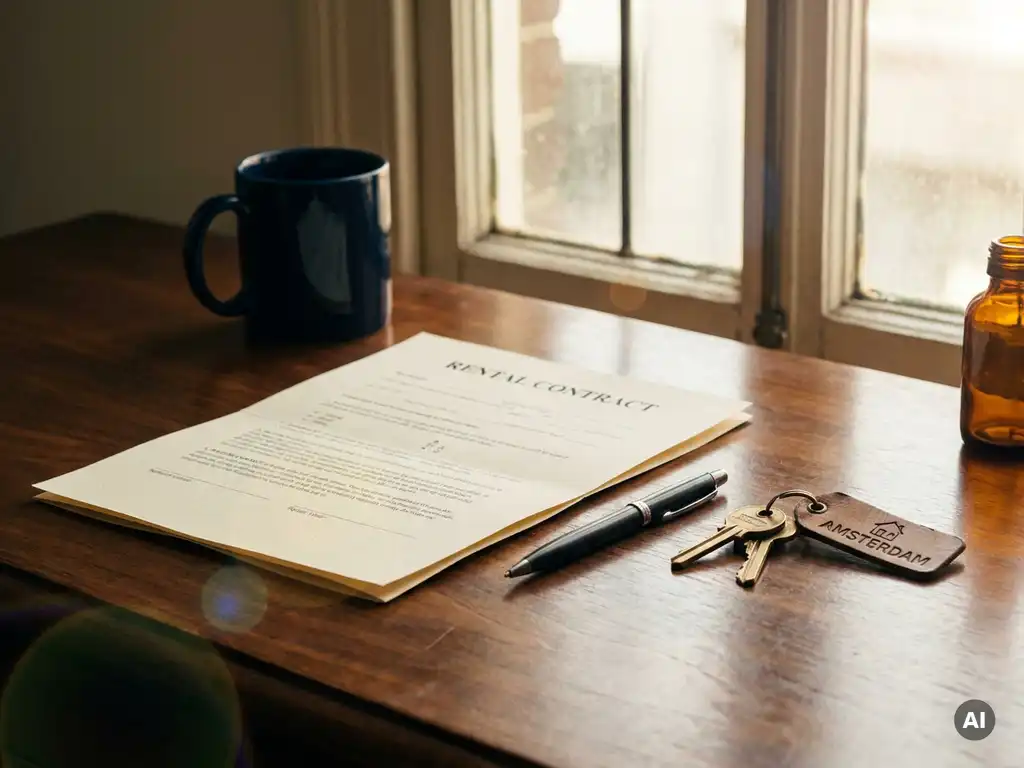
Expats renting in the Netherlands do not legally need a lawyer to review a rental contract, but professional legal review is strongly advisable. Dutch tenancy law is complex, tenant protections vary significantly depending on the type of contract, and certain clauses that appear standard may in fact be unenforceable or disadvantageous. For expats unfamiliar with Dutch legal conventions, a lawyer can identify problematic terms and negotiate better conditions before a contract is signed.
The sections below address the most common questions expats have about renting in the Netherlands, from understanding what a standard contract contains to knowing when legal advice makes a genuine difference.
What does a Dutch rental contract typically include?
A Dutch rental contract, known as a huurovereenkomst, sets out the full terms of the tenancy between landlord and tenant. Standard contracts cover the monthly rent, the rental period, the deposit amount, service costs, maintenance responsibilities, and the conditions under which either party may terminate the agreement. Most contracts also specify house rules, permitted use of the property, and any restrictions on subletting.
In practice, most residential rental contracts in the Netherlands are based on model agreements issued by organisations such as the ROZ (Raad voor Onroerende Zaken). These templates are widely used but are not mandatory, and landlords frequently add their own clauses. Expats should pay particular attention to the following elements:
- Rent and indexation: The agreed monthly rent and the mechanism by which it may be increased annually
- Service costs: Additional charges for utilities, maintenance, or shared facilities, which must be itemised
- Deposit: Typically one to three months’ rent, held as security against damage or unpaid rent
- Notice period: The required advance notice for termination by either party
- Maintenance obligations: Which repairs fall to the tenant and which remain the landlord’s responsibility
- Diplomat clause: A provision that allows a landlord who is temporarily abroad to reclaim the property upon return
The diplomat clause deserves particular attention for expats. This clause, also known as a diplomatic clause, is included in temporary rental agreements and gives the landlord an additional ground to terminate the tenancy and require the tenant to vacate the property when the agreed period expires. While this clause offers security to landlords who are temporarily abroad, it also limits the tenant’s security of tenure. Understanding whether a contract contains such a clause, and what it means in practice, is an important step before signing.
What are the tenant rights of expats renting in the Netherlands?
Expats renting in the Netherlands have the same legal rights as Dutch nationals under Dutch tenancy law. Nationality does not affect the protections afforded to residential tenants. These rights include protection against unlawful eviction, the right to a habitable property, and in many cases, protection against excessive rent increases.
The extent of tenant protection depends significantly on whether the property falls within the social housing sector or the private rental sector, and on the type of contract in place. Key tenant rights include:
- Protection against unlawful eviction: A landlord cannot simply terminate a tenancy without a legally recognised ground. Even where a diplomat clause is included, the tenant must agree to vacate or the landlord must seek a court order.
- Right to habitable conditions: The landlord is legally obliged to maintain the property in a condition fit for its intended use. Tenants may request repairs and, in certain circumstances, seek a rent reduction if the landlord fails to act.
- Rent protection: Depending on the rental price and the type of contract, tenants may be entitled to challenge excessive rents before the Huurcommissie (Rent Tribunal).
- Deposit protection: Landlords must return the deposit within a reasonable period after the tenancy ends, subject to any justified deductions for damage beyond normal wear and tear.
- Right to information: Tenants are entitled to a written contract and to a clear breakdown of any service costs charged in addition to the base rent.
It is worth noting that Dutch tenancy law has undergone significant changes in recent years, particularly regarding the regulation of mid-market rents. The applicable rules depend on the specific circumstances of the tenancy, and expats are advised to seek professional guidance to understand which protections apply to their situation.
What rental contract clauses are illegal or unenforceable in the Netherlands?
Several types of clauses that landlords sometimes include in Dutch rental contracts are either illegal or unenforceable under Dutch law. A clause being present in a signed contract does not make it legally binding if it conflicts with mandatory statutory provisions. Dutch tenancy law contains a number of protections that cannot be contractually waived.
Common examples of clauses that may be unenforceable include:
- Excessive deposit requirements: Deposits that significantly exceed the equivalent of two or three months’ rent may be challenged, depending on the circumstances.
- Unlawful service cost charges: Landlords may only charge service costs for services actually provided. Flat-rate charges that are not itemised or that cover costs the landlord is legally required to bear may be contested.
- Prohibited maintenance obligations: Clauses that shift major maintenance responsibilities to the tenant, beyond what the law permits, are not enforceable.
- Restrictions on registration: A clause preventing a tenant from registering at the property address with the municipality is generally unenforceable and may itself be unlawful.
- Automatic rent increases above statutory limits: Rent indexation clauses that exceed the legally permitted annual increase may be challenged.
- Unlawful termination grounds: Clauses that purport to give the landlord the right to terminate the tenancy on grounds not recognised by Dutch law are without legal effect.
The presence of an unenforceable clause does not automatically invalidate the entire contract, but it can create uncertainty and disputes. Identifying these clauses before signing is considerably more straightforward than challenging them after the tenancy has begun.
What is the difference between a temporary and a permanent rental contract in the Netherlands?
The key distinction between a temporary and a permanent rental contract in the Netherlands lies in the level of tenant protection and the grounds on which the tenancy can be ended. Permanent contracts offer significantly stronger security of tenure, while temporary contracts are time-limited and, in certain forms, allow the landlord to reclaim the property without needing to demonstrate a specific statutory ground for termination.
Permanent rental contracts
A permanent or open-ended rental contract has no fixed end date. The tenant may terminate the agreement by giving the required notice, typically one month. The landlord, however, may only terminate the contract on one of the grounds recognised by Dutch law, such as the tenant’s failure to pay rent, serious nuisance, or the landlord’s own urgent need to occupy the property. This makes permanent contracts the most secure option for tenants.
Temporary rental contracts
Temporary contracts have a fixed end date. Until July 2024, certain short-term contracts of up to two years for independent dwellings allowed landlords to terminate the tenancy at the end of the agreed period without needing a specific statutory ground. This category of contract has since been significantly restricted under changes to Dutch tenancy legislation. Currently, temporary contracts are primarily available in specific circumstances, such as contracts that include a diplomat clause for intermediate letting, or contracts for specific categories of tenant such as students.
The diplomat clause is particularly relevant for expats on the tenant side. If a property is let on a temporary basis under a diplomat clause, the landlord retains the right to reclaim the property upon return from abroad. The tenancy does not end automatically at the expiry of the agreed period; the landlord must formally terminate the agreement. However, if the tenant does not agree to vacate, the landlord must apply to the court for an eviction order, which can be a lengthy process. Expats considering a property let under a diplomat clause should understand the implications for their own security of tenure before signing.
When should an expat consult a lawyer before signing a rental contract?
An expat should consult a lawyer before signing a rental contract whenever the terms are unclear, the contract contains unusual or restrictive clauses, or the financial commitment is significant. In the Dutch rental market, where competition for properties can be intense, there is sometimes pressure to sign quickly. Taking time to obtain legal advice for expats before committing is a prudent step that can prevent costly disputes later.
Specific situations that warrant legal review include:
- The contract contains a diplomat clause and the tenant is uncertain about its implications for their right to remain in the property
- The contract is presented in Dutch and the tenant does not have full command of the language
- The landlord has added non-standard clauses that deviate significantly from the ROZ model agreement
- The deposit or service cost arrangements are unclear or appear disproportionate
- The property is being let by a corporate landlord with a lengthy, complex contract
- The tenant intends to use the property partly for business purposes
- The tenancy is linked to an employment arrangement, such as employer-provided accommodation
Even where a contract appears straightforward, a brief legal review can provide reassurance and identify issues that are not immediately apparent to someone unfamiliar with Dutch tenancy law. The cost of a legal review is generally modest relative to the financial exposure of a rental commitment.
How can a lawyer help an expat negotiate better rental terms?
A lawyer can help an expat negotiate better rental terms by identifying clauses that are legally questionable, commercially unfavourable, or inconsistent with Dutch market practice, and by advising on realistic alternatives that a landlord may be willing to accept. Many expats are unaware that rental contracts in the Netherlands are negotiable to a greater degree than they might expect, particularly in the private sector.
Practical ways in which a lawyer can add value during contract negotiations include:
- Challenging unenforceable clauses: A lawyer can identify provisions that conflict with Dutch mandatory law and advise on whether they should be removed or amended before signing
- Clarifying maintenance obligations: Ensuring that the division of maintenance responsibilities between landlord and tenant is clearly defined and legally compliant
- Negotiating deposit terms: Advising on the appropriate level of deposit and the conditions under which it will be returned
- Reviewing service cost arrangements: Ensuring that any service costs charged are properly itemised and legally justified
- Advising on exit provisions: Clarifying the notice periods and termination conditions that apply to both parties
- Assessing diplomat clause implications: Where a diplomat clause is present, advising the tenant on the practical risks and any protective provisions that might be negotiated
A lawyer experienced in Dutch tenancy law can also advise on current market practice, which is valuable context when assessing whether the terms being offered are reasonable. This is particularly useful for expats who are renting in the Netherlands for the first time and have no prior experience of the local market.
How Russell Advocaten helps expats with rental contracts in the Netherlands
Russell Advocaten Amsterdam is an internationally oriented law firm with decades of experience advising expats on a broad range of legal matters in the Netherlands, including real estate and tenancy law. The firm’s lawyers communicate fluently in English, German, and Dutch, which means expats can discuss their situation clearly and receive advice they can act on with confidence.
For expats navigating the Dutch rental market, Russell Advocaten offers practical legal support that covers the full scope of what a tenancy arrangement involves:
- Review and explanation of rental contracts, including non-standard and corporate landlord agreements
- Identification of unenforceable or commercially unfavourable clauses
- Advice on diplomat clauses and their implications for security of tenure
- Negotiation support to secure better terms before signing
- Guidance on tenant rights under current Dutch tenancy legislation
- Broader legal support for expats on matters including immigration, employment contracts, setting up a business in the Netherlands, and family law
Russell Advocaten is an official partner of IN Amsterdam, the expat centre of the City of Amsterdam, and has been recommended by The Legal 500 for many years. The firm’s lawyers bring long-standing experience in advising international clients who are building their lives and careers in the Netherlands.
If you are an expat preparing to sign a rental contract in the Netherlands and would like professional legal guidance, contact Russell Advocaten to discuss your situation with one of our lawyers.
This information is general in nature and does not constitute legal advice for your specific situation. Please consult a lawyer at Russell Advocaten for advice tailored to your circumstances.
Veelgestelde vragen
Can I get out of a Dutch rental contract early if my employment situation changes?
Early termination of a Dutch rental contract is possible but depends on the type of contract and its specific terms. For permanent contracts, you are generally required to give one month’s notice and cannot simply exit mid-term without the landlord’s agreement. If your contract contains a specific early termination clause, or if you can negotiate a mutual termination with your landlord, an early exit may be achievable. A lawyer can help you assess your options and draft a termination agreement that protects your deposit and avoids liability for remaining rent.
What should I do if my landlord refuses to return my deposit after moving out?
If your landlord withholds your deposit without a clear and justified reason, you have several options under Dutch law. Start by sending a formal written demand requesting the deposit be returned within a set deadline, keeping a record of all correspondence. If the landlord still refuses, you can submit a complaint to the Huurcommissie (Rent Tribunal) or initiate civil proceedings through the court. To protect yourself from the outset, always document the property’s condition thoroughly at move-in and move-out with a signed inspection report and dated photographs.
Is it safe to sign a Dutch rental contract that is only in Dutch if I don't speak the language?
Signing a contract in a language you do not fully understand carries real legal risk — the Dutch-language version is the legally binding document, regardless of any informal translations or verbal explanations provided by the landlord or agent. If you are presented with a Dutch-only contract, you should have it professionally reviewed and translated before signing. A lawyer fluent in both Dutch and English can explain the terms clearly and flag any clauses that are problematic or unusual.
How do I know whether my rental property falls under rent regulation or the free market sector?
In the Netherlands, whether a property falls under the regulated (social) sector or the free market (private) sector is determined by a points-based system called the woningwaarderingsstelsel (WWS), which assesses the property’s size, facilities, energy label, and other factors. Properties scoring below a certain threshold are subject to rent regulation, meaning the maximum rent is capped and can be challenged before the Huurcommissie. Since the introduction of the Affordable Rent Act (Wet betaalbare huur) in 2024, the regulated sector has been expanded to cover more mid-market properties, so it is worth verifying which rules apply to your specific rental before or shortly after signing.
What is the difference between a real estate agent's rental fee and a lawyer's review fee, and do I need both?
A real estate agent (makelaar) helps you find a property and may assist with viewings and initial negotiations, but they do not provide legal advice and are typically engaged by and acting in the interests of the landlord. A lawyer reviews the contract from a legal perspective, identifies unenforceable or unfavourable clauses, and advises you on your rights and risks. In most cases, you do not need both, but if you are dealing with a complex contract or a high-value rental, combining practical market guidance from an agent with independent legal review from a lawyer offers the most comprehensive protection.
Can my landlord increase the rent during my tenancy, and are there limits on how much they can raise it?
Yes, landlords in the Netherlands can increase rent annually, but the permitted increase is subject to statutory limits that vary depending on whether the property is in the regulated or free market sector. For regulated rentals, the government sets a maximum percentage each year. For free market rentals, increases must comply with the indexation clause in the contract and any applicable statutory caps introduced under recent legislation. If your landlord proposes an increase that exceeds the permitted limit, you can challenge it before the Huurcommissie within a set timeframe.
What common mistakes do expats make when renting in the Netherlands, and how can they be avoided?
The most common mistakes include signing a contract without fully understanding the type of tenancy (temporary versus permanent) and its implications, failing to document the property’s condition at move-in, overlooking unclear or excessive service cost arrangements, and not registering with the municipality (gemeente) at the rental address. Another frequent issue is assuming that clauses in a signed contract are automatically enforceable — some are not, but challenging them after the fact is far more difficult than addressing them before signing. Taking time for a professional legal review before committing, even when under time pressure from a competitive rental market, is the single most effective way to avoid these pitfalls.
Gerelateerde artikelen
- How do expats handle inheritance law in the Netherlands?
- What happens to an expat's assets if they divorce in the Netherlands?
- What rights do expats have as tenants in the Netherlands?
- How do expats file taxes in the Netherlands for the first time?
- What is the 30% ruling in the Netherlands?
Deze inhoud is gegenereerd met behulp van AI en kan fouten bevatten.