

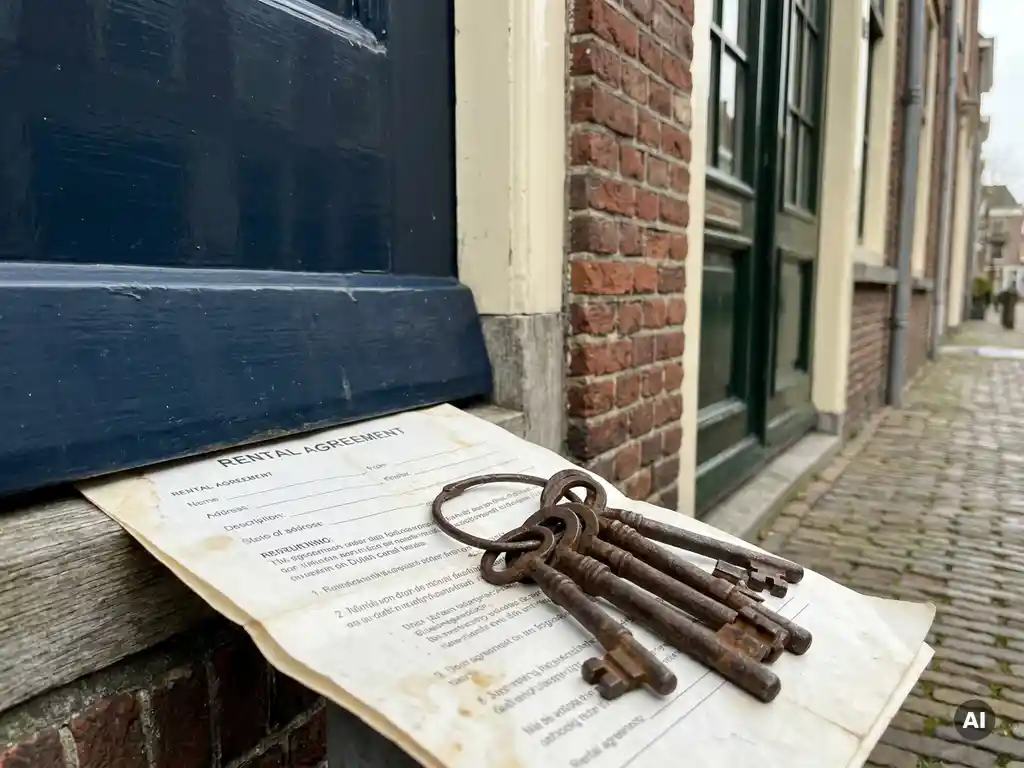
Expats renting in the Netherlands commonly face problems with unclear or unfair rental contracts, unlawful eviction attempts, rent overcharges, and disputes arising from employer-arranged housing. Dutch tenancy law is strongly pro-tenant, but that protection only works in practice when tenants understand their rights. The sections below address the most frequent legal housing issues expats encounter, from contract types to when professional legal advice becomes essential.
What types of rental contracts are used in the Netherlands?
In the Netherlands, rental contracts for residential property fall into two main categories: indefinite-term contracts and fixed-term contracts. An indefinite-term contract offers the strongest tenant protection under Dutch law, as the landlord can only terminate it on limited statutory grounds. A fixed-term contract runs for a specified period and, since legislative reforms in recent years, carries important restrictions on how it may be used.
For expats renting a house in the Netherlands, understanding which type of contract they are signing is the essential first step. The most relevant contract types are:
- Indefinite-term tenancy: The standard form of residential rental. The tenant may terminate at any time with one month’s notice. The landlord’s ability to terminate is strictly limited by law.
- Fixed-term tenancy (up to two years for independent housing): Allowed under Dutch law, but the landlord must notify the tenant in writing between one and three months before the end date that the contract will not be renewed. If this notice is not given on time, the contract automatically converts to an indefinite-term tenancy.
- Temporary contracts with a specific purpose: For example, contracts linked to a specific employment posting or study period. These require a clear legal basis and are subject to scrutiny.
- Diplomat clause (diplomatenbeding): A clause sometimes included in contracts that allows the landlord to reclaim the property if they return from a posting abroad. This clause has strict formal requirements and is only valid in specific circumstances.
Many expats are offered fixed-term contracts by landlords or relocation agencies on the assumption that they will leave the Netherlands after a set period. While this is not inherently unlawful, the automatic conversion rule means that a landlord who fails to follow the correct notification procedure may find themselves unable to end the tenancy as planned. Expats should read any fixed-term contract carefully and verify that the duration and termination conditions comply with current Dutch law.
What are illegal clauses landlords include in expat rental contracts?
Certain clauses that appear in rental contracts offered to expats in the Netherlands are unenforceable under Dutch law, regardless of whether the tenant has signed them. Dutch tenancy law contains mandatory provisions that cannot be contracted out of, and a clause that conflicts with these provisions is void. Signing a contract containing such a clause does not mean the tenant is bound by it.
Common unlawful or unenforceable clauses found in expat rental contracts include:
- Waiver of rent protection: A clause stating that the tenant agrees not to challenge the rent level before the Huurcommissie (Rent Tribunal). This waiver is not valid for social-sector housing and, depending on the rent level, may also be invalid for mid-market properties.
- Unrestricted termination rights for the landlord: Clauses that allow the landlord to end the tenancy at will, without meeting the statutory grounds for termination, are unenforceable.
- Excessive service charges: Landlords sometimes bundle furniture, internet, or cleaning into a service charge that inflates the effective rent. Only certain costs may lawfully be charged as service costs, and these are subject to a reasonableness requirement.
- Prohibition on registering with the municipality (BRP): Some landlords include clauses forbidding tenants from registering their address in the Personal Records Database. This clause is unlawful. Registration is a legal obligation for anyone staying in the Netherlands for more than four months, and a landlord cannot contractually prevent it.
- Automatic forfeiture of the deposit: Clauses that provide for automatic loss of the deposit at the end of the tenancy, without an itemised account of deductions, are not enforceable under Dutch law.
- Obligation to use the landlord’s own maintenance or cleaning services at fixed rates: Where these rates are disproportionate, such clauses may be challenged.
Expats are sometimes reluctant to challenge these clauses for fear of losing the property in a competitive rental market. However, the legal position is clear: a void clause cannot be enforced, and a tenant who has signed such a clause retains their statutory rights in full. Seeking legal advice before signing, rather than after a dispute arises, is the more effective approach.
How does rent protection work for expats in the Netherlands?
Rent protection in the Netherlands is determined primarily by the rent level and the type of property. The Dutch rental market is divided into the social sector and the liberalised (free-market) sector. Social-sector housing, where the rent falls below a statutory threshold, is subject to strict rent regulation, including a points-based valuation system (the woningwaarderingsstelsel). Expats renting in the private market are more likely to be in the liberalised sector, but this does not mean they have no protection.
For social-sector tenants, the Huurcommissie can assess whether the initial rent is too high relative to the property’s points score and can order a reduction. Since 2024, the Dutch government has extended rent regulation to a portion of the mid-market segment through the Affordable Rent Act (Wet betaalbare huur), which introduced a new middle segment with regulated maximum rents. The precise scope of this regulation depends on the property’s points score under the updated valuation system.
For expats in the liberalised sector, rent protection is more limited but still exists in the following respects:
- Annual rent increases are subject to a statutory maximum, which is set by the government each year and linked to wage or inflation indices.
- Service charges must be reasonable, and the landlord must provide an annual statement of actual costs.
- The Huurcommissie retains jurisdiction over service charge disputes even in the liberalised sector.
- Any rent increase clause in the contract must comply with the statutory maximum; a contractual clause providing for a higher increase is void to the extent it exceeds the permitted level.
Expats who are uncertain whether their rent is lawful, or who have received a rent increase notice, should verify the applicable rules for the current year, as the thresholds and percentages are updated annually. The specific figures applicable in 2026 should be confirmed with a legal adviser or via the Huurcommissie’s own guidance.
What happens when a landlord tries to evict an expat tenant?
A landlord in the Netherlands cannot evict a tenant simply by giving notice or by refusing to renew a contract. Dutch law requires the landlord to obtain a court order before a tenant can be compelled to leave. This applies to expats in the same way as to any other tenant, regardless of nationality or the terms of the rental contract.
The statutory grounds on which a landlord may seek termination of an indefinite-term tenancy are limited and include: urgent personal use of the property by the landlord, persistent failure by the tenant to pay rent, serious breach of the tenancy obligations, or a planning or redevelopment requirement. The landlord must prove the relevant ground to the court’s satisfaction.
For fixed-term contracts, the landlord who has given the correct advance notice may reclaim the property at the end of the term without needing to establish a specific ground. However, if the notification procedure was not followed correctly, the tenant can invoke the automatic conversion to an indefinite-term tenancy and resist the eviction.
In practice, expats facing eviction attempts should be aware of the following:
- A landlord who changes the locks, removes the tenant’s belongings, or cuts off utilities to force the tenant to leave is acting unlawfully. This constitutes unlawful eviction, and the tenant can seek urgent relief from the court.
- A notice to quit sent by letter or email has no legal force on its own. The tenant is not obliged to leave on the basis of a letter alone.
- Court proceedings for eviction take time, and the tenant is entitled to remain in the property until a final court order is made and enforced.
- The diplomat clause, if validly included in the contract, does allow the landlord to reclaim the property on return from abroad, but only if the clause meets all formal requirements and the landlord genuinely intends to use the property personally.
Expats who receive an eviction notice or are placed under pressure to vacate should seek legal advice promptly, as the procedural steps and deadlines involved in resisting an eviction are time-sensitive.
What legal risks come with expat housing through an employer or relocation agency?
Many expats arriving in the Netherlands for work have their housing arranged by their employer or through a relocation agency. While this is convenient, it introduces specific legal risks that are not present when a tenant arranges their own rental independently. The central issue is that the contractual relationship may not be straightforward, and the expat’s rights can depend on who is formally the tenant.
The most significant legal risks in employer- or agency-arranged housing include:
- The employer is the tenant, not the expat: Where the employer holds the rental contract and sublets to the employee, the expat’s right to remain in the property is tied to their employment. If the employment ends, the right to occupy the property may end simultaneously. This is a fundamentally weaker position than holding an independent tenancy.
- Lack of transparency on rent and service charges: Relocation agencies sometimes charge a management fee or mark up the rent. The expat may not know the actual rent being paid to the landlord, which makes it difficult to assess whether the amount being charged is lawful.
- Short-term or temporary contracts: Employer-arranged housing often comes with short-term contracts aligned to the employment period. As noted above, fixed-term contracts carry specific procedural requirements, and the expat should understand what happens to their housing if the employment is extended, terminated, or changed.
- Deposit and condition disputes: Where the employer or agency acts as an intermediary, disputes about the deposit or the condition of the property at the end of the tenancy can become complicated, with multiple parties involved.
- BRP registration issues: Some employer-arranged housing arrangements involve addresses where the landlord does not permit BRP registration. As noted above, this is unlawful, and the expat’s inability to register can have consequences for their residence permit and access to services.
Expats in this situation should, where possible, obtain a copy of the underlying rental contract between the employer and the landlord, and seek clarity on their own legal position before accepting the arrangement. The interaction between housing arrangements and employment conditions is an area where specialist legal advice is particularly valuable.
When should an expat seek legal advice about a housing dispute?
An expat should seek legal advice about a housing dispute as soon as the issue involves a potential breach of contract, a threat to their right to remain in the property, or a financial claim that cannot be resolved through direct negotiation with the landlord. Early advice is consistently more effective than advice sought after a dispute has escalated or a deadline has passed.
Specific situations that warrant prompt legal consultation include:
- Receipt of a notice to quit or a letter threatening eviction
- A landlord refusing to return the deposit or making deductions that appear disproportionate
- A rent increase that appears to exceed the statutory maximum
- Discovery of an unlawful clause in a contract that has already been signed
- Pressure from an employer or relocation agency to vacate housing following a change in employment
- A landlord preventing BRP registration or threatening to report the tenant to the IND
- Any situation involving a diplomat clause, where the landlord is claiming the right to reclaim the property
It is worth noting that the Huurcommissie offers a relatively accessible route for certain disputes, particularly those involving rent levels and service charges. However, the Huurcommissie’s jurisdiction is limited, and disputes involving eviction, contract validity, or deposit recovery generally require court proceedings. An adviser familiar with Dutch tenancy law can assess which route is appropriate and what the realistic prospects are, given the specific circumstances.
Expats who are uncertain whether their situation warrants legal advice should err on the side of seeking an initial consultation. Many housing disputes that could have been resolved at an early stage become significantly more complex when left unaddressed.
How Russell Advocaten Can Help Expats With Housing Disputes in the Netherlands
Russell Advocaten is an internationally oriented law firm based in Amsterdam with decades of experience advising expats on legal matters in the Netherlands. The firm’s lawyers are fluent in English, German, and Dutch, which means expats can discuss their situation clearly and without the risk of important details being lost in translation.
For expats dealing with housing issues, Russell Advocaten offers practical legal support across the full range of disputes and questions that arise when living in the Netherlands as an expat, including:
- Reviewing rental contracts before signing, including identifying unlawful clauses and assessing the validity of diplomat clauses or fixed-term provisions
- Advising on rent protection rights and the lawfulness of rent increases or service charges
- Representing tenants in eviction proceedings and urgent applications for injunctive relief
- Advising on the legal position of expats in employer- or agency-arranged housing, particularly where employment and housing are linked
- Assisting with deposit disputes and end-of-tenancy claims
- Providing broader legal support on immigration, employment, setting up a business, contracts, and family law for expats in the Netherlands
Russell Advocaten is an official partner of IN Amsterdam, the expat centre of the City of Amsterdam, and has been recommended by the Legal 500 for many years. The firm’s lawyers combine deep knowledge of Dutch law with an understanding of the practical realities facing international clients in a new legal environment.
If you are facing a housing dispute or have questions about your rental contract in the Netherlands, contact Russell Advocaten to arrange a consultation.
This information is general in nature and does not constitute legal advice for your specific situation. Please consult a lawyer at Russell Advocaten for advice tailored to your circumstances.
Veelgestelde vragen
Can a landlord refuse to give me back my deposit if I leave before the end of a fixed-term contract?
A landlord cannot automatically withhold your deposit simply because you left early. The deposit can only be used to cover specific, documented costs such as unpaid rent or damage beyond normal wear and tear, and the landlord must provide an itemised account of any deductions. If the landlord refuses to return the deposit or provides no breakdown, you can challenge this through the Huurcommissie (for service charge-related deductions) or through the courts. Seeking legal advice early gives you the best chance of recovering the full amount owed.
What should I do if my landlord is pressuring me to leave but hasn't started formal court proceedings?
You are not legally required to vacate simply because a landlord sends a letter, makes verbal demands, or threatens consequences. Without a court order, a landlord has no legal authority to compel you to leave, and any self-help measures such as changing the locks or cutting off utilities are unlawful. Document all communications from the landlord in writing and seek legal advice promptly, as acting quickly gives you the strongest position if the situation escalates to formal proceedings.
My fixed-term contract is ending soon and my landlord never sent me a written notification. What are my rights?
If your landlord failed to notify you in writing between one and three months before the end of the fixed-term contract, the tenancy automatically converts to an indefinite-term contract under Dutch law. This means the landlord loses the right to end the tenancy simply because the fixed term has expired and would instead need to establish one of the statutory grounds for termination. You should document the absence of timely written notice and, if the landlord is pressing you to leave, consult a lawyer to formally assert your rights.
I signed a contract with a clause I now believe is unlawful. Is it too late to challenge it?
No — under Dutch tenancy law, a clause that conflicts with mandatory statutory provisions is void from the outset, regardless of whether you signed the contract. Your signature does not make an unlawful clause enforceable, and you retain your full statutory rights even if you agreed to the clause in writing. It is worth having a lawyer review the contract to identify any such clauses and advise on the most effective way to address them, whether through direct negotiation, the Huurcommissie, or court proceedings.
How do I find out whether my rent falls under the social sector, the new mid-market regulation, or the liberalised sector?
The classification depends on your property’s score under the Dutch points-based valuation system (woningwaarderingsstelsel), which takes into account factors such as floor space, energy efficiency, and location. Since the introduction of the Affordable Rent Act (Wet betaalbare huur) in 2024, a new regulated middle segment has been added between the social sector and the fully liberalised market. The Huurcommissie’s website provides a points calculator, but given that the thresholds are updated and the rules can be complex, a legal adviser can give you a definitive assessment of which regime applies to your specific property and what maximum rent or increase rules follow from that.
My employer arranged my housing and is now saying I have to move out because my contract is ending. Do I have any rights?
Your rights depend critically on whether you are the named tenant in the rental contract or whether your employer holds the contract and sublets to you. If your employer is the formal tenant, your right to occupy the property is generally tied to your employment, and your position is weaker than that of an independent tenant. However, even in these situations there may be arguments available depending on the specific contractual arrangements and how long you have been in occupation. You should obtain a copy of all relevant contracts — both your employment contract and the underlying rental agreement — and seek legal advice before vacating, as acting without advice could mean giving up rights you did not know you had.
Are there any common mistakes expats make when dealing with housing disputes in the Netherlands that I should avoid?
The most common mistakes are waiting too long to seek advice, assuming that a signed contract is fully enforceable as written, and vacating a property under landlord pressure without obtaining legal guidance first. Many expats also overlook the importance of BRP registration, which can affect their residence permit and access to services if left unresolved. Keeping a clear paper trail of all communications with your landlord or agency, understanding which type of contract you hold, and consulting a lawyer at the first sign of a dispute — rather than after deadlines have passed — are the most effective steps you can take to protect your position.
Gerelateerde artikelen
- What should expats know about Dutch contract law before signing agreements?
- What happens to your Dutch residence permit if you lose your job?
- Is the diplomat clause legal in all Dutch rental agreements?
- Is it better to rent or buy a house as an expat in the Netherlands?
- Is the Netherlands good for expats?
Deze inhoud is gegenereerd met behulp van AI en kan fouten bevatten.