

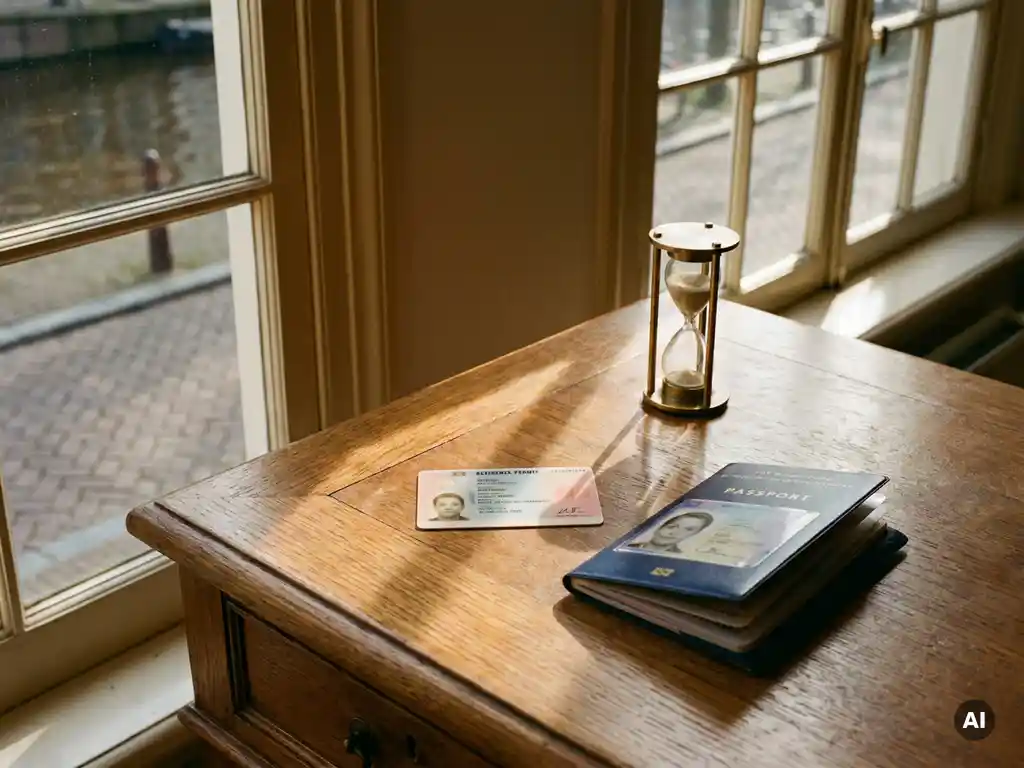
Obtaining a residence permit in the Netherlands typically takes between two weeks and ninety days, depending on the type of permit and the applicant’s circumstances. The IND (Immigratie- en Naturalisatiedienst) sets different statutory decision periods for each permit category, and processing times can vary considerably based on the completeness of the application and the specific route taken. The sections below address the most common questions about Dutch residence permit timelines, from initial application to the role of legal support.
What factors determine how long a Dutch residence permit takes?
The processing time for a Dutch residence permit depends primarily on the type of permit applied for, whether the applicant requires a provisional residence permit (MVV), and the completeness of the submitted documentation. Additional factors include the applicant’s nationality, the sponsoring organisation’s status, and whether the IND needs to consult other bodies such as the UWV (Employee Insurance Agency).
Several variables can extend or shorten the timeline in practice:
- Permit category: Highly skilled migrant applications processed by a recognised sponsor are handled significantly faster than standard single permit (GVVA) applications, which require UWV involvement.
- Sponsor status: Applications submitted by a recognised sponsor benefit from expedited procedures. Employers who have not yet obtained recognised sponsor status face a longer preliminary process.
- Document completeness: Incomplete applications are a leading cause of delay. Missing translations, unlegalised documents, or absent supporting evidence can pause the process entirely.
- MVV requirement: Applicants who require a provisional residence permit before entering the Netherlands add an additional step to the process, though the MVV and residence permit applications are often submitted simultaneously.
- UWV consultation: For single permit applications, the IND must await a labour market assessment from the UWV. The UWV may also contact the employer or employee for clarification, which adds time.
Understanding which of these factors applies to a specific situation is essential before estimating a realistic timeline. Each case is assessed individually, and the actual processing time may differ from the statutory deadline.
What are the official IND processing times per permit type?
The IND publishes statutory decision periods for each residence permit category. For the highly skilled migrant permit, the IND aims to decide within two weeks of receiving a complete application. For the single permit (GVVA), the statutory period is ninety days. The EU Blue Card follows a similar timeline to the highly skilled migrant route when submitted by a recognised employer.
The following overview reflects the general processing timeframes per permit type:
- Highly skilled migrant (kennismigrant): The IND targets a decision within two weeks, provided the application is submitted by a recognised sponsor and the file is complete. If a positive decision is issued, the employee may begin working before the physical residence document is ready, for a maximum of four months from the date stated in the decision letter.
- Single permit (GVVA): The statutory maximum is ninety days. This period includes the UWV’s labour market assessment, which evaluates whether a suitable candidate could have been found within the Netherlands or the EU before recruiting from outside.
- EU Blue Card: Processing times are broadly comparable to the highly skilled migrant route, though the employer does not need to hold recognised sponsor status. The minimum income requirement for 2026 is €5,937 gross per month.
- Student residence permit: The educational institution acts as sponsor and submits the application. Processing times vary but are generally aligned with the academic calendar to ensure the permit is in place before the course begins.
- Partner permit: Processing times depend on the sponsor’s own permit type and whether the applicant requires an MVV. Income requirements apply in most cases, and the IND assesses each application individually.
- Startup visa: Applicants must work with a recognised facilitator approved by the Netherlands Enterprise Agency (RVO). Processing follows standard IND timelines, but the preparatory steps, finding a facilitator and agreeing a cooperation agreement, add time before the application can even be submitted.
These are statutory targets, not guarantees. In practice, processing times fluctuate based on IND workload and the specifics of each application.
What is the difference between an MVV and a residence permit?
An MVV (machtiging tot voorlopig verblijf) is an entry visa that allows a non-EU national to travel to the Netherlands and stay for longer than ninety days. A residence permit is the document that authorises the holder to reside in the Netherlands on an ongoing basis. The MVV is a precondition for entry; the residence permit is the long-term authorisation that follows.
Not every applicant requires an MVV. Whether one is needed depends on the applicant’s nationality. Citizens of certain countries, including EU/EEA nationals and those from countries with specific agreements with the Netherlands, are exempt. For those who do require an MVV, the recognised sponsor typically applies for both the MVV and the residence permit simultaneously, which avoids the need for two separate application rounds.
Once in the Netherlands, the applicant collects the physical residence permit from the IND or a designated collection point. The MVV itself is a sticker placed in the passport by a Dutch embassy or consulate abroad, valid for ninety days and used solely for entry. It does not authorise work or long-term residence on its own.
For applicants moving to the Netherlands for employment, it is important to note that the right of residence is tied to maintaining main residence in the country. Extended absences abroad, deregistration from the municipal personal records database (BRP), or other signals of relocation can lead the IND to conclude that main residence has been moved, which may result in withdrawal or non-renewal of the residence permit.
Can the IND processing time be shortened?
In most cases, the IND processing time cannot be formally expedited on request. However, choosing the right permit route from the outset is the most effective way to minimise waiting time. Highly skilled migrant applications submitted by a recognised sponsor are processed within approximately two weeks, far faster than the ninety-day period for standard single permit applications.
Several practical steps can help avoid unnecessary delays:
- Ensure the employer holds recognised sponsor status: Without this status, the employer must first apply to become a recognised sponsor before submitting a permit application. This preliminary step can add weeks to the overall timeline.
- Submit a complete application: Incomplete files are a primary source of delay. All required documents, including valid passports, employment contracts, salary evidence, and any necessary translations or legalisations, should be in order before submission.
- Choose the correct permit category: Applying under the wrong category can result in rejection and the need to restart the process. Legal advice at this stage can prevent costly errors.
- Anticipate the UWV consultation: For single permit applications, the UWV may contact the employer or employee for additional information. Responding promptly to any such requests prevents the clock from stalling.
Where an applicant has received a positive decision but the physical residence document is not yet ready, the IND’s decision letter (kennisgeving) may explicitly permit the employee to begin working immediately. This provision applies for up to four months from the date stated in the letter, which can be a practical solution for employers who need the employee to start without delay.
What happens if the IND exceeds its decision deadline?
If the IND fails to issue a decision within the statutory period, the applicant or their representative can formally notify the IND that it is in default (in Dutch: ingebrekestelling). If the IND still does not decide within two weeks of receiving that notice, the applicant may appeal to the court to compel a decision. The court can then order the IND to decide within a set timeframe, often accompanied by a penalty for each day of further delay.
This procedure is known as a beroep wegens niet tijdig beslissen (appeal against failure to decide in time) and is governed by Dutch administrative law. It is a formal legal remedy, not a complaint procedure, and it requires the applicant to follow the correct procedural steps in the correct order.
In practice, exceeding the statutory deadline does not automatically mean the application will be approved. It means the IND is obliged to decide, not that the outcome will be favourable. However, the legal mechanism does provide a meaningful tool for applicants who are facing significant personal or professional consequences from the delay, for example, an employee who cannot legally begin work until the permit is in place.
Depending on the specific situation, it may also be worth exploring whether interim relief (voorlopige voorziening) is available through the court, particularly where the delay causes demonstrable harm. This is a more complex legal step and generally warrants professional legal guidance.
When should a lawyer be involved in a residence permit application?
Legal assistance is not required for every residence permit application, but it becomes particularly valuable in complex cases, where previous applications have been refused, or where the applicant’s circumstances do not fit neatly into a standard permit category. Early legal involvement can prevent errors that are difficult or costly to correct later in the process.
Situations where legal advice is especially relevant include:
- Applications that have been refused and are being reconsidered or appealed
- Cases where the IND has exceeded its statutory decision period and formal steps need to be taken
- Situations involving a change of employer, permit category, or employment structure mid-application
- Applications involving complex income structures, multiple income sources, or partner income that needs to be counted
- Cases where the applicant’s main residence is being questioned by the IND
- Startup visa applications, which require coordination with a recognised facilitator and careful preparation of a business plan
- Applications for international clients navigating both Dutch immigration requirements and cross-border legal considerations
Beyond the permit application itself, legal advice is often relevant to the broader context of relocating to the Netherlands, including employment contracts, the 30% ruling (expat scheme), rental agreements, and the establishment of a business. These matters frequently intersect, and addressing them in an integrated way from the outset reduces the risk of complications later.
How Russell Advocaten supports expats with residence permit questions
Russell Advocaten is an internationally oriented law firm based in Amsterdam, with extensive experience advising expats on immigration-related matters, setting up a business in the Netherlands, employment law, real estate, contracts, and family law. The firm’s lawyers communicate equally fluently in English, German, and Dutch, a practical advantage for international clients navigating Dutch legal and administrative processes.
As an official partner of IN Amsterdam, the expat centre of the City of Amsterdam, Russell Advocaten is deeply embedded in the international community and understands the specific challenges that come with relocating to the Netherlands. The firm regularly organises workshops on Dutch law for expats and provides tailored legal support across a broad range of situations.
For expats with questions about residence permits and the broader legal framework of living and working in the Netherlands, Russell Advocaten can assist with:
- Assessing which permit route is most appropriate given the applicant’s situation and employer
- Reviewing applications before submission to identify gaps or risks
- Advising on the 30% ruling (expat scheme) and its interaction with employment conditions
- Supporting employers in obtaining recognised sponsor status
- Advising on employment contracts, rental agreements, and the diplomat clause
- Assisting with formal procedures if the IND exceeds its decision deadline
- Providing cross-border legal support through the international Primerus network
If you have questions about your residence permit or need legal support in connection with your move to the Netherlands, contact Russell Advocaten for a consultation with one of our experienced lawyers.
This information is general in nature and does not constitute legal advice for your specific situation. Please consult a lawyer at Russell Advocaten for advice tailored to your circumstances.
Veelgestelde vragen
Can I work in the Netherlands while my residence permit application is still being processed?
It depends on the permit type and whether a positive decision letter (kennisgeving) has already been issued. For highly skilled migrant applications, once the IND issues a positive decision, the employee may begin working immediately — even before the physical residence document is ready — for up to four months from the date stated in the letter. For other permit types, working before the permit is formally granted is generally not permitted, and doing so could jeopardise the application or result in enforcement action against the employer.
What documents are most commonly missing from Dutch residence permit applications?
The most frequent omissions include expired or soon-to-expire passports, unsigned or undated employment contracts, missing salary slips or proof of income, and documents that have not been officially translated into Dutch, English, French, or German as required by the IND. For applicants from countries that require document legalisation or an apostille, failing to arrange this in advance is a particularly common and time-consuming oversight. Checking the IND’s document checklist for your specific permit category before submission is strongly recommended.
What happens to my residence permit if I change employers after it has been granted?
A Dutch residence permit is typically tied to a specific employer and purpose. If you change employers, your current permit no longer covers the new employment, and a new application must be submitted — ideally before you start working for the new employer. For highly skilled migrants, the new employer must also be a recognised sponsor. There is a short grace period of up to three months during which the IND will not immediately revoke the permit after a job change, but working for the new employer without a valid permit during this period is not permitted.
Does my family members' residence permit application get processed at the same time as mine?
Family members applying for a dependent or partner permit do not automatically have their applications linked to or processed simultaneously with the primary applicant’s permit. Each application is assessed individually by the IND. However, it is generally advisable to submit family member applications as early as possible, since processing times for partner and family permits can be longer than for employment-based permits, particularly when an MVV is also required. Coordinating the timing of submissions with legal support can help ensure the family can relocate together without unnecessary gaps.
What is the 30% ruling and how does it relate to my residence permit?
The 30% ruling (also called the expat scheme) is a Dutch tax facility that allows qualifying highly skilled migrants to receive up to 30% of their gross salary tax-free, in recognition of the extra costs associated with relocating to the Netherlands. It is a separate application from the residence permit, submitted to the Dutch Tax Authority (Belastingdienst) jointly by the employee and employer. While the two processes are independent, eligibility for the 30% ruling is closely linked to the conditions of the highly skilled migrant permit — including the minimum salary threshold — making it important to consider both together when structuring an employment package.
Can my residence permit be withdrawn if I travel abroad frequently?
Yes, extended or frequent absences from the Netherlands can put your residence permit at risk. The IND requires that permit holders maintain their main residence in the Netherlands, which includes being registered in the municipal personal records database (BRP). If the IND concludes that your main residence has effectively moved abroad — based on deregistration, prolonged absence, or other indicators — it may withdraw your permit or refuse to renew it. If your work or personal circumstances require regular international travel, it is advisable to seek legal advice on how to document and manage your residency status proactively.
How far in advance should I start the residence permit process before my intended start date in the Netherlands?
For highly skilled migrant applications with a recognised sponsor, a lead time of four to six weeks before the intended start date is generally sufficient, accounting for the two-week IND processing target plus time for document preparation and any MVV processing at a Dutch embassy abroad. For single permit (GVVA) applications, the ninety-day statutory period means you should ideally begin the process at least four to five months before the intended start date. For more complex routes — such as the startup visa or applications involving unrecognised sponsors — starting even earlier is advisable to allow time for preliminary steps.
Gerelateerde artikelen
- How do expats build a social network when moving to Amsterdam?
- What is the cost of living for expats in Amsterdam in 2026?
- What happens to an expat's assets if they divorce in the Netherlands?
- How do Dutch tenant protection laws affect expats?
- Who qualifies for 30% ruling in the Netherlands?
Deze inhoud is gegenereerd met behulp van AI en kan fouten bevatten.