

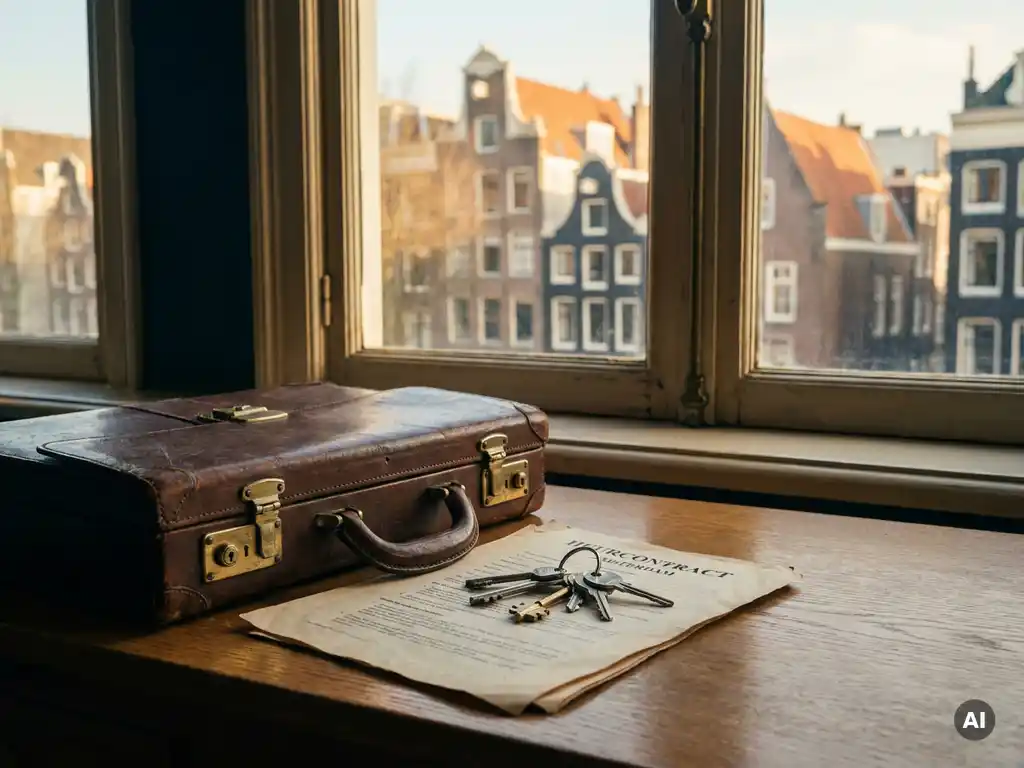
Expats in the Netherlands typically find housing through a combination of dedicated rental platforms, relocation agencies, and direct landlord contact. The Dutch rental market is competitive, particularly in Amsterdam and other major cities, where demand consistently outpaces supply. This article addresses the most common questions expats face when searching for a rental property in the Netherlands, from understanding contract types and required documents to knowing your legal rights as a tenant.
What makes the Dutch rental market difficult for expats?
The Dutch rental market is one of the most competitive in Europe, and expats face particular challenges because they often arrive without a Dutch credit history, a local employer reference, or familiarity with how the market operates. In cities such as Amsterdam, Utrecht, and The Hague, the gap between housing demand and available rental stock means that properties are frequently let within days of being listed.
Several structural factors compound this difficulty for those moving to the Netherlands from abroad:
- High demand in urban centres: Amsterdam in particular has a severely constrained rental market, with both local residents and international arrivals competing for a limited number of properties.
- Income and employment requirements: Most landlords require proof of Dutch income, typically at least three times the monthly rent. Expats who have just relocated may not yet have a Dutch employment contract or payslips to present.
- No local rental history: Without a Dutch rental record or references from previous Dutch landlords, expats are often considered higher-risk tenants.
- Language barriers: Although many landlords in Amsterdam operate in English, lease agreements and correspondence with housing associations are frequently in Dutch.
- Social housing restrictions: A large portion of Dutch rental housing falls under the social housing sector, which is reserved for residents who meet specific income thresholds and are registered on waiting lists, sometimes for years. Expats in professional roles generally do not qualify and must navigate the private rental sector.
Understanding these constraints before beginning a property search allows expats to prepare the right documentation and set realistic expectations about timelines and costs.
What types of rental contracts are available in the Netherlands?
In the Netherlands, rental agreements for residential property generally fall into two categories: indefinite contracts and fixed-term contracts. An indefinite contract offers the tenant the strongest protection under Dutch tenancy law, as the landlord’s ability to terminate the agreement is significantly restricted. A fixed-term contract runs for a specified period, after which it either converts to an indefinite agreement or ends, depending on the terms agreed.
Indefinite rental contracts
An indefinite contract has no set end date. Once the agreed notice period has passed, the tenant may terminate the agreement. The landlord, however, may only end the contract on limited statutory grounds, such as the tenant’s failure to meet obligations or the landlord’s genuine personal use of the property. This type of contract provides long-term security and is common in the private rental sector.
Fixed-term rental contracts
A fixed-term contract specifies a start and end date. Under Dutch law, a fixed-term contract for independent residential accommodation may be concluded for a maximum of two years. The landlord must notify the tenant in writing between one and three months before the end date that the contract will not be renewed. If the landlord fails to give this notice in time, the contract automatically converts to an indefinite one. Fixed-term contracts are often used for furnished properties aimed at expats or for temporary relocations.
It is also worth noting the diplomat clause (diplomatenbeding), a contractual provision sometimes included in rental agreements that allows a landlord to reclaim the property if they need to return to it, for instance, after an international posting. This clause is particularly relevant in the expat rental market and affects the tenant’s security of tenure. Whether such a clause is enforceable depends on the specific wording and circumstances, and legal advice is recommended before signing any agreement containing it.
Where do expats search for rental properties in the Netherlands?
Expats in the Netherlands most commonly search for rental properties through online platforms, relocation agencies, and professional networks. The private rental market for international arrivals is largely concentrated on a handful of well-established channels, though competition on all of them is intense.
The most widely used resources include:
- Funda (funda.nl): The largest property platform in the Netherlands, listing both sales and rental properties. It is the standard starting point for most property searches.
- Pararius and Kamernet: Platforms focused specifically on the private rental market, with a significant proportion of listings aimed at international tenants.
- Expatica and IamExpat: English-language platforms that aggregate rental listings and provide practical guidance for international arrivals.
- Relocation agencies: Professional relocation consultants assist expats in finding suitable housing, negotiating lease terms, and navigating administrative requirements. This service is often arranged by the employer as part of an international relocation package.
- Corporate housing providers: For short-term stays or during the initial period after arrival, serviced apartments and corporate housing offer a bridge solution while a longer-term rental is secured.
It is advisable to begin the search before arriving in the Netherlands where possible, and to have all required documentation prepared in advance. Acting quickly and presenting a complete application at the first point of contact significantly improves the chances of securing a property in a competitive market.
What documents do landlords in the Netherlands typically require?
Landlords in the Netherlands typically require proof of identity, evidence of income or employment, and references before agreeing to let a property. For expats, assembling this documentation can be more complex than for local residents, particularly in the early stages of an international relocation.
The standard documents requested include:
- Valid passport or identity document
- Employment contract or letter from the employer confirming the position, salary, and duration of employment in the Netherlands
- Recent payslips (typically the last two to three months) or, for newly arrived expats, a statement from the employer confirming the agreed salary
- Bank statements demonstrating sufficient financial means
- BSN (Burgerservicenummer) — the Dutch citizen service number, which is required for registering at a municipality and for many administrative processes in the Netherlands
- References from previous landlords, where available
- Proof of residence permit, where applicable, depending on the applicant’s nationality and immigration status
Expats who have recently arrived and do not yet have Dutch payslips may be able to substitute these with a formal employer declaration or a letter from their HR department. Some landlords also accept a guarantor arrangement or a higher security deposit in lieu of a full rental history. Requirements vary between landlords and letting agents, so it is worth clarifying what is needed before submitting an application.
What are the legal rights of expats renting in the Netherlands?
Expats renting in the Netherlands have the same legal rights as Dutch residents under Dutch tenancy law. Nationality does not affect a tenant’s statutory protections. These rights cover security of tenure, limits on rent increases, the landlord’s maintenance obligations, and protection against unlawful eviction.
Key tenant rights under Dutch law include:
- Security of tenure: Under an indefinite contract, a landlord may only terminate the tenancy on specific statutory grounds. Arbitrary or convenience-based termination by the landlord is not permitted.
- Rent protection: For properties in the regulated (social) sector, rent increases are capped by law. In the private sector, the terms of the lease govern increases, though statutory limits may apply depending on the rent level and the date the contract was concluded.
- Maintenance obligations: The landlord is legally required to maintain the property in a habitable condition and to carry out necessary repairs. Minor maintenance may fall to the tenant, as defined by Dutch law.
- Deposit limits: Dutch law limits the security deposit a landlord may charge. As a general principle, a deposit exceeding two months’ rent is considered disproportionate, though the specific rules depend on the type of tenancy.
- Recourse through the Rent Tribunal (Huurcommissie): Tenants in the regulated sector can refer disputes about rent levels or service charges to the Huurcommissie, an independent body that adjudicates rental disputes.
It is important to note that the scope of these protections can differ between the social rental sector and the private (free market) sector. Expats renting in the private sector, which is the most common situation for international professionals, should review their lease carefully and seek legal advice if any clause appears to conflict with their statutory rights.
When should expats seek legal advice about housing in the Netherlands?
Expats should seek legal advice about housing in the Netherlands whenever they encounter a clause in a lease they do not fully understand, face a dispute with a landlord, or are asked to sign an agreement that deviates from standard terms. Early legal input can prevent costly misunderstandings and protect the tenant’s position throughout the tenancy.
Specific situations that warrant professional legal advice include:
- Lease agreements containing a diplomat clause or other unusual termination provisions
- Disputes over the return of a security deposit at the end of a tenancy
- Landlord attempts to terminate a tenancy without a valid statutory ground
- Disagreements about maintenance responsibilities or the habitability of the property
- Rent increases that appear to exceed what is permitted under the contract or applicable law
- Situations where the landlord is unresponsive to repair requests
- Uncertainty about whether a property falls within the regulated or private rental sector, and what rights apply accordingly
Given that Dutch tenancy law is detailed and that lease agreements are frequently drafted in Dutch, expats are well advised to have any agreement reviewed before signing. The specific outcome of any dispute will depend on the facts and the precise terms of the contract, so general guidance is no substitute for advice tailored to the individual situation.
How Russell Advocaten supports expats with housing in the Netherlands
Russell Advocaten Amsterdam is an internationally oriented law firm with decades of experience advising expats on a wide range of legal matters in the Netherlands. The firm’s lawyers communicate equally fluently in English, German, and Dutch, a practical advantage for international clients navigating Dutch tenancy law and lease negotiations.
For expats dealing with housing questions, Russell Advocaten can assist with:
- Reviewing and explaining rental agreements before signing, including clauses such as the diplomat clause
- Advising on tenant rights and landlord obligations under Dutch tenancy law
- Representing tenants in disputes with landlords, including security deposit recovery and unlawful termination claims
- Providing guidance on the intersection of housing and immigration status, for instance, where a residence permit or employment arrangement affects the tenancy
- Supporting broader relocation needs, including advice on setting up a business, employment contracts, and family law matters
Russell Advocaten is an official partner of IN Amsterdam, the expat centre of the City of Amsterdam, and has been recommended by the Legal 500 for many years. The firm’s combination of local expertise and international orientation makes it a trusted legal partner for expats in the Netherlands.
If you have questions about renting a property in the Netherlands or need a lease reviewed before signing, contact Russell Advocaten for a consultation tailored to your situation.
This information is general in nature and does not constitute legal advice for your specific situation. For advice tailored to your circumstances, please consult a lawyer at Russell Advocaten.
Veelgestelde vragen
Can I rent a property in the Netherlands before I arrive, or do I need to be physically present to sign a lease?
It is possible to begin your search remotely and even secure a property before arriving, though most landlords and letting agents prefer to meet prospective tenants in person before signing. A practical middle ground is to arrange viewings during a short pre-move visit or to work with a relocation agency that can represent your interests on the ground. For the lease signing itself, some landlords accept digital signatures, but this should be confirmed in advance. Securing short-term corporate housing or a serviced apartment for your first few weeks gives you a base from which to conduct an in-person search without pressure.
What can I do if I don't yet have Dutch payslips or a Dutch employment contract when applying for a rental?
Many landlords will accept a formal employer declaration letter as a substitute for payslips, provided it clearly states your position, start date, and agreed gross salary. If your employer is an internationally recognised company, this often carries significant weight. Alternatively, some landlords may agree to a higher security deposit or a guarantor arrangement to offset the perceived risk. Being upfront about your situation and presenting as complete a documentation package as possible — including foreign payslips, a bank statement, and your signed employment offer — demonstrates reliability and can make a meaningful difference.
How much should I budget for upfront costs when renting in the Netherlands?
Beyond the monthly rent itself, you should budget for a security deposit of up to two months’ rent, which is the standard maximum under Dutch law. If you use a letting agent, agency fees may apply, though since 2023 Dutch law prohibits landlords and agents from charging tenants double commission — you should not be asked to pay fees if the agent was engaged by the landlord. Additional upfront costs can include the first month’s rent in advance, connection fees for utilities, and any costs associated with obtaining a BSN. For furnished properties, confirm what is included, as service costs and utilities are sometimes billed separately.
What is the difference between the regulated (social) sector and the private rental sector, and how do I know which one applies to my property?
The distinction is based on the property’s rent level and a points-based valuation system called the woningwaarderingsstelsel (WWS). Properties below a set rent threshold — currently around €900 per month, though this figure is periodically updated — fall within the regulated sector and benefit from stronger rent protections, including the ability to challenge rent levels at the Huurcommissie. Properties above this threshold are generally considered private sector rentals, where market rents apply and fewer statutory price controls are in force. Most expats renting in Amsterdam and other major cities will be in the private sector, but if you are unsure, a lawyer or the Huurcommissie can help you determine the applicable category for your specific property.
What should I look out for when reviewing a rental contract in the Netherlands?
Key clauses to scrutinise include the notice period for both parties, any termination provisions such as the diplomat clause, the conditions under which the landlord may enter the property, how and when rent increases can be applied, and the precise definition of the tenant’s maintenance responsibilities. Pay close attention to the service costs listed alongside the base rent, as these can add substantially to your monthly outgoings and should be itemised clearly. If the contract is in Dutch, do not rely solely on an automated translation — having a lawyer review it before signing ensures you understand exactly what you are committing to.
Can my landlord refuse to return my security deposit, and what can I do if this happens?
A landlord may only retain part or all of the security deposit to cover legitimate costs, such as unpaid rent or damage to the property beyond normal wear and tear. They cannot withhold the deposit simply because of minor scuffs or general deterioration that results from ordinary use. If your landlord refuses to return the deposit without valid justification, you can first send a formal written demand setting a reasonable deadline for repayment. If this does not resolve the matter, you may be able to refer the dispute to the Huurcommissie (for regulated sector tenancies) or pursue the claim through the civil courts, ideally with legal assistance.
Does my immigration or visa status affect my rights as a tenant in the Netherlands?
Your statutory rights as a tenant under Dutch tenancy law apply regardless of your nationality or immigration status — the law does not distinguish between Dutch citizens and foreign nationals. However, your immigration status can have indirect practical implications: for instance, some landlords may request proof of a valid residence permit as part of the application process, and the duration of your permit may influence the type of contract a landlord is willing to offer. If your residence permit is tied to a specific employer and your employment situation changes, it is worth seeking legal advice promptly, as this can affect both your right to remain in the Netherlands and the continuity of your tenancy.
Gerelateerde artikelen
- What is the highly skilled migrant visa in the Netherlands?
- When should an expat hire a lawyer in the Netherlands?
- How do you register as an expat in the Netherlands?
- Is moving to the Netherlands a good idea?
- How much does an immigration lawyer cost in the Netherlands?
Deze inhoud is gegenereerd met behulp van AI en kan fouten bevatten.