

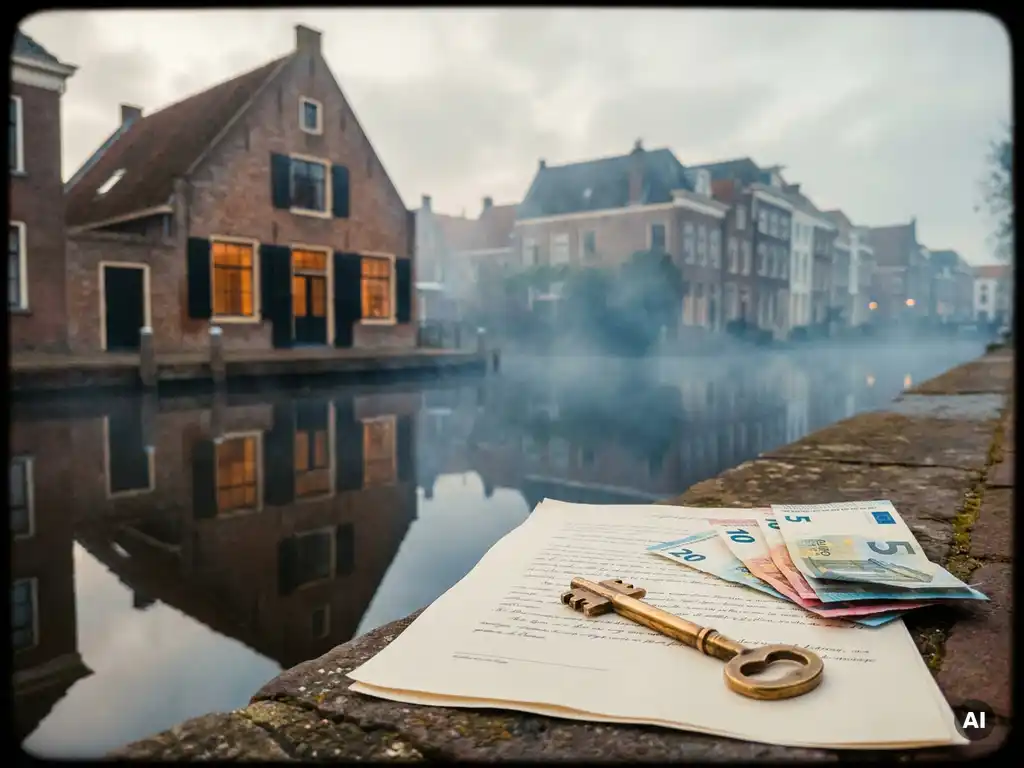
No, you do not need a Dutch bank account to buy property in the Netherlands. Foreign buyers are legally permitted to purchase Dutch real estate regardless of whether they hold a local bank account, and there is no statutory requirement for one. That said, having a Dutch bank account significantly simplifies the transaction process, particularly when it comes to mortgage payments, notary fees, and ongoing property costs. The sections below address the most common questions foreign buyers have about banking, payment requirements, and the broader legal framework for purchasing property in the Netherlands.
Can foreigners buy property in the Netherlands without a Dutch bank account?
Yes, foreigners can buy property in the Netherlands without a Dutch bank account. Dutch law places no nationality or residency restrictions on property ownership, and there is no legal requirement to hold a local bank account as a condition of purchase. EU and non-EU nationals alike are eligible to buy, whether they reside in the Netherlands or abroad.
In practice, the absence of a Dutch bank account does create friction at several stages of the transaction. Most Dutch civil-law notaries (notarissen) who handle property transfers prefer or require that funds be received from a verifiable bank account, and some mortgage lenders will only disburse funds to a Dutch account. If you are financing the purchase through a Dutch mortgage, the lender will almost certainly require a Dutch account for loan disbursement and monthly repayments.
For buyers purchasing with their own funds rather than a mortgage, a foreign bank account may be sufficient, provided the notary is satisfied with the source of funds and the transfer can be completed in a timely manner. It is advisable to confirm the notary’s requirements early in the process, as these can vary.
What are the payment requirements when buying Dutch property?
When buying property in the Netherlands, the purchase price is paid through a Dutch civil-law notary, who acts as a neutral intermediary and holds the funds in a third-party account (derdengeldenrekening) until the transfer is complete. The buyer must also pay transfer tax (overdrachtsbelasting), notary fees, and any mortgage registration costs.
The key financial obligations at the point of purchase are as follows:
- Deposit: Typically, 10% of the purchase price is due when the preliminary purchase agreement (voorlopig koopcontract) is signed, usually within a few weeks of the offer being accepted.
- Transfer tax: For most buyers, this is 2% of the purchase price. First-time buyers under the age of 35 purchasing a property below a set threshold may qualify for an exemption, though eligibility conditions apply.
- Notary fees: These cover the deed of transfer and, where applicable, the mortgage deed. Costs vary by notary and transaction complexity.
- Mortgage costs: If you are taking out a Dutch mortgage, additional costs include valuation fees, mortgage advice fees, and bank charges.
All funds must be transferred to the notary’s third-party account before the transfer deed is signed. International transfers are accepted, but they must arrive in full and cleared before the completion date. Currency conversion costs and transfer delays are practical risks that buyers using foreign accounts should plan for carefully.
Does having a Dutch bank account make the process easier?
Yes, holding a Dutch bank account makes the property purchase process considerably more straightforward. It removes several logistical obstacles related to fund transfers, mortgage administration, and ongoing property costs, and it is effectively a prerequisite if you intend to take out a Dutch mortgage.
The practical advantages of a Dutch bank account for property buyers include:
- Faster fund transfers: Domestic transfers within the Netherlands are processed quickly and reliably, reducing the risk of delays at completion.
- Mortgage eligibility: Most Dutch lenders require a Dutch bank account for loan disbursement and monthly repayment collection.
- Utility and service payments: Ongoing costs such as municipal taxes (gemeentelijke belastingen), home insurance premiums, and service charges for apartment buildings are typically collected by direct debit from a Dutch account.
- Credibility with sellers and notaries: Having a local account can signal financial readiness and simplify the administrative process for all parties involved.
For buyers relocating to the Netherlands, opening a Dutch bank account early in the process is strongly advisable. For non-residents purchasing investment property, it remains worth exploring, as the administrative benefits generally outweigh the effort involved in opening an account from abroad.
How can non-residents open a Dutch bank account?
Non-residents can open a Dutch bank account, though the process is more involved than for residents. The requirements vary between banks, and not all Dutch banks offer accounts to individuals who do not yet have a registered address in the Netherlands. However, several options are available to foreign buyers.
The general steps and requirements are as follows:
- Obtain a BSN (Burgerservicenummer): Most Dutch banks require a citizen service number before opening an account. Non-residents can obtain a non-resident BSN (RNI-BSN) by visiting a designated municipality in the Netherlands, without needing to register as a resident.
- Choose a suitable bank: Some major Dutch banks, including ING and Rabobank, offer accounts to non-residents under certain conditions. Online banks and international fintech providers may offer more flexible options as an interim solution.
- Provide identification and documentation: A valid passport, proof of address in your country of residence, and in some cases proof of income or employment will be required.
- Visit a branch or complete the process online: Depending on the bank, account opening may require an in-person visit to a Dutch branch or can be completed remotely.
The timeline for opening an account can range from a few days to several weeks, so it is advisable to begin this process well before you reach the stage of signing a purchase agreement. Expats who have already registered with a Dutch municipality will generally find the process more straightforward.
What other legal requirements apply to foreign property buyers in the Netherlands?
Beyond the banking question, foreign buyers must navigate several legal and administrative requirements when purchasing property in the Netherlands. These apply regardless of nationality and are an integral part of every property transaction under Dutch law.
The most important requirements include:
- Notarial deed of transfer: All property transfers in the Netherlands must be executed by a licensed civil-law notary and registered in the Dutch Land Registry (Kadaster). This is a legal formality that cannot be bypassed.
- Preliminary purchase agreement: The voorlopig koopcontract is a binding contract signed by both parties before the final transfer. It sets out the agreed price, conditions, and completion date. Foreign buyers should ensure they understand all clauses before signing, as Dutch contract law governs the agreement.
- Financing conditions: If you are applying for a Dutch mortgage as a foreign national, lenders will assess your income, residency status, and financial position. Permanent residents and EU citizens generally have access to a wider range of mortgage products than non-residents, though options exist for both groups.
- Tax obligations: Property owners in the Netherlands are subject to municipal property tax (onroerendezaakbelasting) and, where applicable, the notional rental value tax (eigenwoningforfait) if the property is a primary residence. Transfer tax is payable at the point of purchase.
- Anti-money laundering checks: Notaries and lenders are legally required to verify the source of funds used in property transactions. Foreign buyers should be prepared to provide documentation demonstrating the origin of their funds.
For buyers who are also considering renting property before purchasing, or who hold a diplomatic posting in the Netherlands, it is worth being aware that specific contractual arrangements may apply, including provisions relevant to those with diplomatic status in the Netherlands. The legal landscape for international buyers is nuanced, and individual circumstances can significantly affect which rules and options apply.
How Russell Advocaten Can Help Foreign Property Buyers in the Netherlands
Purchasing property in the Netherlands as a foreign national involves more than finding the right home at the right price. The legal, financial, and administrative requirements can be complex, and the consequences of misunderstanding a contract or missing a procedural step can be significant. This is where specialist legal support makes a material difference.
Russell Advocaten is an internationally oriented law firm based in Amsterdam, with long-standing experience advising expats and foreign nationals on a wide range of legal matters in the Netherlands. Their lawyers communicate fluently in English, German, and Dutch, which is a practical advantage for international clients navigating Dutch legal processes. The firm’s areas of expertise relevant to foreign property buyers include:
- Real estate and lease law, including the review and negotiation of purchase agreements
- Contract law, ensuring that preliminary and final agreements protect your interests
- Immigration and residency matters, including advice on how your residency status may affect your financing options
- Setting up a business in the Netherlands, for buyers who are also establishing a commercial presence
- Employment and personnel law, relevant for expats relocating with their employer
Russell Advocaten is an official partner of IN Amsterdam, the expatriate centre of the City of Amsterdam, and has been recommended by the Legal 500 for many years. The firm’s international network through Primerus, spanning 3,000 lawyers in 40 countries, means that cross-border legal questions can also be addressed effectively.
If you are considering buying property in the Netherlands and would like legal advice tailored to your specific situation, contact Russell Advocaten to discuss your circumstances with an experienced lawyer.
This information is general in nature and does not constitute legal advice for your specific situation. Please consult a lawyer at Russell Advocaten for advice tailored to your circumstances.
Veelgestelde vragen
Can I get a Dutch mortgage as a non-resident foreigner?
Yes, non-residents can access Dutch mortgages, but the options are more limited than those available to residents or EU citizens with a registered Dutch address. Lenders will typically assess your income source, employment type, and country of residence, and some banks will only lend to non-residents under specific conditions. Working with a Dutch mortgage adviser (hypotheekadviseur) who has experience with international clients is strongly recommended, as they can identify lenders whose criteria match your profile and guide you through the additional documentation requirements.
What happens if my international bank transfer is delayed and doesn't arrive before the completion date?
If funds do not arrive in the notary’s third-party account (derdengeldenrekening) in full and cleared before the agreed completion date, the transfer of ownership cannot proceed as scheduled. This can trigger penalty clauses under the preliminary purchase agreement, and in serious cases the seller may have grounds to cancel the contract and retain the 10% deposit. To avoid this risk, initiate international transfers well in advance — ideally several business days before the deadline — and account for potential delays caused by currency conversion, correspondent banking, or compliance checks.
Do I need to be physically present in the Netherlands to complete the property purchase?
Not necessarily. If you are unable to attend the notarial signing in person, you can grant a power of attorney (volmacht) to a trusted representative — such as your lawyer or a designated agent — who can sign the transfer deed on your behalf. The power of attorney must meet specific legal requirements and may need to be notarised and apostilled in your country of residence before it is accepted by the Dutch notary. Confirming these requirements with your notary and legal adviser well ahead of the completion date is essential.
Are there any restrictions on what type of property a foreigner can buy in the Netherlands?
There are generally no restrictions on the type of residential or commercial property a foreign national can purchase in the Netherlands. However, buyers of apartment units should be aware that these properties typically come with membership in a homeowners’ association (Vereniging van Eigenaren, or VvE), which carries its own obligations, service charges, and governance rules. Some rural or protected land categories may also be subject to specific planning or use restrictions. Reviewing the property’s legal status and any associated obligations with a real estate lawyer before signing is always advisable.
What is the most common mistake foreign buyers make when purchasing property in the Netherlands?
One of the most frequent mistakes is signing the preliminary purchase agreement (voorlopig koopcontract) without fully understanding its terms or the conditions attached to it. In the Netherlands, this contract is legally binding once signed by both parties, and the standard three-day cooling-off period is relatively short. Foreign buyers sometimes assume the agreement is a formality or that terms are non-negotiable, when in fact clauses around financing conditions, inspection rights, and completion timelines can and should be reviewed and, where necessary, negotiated before signing. Engaging a lawyer to review the contract before you sign is one of the most valuable steps you can take.
How do ongoing property taxes and costs work for foreign owners who don't live in the Netherlands?
Foreign property owners who do not reside in the Netherlands are still subject to Dutch municipal property tax (onroerendezaakbelasting, or OZB), which is levied annually by the local municipality based on the property’s assessed value. If the property is not your primary residence, the eigenwoningforfait (notional rental value tax) does not apply, but rental income generated from the property may be subject to Dutch income tax or corporate tax depending on how the property is held. It is advisable to consult both a Dutch tax adviser and, if necessary, a tax professional in your home country to understand your cross-border tax obligations before completing the purchase.
Is it worth using a buyer's agent (aankoopmakelaar) as a foreign buyer, and what do they do?
For most foreign buyers, engaging a buyer’s agent (aankoopmakelaar) is well worth the cost. Unlike the seller’s agent, a buyer’s agent works exclusively in your interest — helping you identify suitable properties, assessing market value, conducting negotiations, and guiding you through the due diligence process. This is particularly valuable if you are unfamiliar with the Dutch property market, are purchasing from abroad, or are navigating the process in a language that is not your first. Buyer’s agents typically charge a fixed fee or a percentage of the purchase price, and their involvement can prevent costly mistakes and help you secure better terms.
Gerelateerde artikelen
- How do expats build a social network when moving to Amsterdam?
- What is a diplomat clause in a Dutch rental agreement?
- Is it better to rent or buy a house as an expat in the Netherlands?
- Is hiring an immigration lawyer worth it?
- What are the legal considerations for expats?
Deze inhoud is gegenereerd met behulp van AI en kan fouten bevatten.