

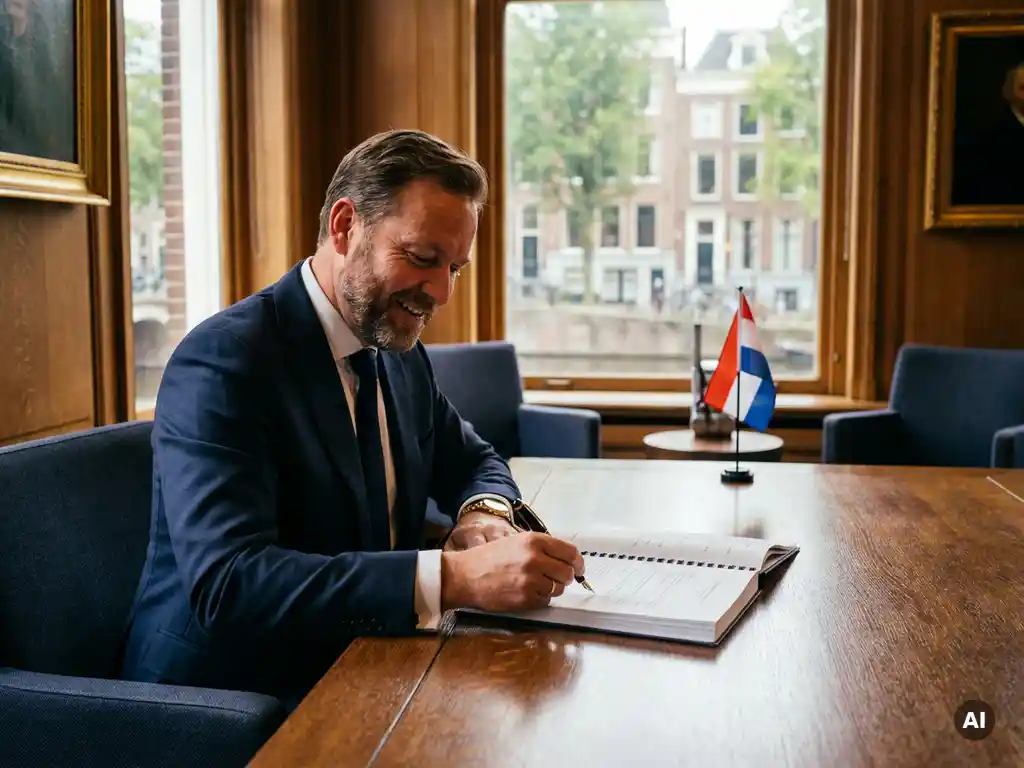
Yes, a foreigner can start a business in the Netherlands. The country actively welcomes international entrepreneurs, and there is no general legal requirement for a business founder to hold Dutch nationality or residency. The rules that apply depend primarily on your nationality, the legal structure you choose, and whether you intend to live and work in the Netherlands yourself or manage the business from abroad. The sections below address the most common practical and legal questions that foreign founders face.
What legal structures are available to foreign entrepreneurs in the Netherlands?
Foreign entrepreneurs can choose from the same range of legal structures available to Dutch nationals. The most widely used options are the besloten vennootschap (BV), which is a private limited liability company, and the eenmanszaak, a sole proprietorship. For larger ventures or joint ventures, a naamloze vennootschap (NV) is also available. Each structure carries different implications for liability, taxation, and governance.
The BV is by far the most popular choice for foreign founders establishing a substantive business presence in the Netherlands. It offers limited liability, a clear corporate governance framework, and is well understood by Dutch banks, investors, and counterparties. Since 2012, the BV can be incorporated with a minimum share capital of just one euro, making it accessible to a broad range of entrepreneurs.
For those who wish to test the Dutch market without immediately committing to a full corporate structure, a branch office of a foreign company is another option. A branch is not a separate legal entity and does not offer limited liability, but it allows a foreign company to operate in the Netherlands without incorporating a new entity. Alternatively, a representative office can be used for market research and promotional activities, though it cannot enter into commercial contracts directly.
The right structure depends on factors such as the nature of the business, the number of founders, the expected level of liability exposure, and long-term plans for the Dutch entity. Legal advice tailored to your specific situation is strongly recommended before making this decision.
Do foreigners need a visa or residence permit to run a business in the Netherlands?
Whether a foreigner needs a visa or residence permit to run a business in the Netherlands depends on their nationality and whether they intend to be physically present in the country. EU, EEA, and Swiss nationals enjoy freedom of movement and do not require a residence permit or work permit to live and work in the Netherlands, including as self-employed entrepreneurs. Non-EU nationals, however, generally require a residence permit and, in most cases, a work permit.
For non-EU nationals wishing to establish and run a business in the Netherlands as a self-employed person, the relevant permit is the residence permit for self-employment (zelfstandige). This permit is assessed against a points-based system that considers the applicant’s business plan, relevant experience, and the added value the business brings to the Dutch economy.
It is also worth noting that certain permit categories do not require a sponsor, including the self-employment permit and the orientation year permit for recent graduates. For non-EU nationals who are employed by their own Dutch BV, a different route may apply, potentially through the highly skilled migrant scheme if the salary and expertise requirements are met.
EU citizens who intend to stay in the Netherlands for longer than four months must register with the local municipality, even though no residence permit is required. For an indefinite stay, additional requirements apply, including financial independence and five years of continuous residence.
The immigration landscape is complex, and the applicable rules depend heavily on individual circumstances, including nationality, the structure of the business, and the applicant’s role within it. Professional legal guidance is advisable before submitting any application.
How does a foreigner register a company with the Dutch Chamber of Commerce?
Registering a company with the Dutch Chamber of Commerce (Kamer van Koophandel, or KVK) follows the same process for foreign nationals as for Dutch residents. The KVK is the central register for all businesses operating in the Netherlands, and registration is a legal obligation for any entity conducting commercial activities in the country.
The general steps involved in registering a Dutch BV as a foreign founder are as follows:
- Draft and execute a notarial deed of incorporation. A BV must be incorporated before a Dutch civil law notary (notaris). The deed sets out the articles of association and the initial share structure. This step requires the presence of the founders or their authorised representatives.
- Obtain a Dutch citizen service number (BSN) if required. Directors and certain other individuals connected to the company may need a BSN for tax registration purposes. Non-residents can apply for a non-resident BSN through the Dutch government.
- Register with the KVK. Following incorporation, the company must be registered in the KVK Trade Register. This is typically arranged by the notary as part of the incorporation process. Registration generates a KVK number, which is required for all official business dealings.
- Register with the Dutch Tax and Customs Administration (Belastingdienst). After KVK registration, the company must register for corporate income tax and, if applicable, VAT (btw). The tax authorities will issue a VAT identification number.
Foreign founders who are not present in the Netherlands can authorise a representative to act on their behalf during the incorporation process, subject to the notary’s requirements. The entire process, from drafting the articles of association to completing registration, can typically be completed within a few weeks, though preparation time varies depending on the complexity of the structure.
Can a foreigner own and direct a Dutch BV without living in the Netherlands?
Yes, a foreigner can own and serve as a director of a Dutch BV without being a resident of the Netherlands. Dutch corporate law does not impose a residency requirement on shareholders or directors of a BV. This makes the Netherlands an attractive jurisdiction for international entrepreneurs who wish to establish a European entity without relocating.
However, operating a Dutch BV from abroad raises several practical and legal considerations that should not be overlooked.
Corporate substance requirements
Dutch tax law and international tax treaties require that a company have sufficient economic substance in the Netherlands to be treated as a Dutch tax resident. If a BV is managed and controlled entirely from abroad, the Dutch Tax and Customs Administration may challenge its tax residency, potentially resulting in the company being treated as a tax resident of the director’s home country instead. To demonstrate sufficient substance, companies typically need a Dutch address, local management involvement, and decision-making that genuinely takes place in the Netherlands.
Director liability and governance
Non-resident directors of a Dutch BV are subject to the same duties and potential liabilities as resident directors under Dutch company law. This includes duties of care, obligations in the event of insolvency, and potential personal liability in cases of mismanagement. Directors who are unfamiliar with Dutch corporate governance standards should seek legal advice to understand their obligations before accepting a directorship.
Whether you live in the Netherlands or manage your Dutch BV remotely, the legal and tax implications of your specific structure deserve careful analysis before incorporation.
What tax obligations apply when a foreigner starts a business in the Netherlands?
A foreigner who starts a business in the Netherlands will be subject to Dutch tax obligations from the moment the company or business activity is registered. The primary taxes applicable to a Dutch BV are corporate income tax (vennootschapsbelasting), VAT (btw), and, where the director is also an employee of the company, wage tax (loonheffing).
Corporate income tax in the Netherlands is levied on the company’s worldwide profits if the company is considered a Dutch tax resident. The applicable rates and thresholds are set by Dutch tax legislation and are subject to change; current rates should be verified with a tax adviser or the Dutch Tax and Customs Administration.
For foreign employees or founders relocating to the Netherlands, the expat scheme (formerly known as the 30% ruling) may be relevant. This is a tax facility that allows qualifying employers to pay a portion of a foreign employee’s salary tax-free, as compensation for extraterritorial costs such as relocation expenses and higher living costs. To qualify in 2026, the employee must, among other conditions, earn an annual salary above EUR 48,013 (or EUR 36,497 for employees under 30 with a qualifying master’s degree). The scheme applies for a maximum period of five years. Employees who began using the scheme after 1 January 2024 are subject to updated rules, including a reduction of the maximum tax-free percentage to 27% from 1 January 2027.
VAT registration is required if the business supplies goods or services in the Netherlands above the registration threshold. Registered businesses must file periodic VAT returns and remit any VAT due to the tax authorities.
Tax obligations can be complex for cross-border structures, particularly where the founder lives in one country and the business operates in another. Professional tax and legal advice specific to your situation is essential.
What are the most common legal pitfalls for foreign founders in the Netherlands?
Foreign founders setting up a business in the Netherlands frequently encounter a set of recurring legal challenges. Awareness of these issues at an early stage can prevent significant problems later.
- Underestimating corporate substance requirements. As noted above, a Dutch BV managed entirely from abroad may not qualify as a Dutch tax resident. Failing to establish genuine local substance can have serious tax consequences.
- Overlooking Dutch employment law obligations. Dutch employment law is strongly protective of employees and differs significantly from many other jurisdictions. Foreign founders who hire staff in the Netherlands must comply with rules on contracts, notice periods, dismissal procedures, and collective agreements, among other obligations.
- Inadequate shareholder agreements. Many foreign founders incorporate a BV without a shareholders’ agreement, relying solely on the articles of association. This can leave significant gaps in governance, particularly in multi-founder situations, leading to disputes that are difficult and costly to resolve.
- Misunderstanding the permit landscape. Non-EU founders sometimes proceed with incorporation without first confirming that they have the right to work in the Netherlands in the capacity they intend. The permit category required depends on the specific role and structure, and applying for the wrong permit can cause significant delays.
- Neglecting GDPR compliance. Businesses operating in the Netherlands are subject to the General Data Protection Regulation. Foreign founders accustomed to different data protection regimes should ensure that their data practices comply with Dutch and EU requirements from the outset.
- Not registering lease agreements correctly. Foreign founders who rent commercial premises in the Netherlands should be aware that Dutch commercial tenancy law provides specific protections and obligations for both landlords and tenants. The terms of a lease agreement and the applicable legal regime should be reviewed carefully before signing.
Each of these pitfalls can be mitigated with proper legal preparation. The specific risks in any given situation will depend on the business model, the legal structure, and the nationalities and roles of the founders involved.
How Russell Advocaten helps foreign founders start a business in the Netherlands
Russell Advocaten Amsterdam is an internationally oriented law firm with decades of experience advising expats in the Netherlands on immigration, setting up a business, employment law, real estate, contracts, and family law. The firm’s lawyers are equally fluent in English, German, and Dutch, which means foreign founders can communicate in their preferred language from day one without losing nuance or precision.
For foreign entrepreneurs looking to establish a presence in the Netherlands, Russell Advocaten offers practical, end-to-end legal support across the key areas that matter most:
- Advising on the most appropriate legal structure for your business and personal situation
- Guiding you through the incorporation process and KVK registration
- Advising on residence and work permit requirements for non-EU founders and their families
- Drafting and reviewing shareholder agreements, employment contracts, and commercial leases
- Advising on Dutch employment law obligations when you hire your first staff members
- Supporting compliance with GDPR and other regulatory requirements
- Providing ongoing legal advice as your business grows and its legal needs evolve
Russell Advocaten is an official partner of IN Amsterdam, the expat centre of the municipality of Amsterdam, and has been recommended by The Legal 500 for many years. The firm is also part of the Primerus network, giving clients access to trusted legal advisers in more than 40 countries for cross-border matters.
If you are considering starting a business in the Netherlands and would like to discuss your situation with an experienced lawyer, contact Russell Advocaten to arrange an initial consultation.
This information is general in nature and does not constitute legal advice for your specific situation. Please consult a lawyer at Russell Advocaten for advice tailored to your circumstances.
Veelgestelde vragen
How long does it typically take to incorporate a Dutch BV as a foreign founder?
The full incorporation process for a Dutch BV generally takes between two to four weeks from the moment all required documents are in order, though preparation time can extend this depending on the complexity of your structure. Key steps that can cause delays include gathering apostilled or notarised identity documents, obtaining a non-resident BSN, and finalising the articles of association with the notary. If you are not physically present in the Netherlands, arranging a power of attorney for a representative to act on your behalf can add additional time, so it is advisable to start preparing well in advance of your intended launch date.
Can I open a Dutch business bank account as a non-resident foreign founder?
Yes, but it can be one of the more challenging practical steps for non-resident foreign founders. Dutch banks are subject to strict anti-money laundering (AML) and Know Your Customer (KYC) requirements, and many traditional banks require in-person meetings, a Dutch residential address, or a BSN before opening a business account. As an alternative, several international fintech providers and payment institutions (such as Wise Business, Revolut Business, or Bunq) offer Dutch IBAN accounts with less stringent residency requirements, which can serve as a workable interim solution while you establish a fuller banking relationship.
What happens if I start operating in the Netherlands without registering with the KVK?
Operating a business in the Netherlands without registering with the KVK (Chamber of Commerce) is a legal violation and can result in fines issued by the Dutch Tax and Customs Administration (Belastingdienst). Beyond the financial penalty, an unregistered business cannot legally issue invoices, enter into enforceable commercial contracts, or claim VAT refunds, which can seriously disrupt your operations. Registration is a straightforward obligation and should be completed before any commercial activity begins — there is no grace period for foreign founders.
Do I need a local Dutch director on the board of my BV to satisfy substance requirements?
Not necessarily, but having a locally based director is one of the most practical and commonly used ways to demonstrate that a Dutch BV is genuinely managed and controlled from the Netherlands. The substance test looks at where key management decisions are actually made, where board meetings are held, and whether the company has a real operational presence in the country. If you manage the BV entirely from abroad, the Dutch tax authorities may challenge its Dutch tax residency — appointing a qualified local director who is actively involved in decision-making can help mitigate this risk, though the overall substance assessment always depends on the specific facts of your situation.
What is the difference between a branch office and a subsidiary (BV), and which is better for a foreign company entering the Dutch market?
A branch office is an extension of the foreign parent company — it has no separate legal personality, meaning the parent bears full liability for the branch’s activities in the Netherlands. A BV (subsidiary) is a separate Dutch legal entity with its own limited liability, shielding the parent company from the subsidiary’s debts and obligations. For foreign companies testing the Dutch market on a smaller scale or for a limited period, a branch can be a quicker and less costly option; however, for any substantive or long-term commercial activity, a BV is generally preferred because of the liability protection, cleaner governance structure, and greater credibility with Dutch banks, clients, and partners.
If I relocate to the Netherlands to run my BV, can my family members also get residence rights?
Yes, in most cases. If you obtain a residence permit in the Netherlands — for example, under the self-employment permit or the highly skilled migrant scheme — your spouse or registered partner and dependent children are generally eligible to apply for a dependent family member residence permit (gezinshereniging). Their permit is typically tied to yours, meaning it is valid for the same duration and subject to renewal alongside your own. It is important to factor family reunification requirements, such as income thresholds and housing conditions, into your planning from the outset, as these can affect the timeline and eligibility of the application.
Are there any government incentives or support programmes available specifically for foreign entrepreneurs starting a business in the Netherlands?
Yes, the Netherlands offers several programmes that foreign entrepreneurs may be able to access. The Netherlands Foreign Investment Agency (NFIA) provides free advisory services to international companies looking to establish or expand in the Netherlands, including guidance on locations, incentives, and regulatory requirements. The Dutch government also offers innovation incentives such as the WBSO (R&D tax credit) and the Innovation Box regime, which can significantly reduce the tax burden for technology and knowledge-driven businesses. Additionally, IN Amsterdam — of which Russell Advocaten is an official partner — provides practical support and information services specifically for expats and international entrepreneurs settling in the Amsterdam region.
Gerelateerde artikelen
- Why is finding housing so difficult for expats in Amsterdam?
- What support is available for expat entrepreneurs in Amsterdam?
- How does the Dutch school system work for expat children?
- How long does it take to register a company in the Netherlands?
- What does expat mean?
Deze inhoud is gegenereerd met behulp van AI en kan fouten bevatten.