

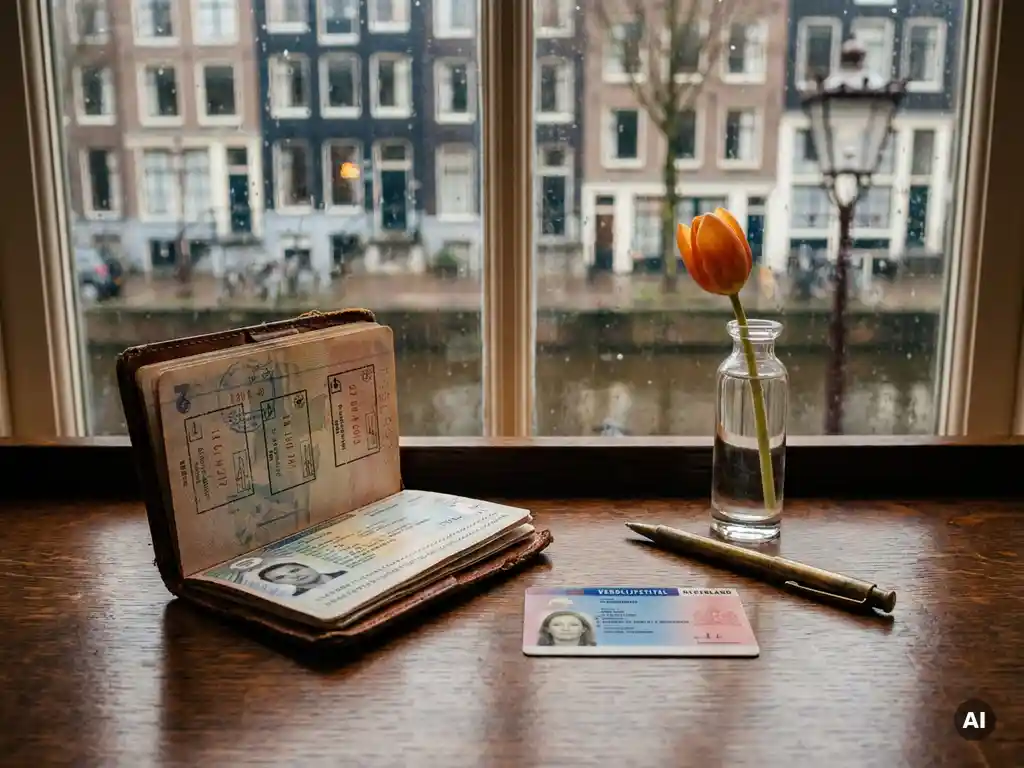
The Dutch startup visa is a one-year residence permit that allows non-EU nationals to launch an innovative business in the Netherlands under the guidance of a recognised facilitator. It is designed for entrepreneurs who have a concrete, scalable business idea and need time to develop it into a viable company. The sections below address the most important practical questions about eligibility, requirements, and what comes next.
Who is eligible for the Dutch startup visa?
Non-EU nationals who wish to start an innovative business in the Netherlands may apply for the Dutch startup visa, provided they work alongside a recognised facilitator and meet the IND’s requirements. The permit is intended for entrepreneurs at an early stage, those who have not yet formally established their company but have a credible, scalable business plan ready to execute.
To be eligible, the applicant must be a national of a country outside the European Union, the European Economic Area, or Switzerland. EU and EEA nationals already have the right to live and work in the Netherlands and do not require this permit. The applicant must also demonstrate that their business concept is genuinely innovative, not simply a freelance or self-employed arrangement, but a scalable venture with growth potential.
Additionally, the applicant must be able to support themselves financially during the permit period. The IND requires proof of sufficient funds, and the facilitator plays a central role in assessing and confirming the viability of both the entrepreneur and the business concept before the application is submitted.
What counts as an innovative business under Dutch law?
An innovative business, for the purposes of the Dutch startup visa, is one that introduces a new product, service, or process to the market, something that is not simply a replication of an existing business model. The IND does not apply a rigid statutory definition, but the concept of innovation is assessed in terms of market novelty, scalability, and the extent to which the business creates added value beyond what is already available.
In practice, this means the business should have characteristics that distinguish it from conventional self-employment. Relevant factors typically include:
- A product or service that addresses an unmet market need or improves significantly on existing solutions
- A business model with clear potential for growth and scaling beyond the founder
- Evidence of research, development, or a prototype that supports the concept
- A plan that demonstrates how the business will generate sustainable revenue
The facilitator plays a decisive role in this assessment. It is the facilitator, not the IND directly, who first evaluates whether the business concept meets the innovation threshold. The IND then relies substantially on the facilitator’s judgement when processing the application. Entrepreneurs should therefore be prepared to present a detailed and substantiated business plan that clearly articulates the innovative element of their venture.
What is a recognised facilitator and why is one required?
A recognised facilitator is an organisation officially approved by the IND to guide and supervise startup entrepreneurs during their one-year permit period. The facilitator is a mandatory requirement: without one, an application for the Dutch startup visa cannot be submitted. The IND does not accept applications directly from entrepreneurs without this intermediary.
Recognised facilitators include incubators, accelerators, universities, and innovation hubs that have been vetted and approved by the Dutch government. Their role is not merely administrative. During the permit year, the facilitator actively coaches the entrepreneur, evaluates progress, and provides the IND with an assessment of whether the startup is developing as planned.
The requirement exists because the startup visa is not a general business permit. It is a structured programme designed to support entrepreneurs with genuine potential while ensuring that the permit is not misused. The facilitator acts as a quality filter and a support mechanism simultaneously. Entrepreneurs should research available facilitators carefully, as each has its own focus areas, selection criteria, and level of support offered. Matching the right facilitator to the nature of the business concept is an important early step in the application process.
What documents are needed to apply for the Dutch startup visa?
The documentation required for a Dutch startup visa application centres on proving the applicant’s identity, the viability of the business concept, and the involvement of a recognised facilitator. While the precise list may vary depending on individual circumstances, the core documents typically required are as follows:
- A valid passport with sufficient remaining validity
- A signed cooperation agreement with a recognised facilitator
- A detailed business plan demonstrating the innovative nature and scalability of the venture
- Proof of sufficient financial means to support oneself during the permit period
- A declaration or statement from the facilitator confirming their involvement and assessment of the business concept
- Completed IND application forms
- Proof of payment of the application fee
Depending on the applicant’s nationality, a provisional residence permit (machtiging tot voorlopig verblijf, or MVV) may also be required before entering the Netherlands. This entry visa is applied for simultaneously with the residence permit in most cases. Applicants should verify with the IND or a legal adviser whether an MVV applies to their specific nationality, as not all nationalities are subject to this requirement.
Foreign-language documents will generally need to be translated by a certified translator, and some documents may require legalisation. It is advisable to allow sufficient time for document preparation, as incomplete or incorrectly prepared submissions can cause significant delays.
What happens after the Dutch startup visa expires?
The Dutch startup visa is valid for one year and cannot be extended under the same permit category. Once the year has elapsed, the entrepreneur must either leave the Netherlands or transition to a different residence permit that matches their new situation. The outcome of the startup year determines which route is available.
If the business has been successfully established and is generating income, the entrepreneur may apply for a self-employed residence permit (for holders of a Dutch company) or, in certain circumstances, a highly skilled migrant permit if the business employs the founder in a salaried capacity through a recognised sponsor. The transition to a new permit must be applied for before the startup visa expires.
Entrepreneurs who have made substantial progress but whose business is not yet fully operational may find that their options are limited, as the startup visa route does not provide for an automatic continuation. This makes the planning of the permit year particularly important. The facilitator’s end-of-year assessment will carry weight in any subsequent application, so maintaining a clear record of milestones, revenue, and development during the permit period is strongly advisable.
It is worth noting that if the entrepreneur qualifies as a highly skilled migrant after establishing their business, they may also benefit from the 30% ruling (the expat scheme), which provides a partial tax-free allowance for employees with scarce expertise recruited from abroad. Whether this applies will depend on the specific employment structure and salary level at that point.
How does the Dutch startup visa differ from the Dutch self-employed permit?
The Dutch startup visa and the self-employed residence permit (for zelfstandigen) are two distinct routes for non-EU entrepreneurs, and they serve different stages of business development. The startup visa is for entrepreneurs at the pre-launch or early-launch phase who are still developing their concept; the self-employed permit is for those who already have an established business or a concrete, immediately viable plan.
The key differences between the two permits are:
- Stage of business: The startup visa targets entrepreneurs who are building a new, innovative venture; the self-employed permit is for those with a functioning or immediately executable business
- Facilitator requirement: The startup visa requires a recognised facilitator; the self-employed permit does not
- Innovation requirement: The startup visa explicitly requires an innovative business concept; the self-employed permit applies to a broader range of business activities
- Duration: The startup visa is valid for one year and cannot be renewed; the self-employed permit can be renewed and extended
- Income assessment: The self-employed permit involves a points-based assessment by the IND that weighs factors such as personal experience, business plan, and added value to the Dutch economy; the startup visa relies more heavily on the facilitator’s evaluation
For entrepreneurs who are uncertain which route applies to their situation, the distinction often comes down to whether the business concept is genuinely new and scalable (pointing towards the startup visa) or whether it is a professional service or trade that can be operational immediately (pointing towards the self-employed permit). Both routes have their own procedural requirements and timelines, and the choice of permit has long-term consequences for the entrepreneur’s residency status in the Netherlands.
How Russell Advocaten supports international entrepreneurs in the Netherlands
Russell Advocaten is an internationally oriented law firm based in Amsterdam with decades of experience advising expats and foreign entrepreneurs on living, working, and doing business in the Netherlands. The firm’s lawyers communicate fluently in English, German, and Dutch, which makes them well placed to assist clients navigating Dutch legal and administrative processes from abroad or upon arrival.
For international entrepreneurs considering the startup visa or any other route to establishing a business in the Netherlands, Russell Advocaten can assist with:
- Advising on the most appropriate residence permit route based on the individual’s circumstances
- Reviewing and advising on business structures and incorporation under Dutch law
- Drafting and reviewing contracts, shareholder agreements, and employment arrangements
- Advising on real estate and commercial lease agreements for business premises
- Providing guidance on personnel matters and Dutch employment law as the business grows
- Supporting with family reunification and related immigration questions
Russell Advocaten is an official partner of IN Amsterdam, the expat centre of the City of Amsterdam, and has been recommended by the Legal 500 for many years. The firm’s legal services for expats are broad and practical, covering the full range of legal questions that arise when building a life and a business in the Netherlands.
The information in this article is general in nature and does not constitute legal advice for your specific situation. If you are considering applying for a Dutch startup visa or any other residence permit, we recommend seeking personalised legal advice. Contact Russell Advocaten to discuss your situation with one of our lawyers.
This information is general in nature and does not constitute legal advice for your specific situation; please consult a lawyer at Russell Advocaten for advice tailored to your circumstances.
Veelgestelde vragen
Can I apply for the Dutch startup visa if I have already registered a company in the Netherlands?
The Dutch startup visa is specifically designed for entrepreneurs who have not yet formally established their company, or who are at the very earliest stage of doing so. If you have already incorporated a Dutch entity and are operating it, you will likely need to apply for the self-employed residence permit instead. If you are unsure whether your current stage of business development qualifies, it is advisable to seek legal advice before submitting any application, as applying under the wrong permit category can result in delays or refusals.
How do I find and approach a recognised facilitator, and what should I expect from the selection process?
The IND publishes an official list of recognised facilitators on its website, and this is the best starting point for your search. Each facilitator has its own focus areas — some specialise in tech startups, others in life sciences, sustainability, or creative industries — so it is important to identify one whose expertise aligns with your business concept. Most facilitators have their own application or intake process, which may include pitching your idea, submitting a business plan, and attending interviews. Expect the selection process to be competitive, as facilitators are selective about the entrepreneurs they take on.
What happens if my startup does not make sufficient progress during the one-year permit period?
If your business has not developed sufficiently by the end of the permit year, your options for continuing to reside in the Netherlands will be limited. The startup visa cannot be extended, and transitioning to a self-employed permit requires demonstrating a viable, operational business. The facilitator’s end-of-year assessment plays a significant role in any subsequent application, so it is important to document your milestones, progress, and challenges throughout the year — even if the business has not yet reached profitability. In some cases, entrepreneurs in this situation may need to leave the Netherlands and reassess their approach before reapplying.
Is there a minimum or maximum age requirement for the Dutch startup visa?
There is no specific minimum or maximum age requirement for the Dutch startup visa under IND rules. The permit is assessed on the basis of the business concept, the applicant’s ability to support themselves financially, and the facilitator’s endorsement — not on age. However, applicants must be legally capable of entering into contracts and conducting business, which in practice means they must be adults. If you are applying as a young entrepreneur or a more experienced professional pivoting to a new venture, the same eligibility criteria apply.
Can my family members join me in the Netherlands while I am on the Dutch startup visa?
Yes, family members — such as a spouse, registered partner, or dependent children — may be able to join you in the Netherlands under a family reunification residence permit, provided you meet the applicable income and accommodation requirements. The startup visa itself does not automatically grant residence rights to family members, so a separate application will need to be made on their behalf. Given that the startup visa year may not yet generate a stable income, meeting the financial threshold for family reunification can be challenging, and it is worth discussing your specific family situation with an immigration lawyer before making plans.
What is the most common reason Dutch startup visa applications are refused, and how can I avoid it?
The most frequent reasons for refusal relate to an insufficiently substantiated business plan, a lack of genuine innovation in the proposed concept, or the absence of a valid cooperation agreement with a recognised facilitator. Applications that describe a business model that closely resembles conventional freelancing or self-employment — rather than a scalable, innovative venture — are particularly at risk. To strengthen your application, invest time in developing a detailed, evidence-based business plan that clearly articulates the innovative element, the target market, the revenue model, and your growth strategy. Working closely with your facilitator during the preparation phase significantly improves the quality and credibility of the submission.
Do I need to be physically present in the Netherlands for the entire duration of the startup visa?
While there is no strict rule requiring you to be in the Netherlands every single day, the startup visa is a residence permit — meaning you are expected to actually reside and develop your business there during the permit period. Extended absences could raise questions about whether you are genuinely using the permit for its intended purpose, and may affect your facilitator’s ability to supervise and assess your progress. If you anticipate needing to travel frequently for business reasons, it is sensible to discuss this with your facilitator and, if necessary, seek legal advice on how to document your activities appropriately.
Gerelateerde artikelen
- Which Dutch corporate laws apply to foreign-owned companies?
- What is the difference between a work permit and a residence permit in the Netherlands?
- How long can you benefit from the 30% ruling in the Netherlands?
- Does the 30% ruling affect your mortgage options in the Netherlands?
- How do you apply for the 30% ruling in the Netherlands?
Deze inhoud is gegenereerd met behulp van AI en kan fouten bevatten.