


Reinier advises national and international companies
reinier.russell@russell.nl +31 20 301 55 55Niek is an expert in corporate and financial law
niek.vandergraaf@russell.nl +31 20 301 55 55Would you like to know whether you can establish your business on a particular plot of land and what conditions the buildings must meet? Then the zoning plan is the first document you should consult.
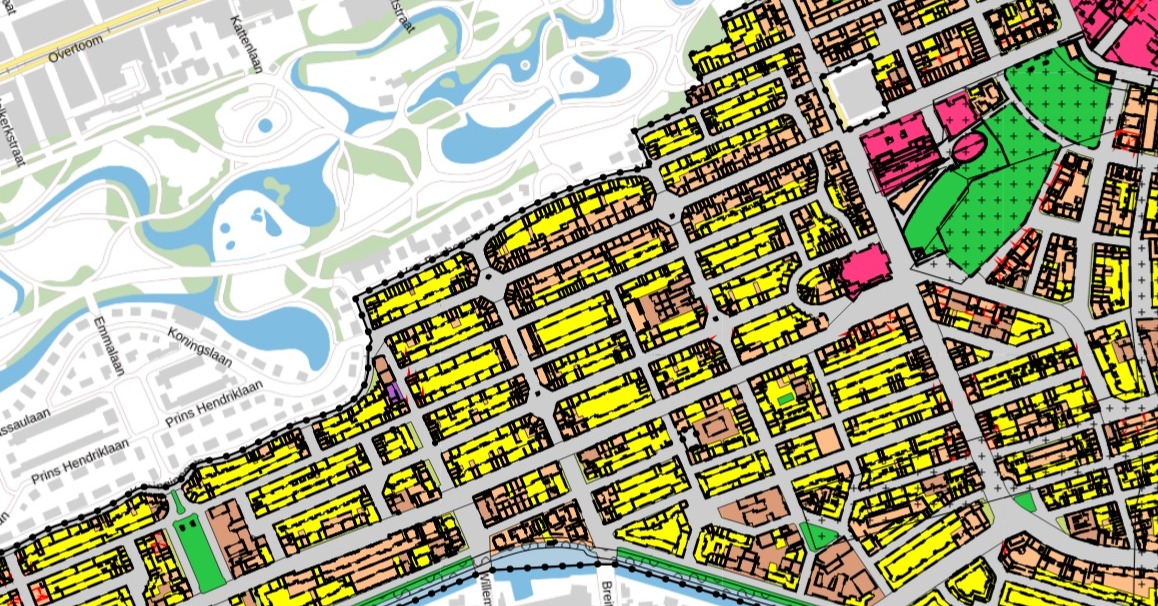
Are you permitted to establish commercial premises at a specific location, or is that location intended exclusively for residential use? How high may the buildings be, how many square metres may be built on, and are there any additional requirements about parking, the environment or appearance? All these rules are laid down in the zoning plan adopted by the municipal council. The zoning plan assigns a specific use to land and buildings and contains binding rules for both the use of the land and the building possibilities. The zoning plan is therefore of great importance to entrepreneurs, project developers and property owners.
The use refers to the function of a plot of land as laid down in the zoning plan. This function determines what you are allowed to do with the land and any buildings on it. For example, a plot of land may have the designation “Residential”, which means that residential use is permitted, but commercial activities are only possible to a very limited extent or not at all. Other plots may have a zoning designation of “Commercial”, “Office”, “Retail” or “Hospitality”, with or without specific designations or restrictions.
It is important to realise that the zoning plan not only prescribes the use of a building, but also that of the associated land, such as gardens, car parks or storage areas. Use that is in breach with the zoning plan may lead to enforcement action by the municipality, for example in the form of an order subject to a penalty or administrative enforcement.
In addition to the use, the zoning plan contains detailed rules about the buildings. These include maximum building heights, the percentage of the land that may be built on, the location of buildings on the plot and regulations about outbuildings or yard fences. Rules may also apply to the use of land and buildings, such as opening hours, the number of permitted residential units or whether certain business activities are permitted or not.
In some cases, the zoning plan offers flexibility by giving the mayor and aldermen the authority to derogate from the standard rules under certain conditions. Whether citizens can invoke this authority varies from situation to situation and often requires careful legal assessment.
A zoning plan consists of three interrelated components:
The image is the map of the zoning plan. This map shows the various purposes and indications. By looking at a plot on the map, you can immediately see what use applies to it and what additional indications apply.
The rules are the legally binding part of the zoning plan. They specify what is permitted within a particular zoning and under what conditions. These include rules on construction, use and any exceptions or possibilities for derogation.
The explanation contains explanations of the choices made and the underlying policy and planning considerations. Although the explanation is not legally binding, it can be important in interpreting the rules.
The zoning plan also plays an important role in permit applications. An environment and planning permit for construction, renovation or use is assessed against the applicable zoning plan. If a plan conflicts with the zoning plan, the permit may be refused, unless a derogation procedure or plan amendment is possible. This can have significant consequences for the planning and feasibility of your project.
With the entry into force of the Environment and Planning Act, a single environment plan has been created by operation of law for each municipality, replacing the various zoning plans and other spatial regulations. This environment plan consists of a temporary part and a (initially empty) new part.
The temporary part consists of spatial decisions (such as zoning plans, management regulations and amendment plans), rules from several municipal regulations and the so-called “dowry”. This dowry contains transitional rules on, among other things, noise, odour, vibrations, light and external safety. The dowry is necessary because, at the start of the Environment and Planning Act, powers were transferred from the state to the municipalities. Without the dowry, legal loopholes could arise. Municipalities may later adapt these rules to the local situation.
Municipalities have until 1 January 2032 to convert all rules from the temporary part of the environment plan into a new environment plan that meets all the requirements of the Environment and Planning Act. Zoning plans whose drafts were made available for public inspection before 1 January 2024 are still subject to the old legislation but must ultimately also be converted.
Would you like to know whether you can establish your business on a particular plot of land and what conditions the buildings must meet? Or are you dealing with a zoning plan or environment plan that is hindering your plans? Then it is advisable to seek legal advice in good time. Russell Advocaten advises and litigates on behalf of entrepreneurs and property owners on zoning plans, permits and enforcement issues. We are also happy to assist you with other issues in the field of spatial planning and real estate. Please contact us:
This newsletter highlights the key developments in EU law and their practical implications for the aviation sector.
The regulation of charities and nonprofit organizations is changing rapidly. New rules, stricter audits, and European legislation are making it more important than ever for organizations to stay on top of their compliance obligations. In this newsletter, we outline the most important developments for you.
Over the past year, the number of rental properties sold has risen sharply. Private residential landlords are pulling out due to stricter regulations and declining returns. For tenants, this creates uncertainty about their rights. Still, one reassuring rule applies: “Sale does not terminate the lease.”
What can you do if you have a dispute with the board or the manager of the homeowners’ association? For example, regarding overdue maintenance or whether sustainability measures are too expensive?
European regulatory developments are introducing major new obligations for companies in the retail, fashion and luxury sectors. Companies must prepare their compliance processes accordingly.
The Holocaust Expropriated Art Recovery Act (HEAR Act) of 2016 has recently undergone significant amendments. This could have major implications for anyone wishing to export, trade or loan art dating from before 1946 to the United States. What do art dealers, collectors and museums need to bear in mind from now on?
