


A buyer at a French auction house was ordered by a Dutch court to pay € 30,000 for storing drawings for two years. That is almost as much as he had paid for the drawings. How did the auctioneer get this together?
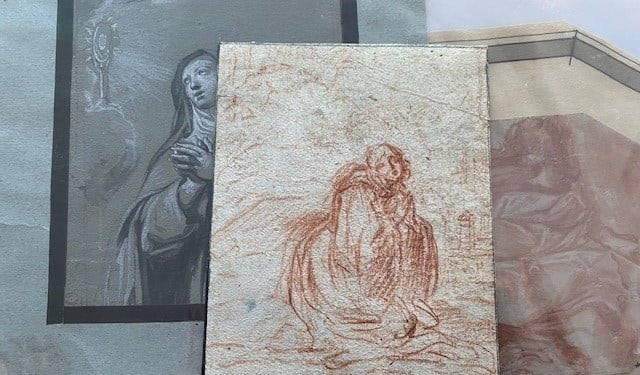
The case is special enough for the court to include it in its weekly newsletter. Reason enough for us to bring it to your attention as well. What happened?
A Dutch art dealer bought eleven drawings for over € 40,000 at an auction in Paris in March 2018. Then he did not pay for them. In December 2018, he was ordered by a French court to pay the auction house for the drawings and legal costs. In January 2020, the buyer paid for the drawings, but this had required a reminder from Russell Advocaten. To secure payment, we were also forced to seize assets of the buyer.
The art dealer refused to pay the invoice for the storage, which by then amounted to almost € 20,000. Going to court was thus inevitable. The buyer tried in different ways to delay the proceedings, but in the end the court was able to give a verdict. What did it say?
The art dealer argued that he had not been informed of the storage costs he would have to pay. He had therefore not accepted them either. Therefore, according to him, these costs were not part of the purchase agreement with the auction house. However, the auctioneer was able to prove that this was not the case. In their general terms and conditions it is explicitly mentioned, also in English, that storage costs are charged if the buyer does not pay on time. During the auction, their storage costs were even explicitly pointed out. In addition, they can be consulted on the auction house’s website. Therefore, it was clear for the court that storage costs had to be paid.
But did the storage costs have to be so high as the auctioneer claimed? The costs had to be paid per lot. According to the buyer, the drawings fitted in one folder and were therefore one lot. According to our client, they were eleven lots. He was proven right by the court. The storage costs vary according to the size of the lot. So the size was already taken into account. The buyer therefore had to pay per drawing. That amounted to a total of over € 30,000. And that the costs had risen so high was due to his late payment.
However, this was not yet the end of the story for that particular buyer. A similar case involving another client of our firm ran at the same time as these proceedings. In this case, he was also ordered to pay over € 40,000 for an unpaid work of art, storage costs, seizure costs, collection costs and litigation costs. All in all, a satisfying result for our clients.
Do you have a dispute with a buyer who does not pay? Or do you have no general terms and conditions yet but would like to have them drafted? We will also be happy to check your existing terms and conditions. And, of course, you can contact us with other questions and disputes about art and law. Please contact:
As of 1 January 2026, the Money Laundering and Terrorist Financing (Prevention) Act (Wwft) will change. Cash payments of EUR 3,000 or more will then be prohibited. What does this mean for the retail sector and the art trade?
Since 28 June 2025, a new EU regulation requires anyone wishing to import cultural goods into the EU to have an import licence or submit an importer’s declaration. When is which type of document required? How does it affect art dealers, galleries, auction houses and collectors, both inside and outside the EU?
Employees who consume alcohol and drugs during work or who want to work under the influence remain a problem for employers. What measures can you take against this? Are you allowed to test an employee if you suspect they are under the influence?
Stolen cultural objects must be returned to the country of origin. What are your rights and duties if you have bought art in good faith that is claimed to have been stolen?
The government has outlined in a letter how it intends to translate the proposals from the Buma Committee’s advice into regulations. What does this mean in practice for private individuals who own art or other cultural goods? But first: what are the rules for exporting protected cultural goods at the moment?
The government has outlined in a letter how it intends to translate the proposals from the Buma Committee’s advice into regulations. What does this mean in practice for private owners of art or other cultural goods? Will this solve the problems of owners?
