


Reinier advises national and international companies
reinier.russell@russell.nl +31 20 301 55 55Jesper specialises in corporate litigation and governance
jesper.nooij@russell.nl +31 20 301 55 55COVID-19 and the Russian invasion of Ukraine with the associated sanctions make it difficult to perform international contracts. You then have to renegotiate under pressure. Not fun at all. Therefore we will give you 4 tips to arrange in advance what you and your contract partner may do in such a case.
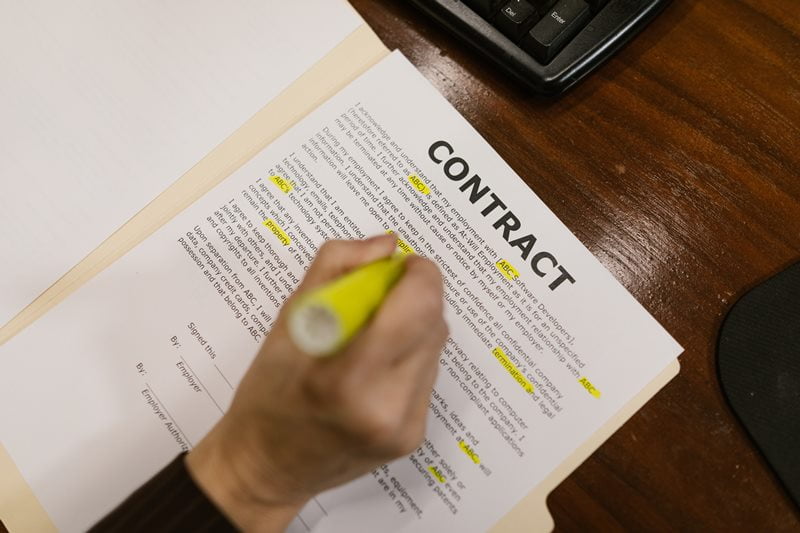
Whether you can invoke force majeure, a hardship clause or any other scheme primarily depends on the arrangements you have made. You therefore have to document them properly. This is even more true with international contracts, where you may deal with a legal system you are not familiar with. For example, the United Kingdom has no provision for force majeure unless it is explicitly included in the contract.
Therefore we will give you 4 tips to make sound arrangements which take into account changed circumstances so you do not have to renegotiate.
By means of a price escalation clause, you agree that prices will automatically change when a certain price index changes, such as the consumer price index of the US Bureau of Labor Statistics or index of Statistics Netherlands (Centraal Bureau voor de Statistiek). This can be immediate or annual, as is the case with many leases, for example. Continuous price changes will usually not be good for mutual relations. It is also possible determine a maximum for the changes, so that you do not have to pay twice as much without notice. Such a clause immediately solves the problem for a supplier of sharply increased inflation due to a shortage of raw materials or components.
This clause gives the seller the right to adjust the price if certain reference values change. It is common to attach to this the obligation to give the buyer a few days’ notice that the prices will be adjusted. In this clause, you can also include an obligation to renegotiate the price.
But what happens if price adjustments do not suffice to solve the problems? For example, if delivery is not possible at all anymore? In this case you can invoke force majeure. In some countries a force majeure clause does have to be explicitly included in a contract. What can you arrange in such a clause?
First of all, a definition of force majeure. In principle, such a clause deals with circumstances which are beyond the control of the parties and make it impossible for them to perform the contract. The current example is the corona measures in different countries, but it can also be a flood that completely paralyses a company, or a war situation. In addition, general situations of force majeure can be explicitly mentioned in the contract. For example, epidemics, war and natural disasters. These do not need to be discussed further. You can also make arrangements about the consequences of stricter customs controls or imposed sanctions.
In addition, you can arrange which powers the parties will have in the event of force majeure, e.g. temporarily suspending or terminating the contract. You can also make arrangements on risk sharing. As force majeure is by definition beyond the control of the parties, the damage is usually divided 50-50. But you can also arrange that force majeure cannot be invoked or that an appeal to force majeure is not allowed in certain situations. And in which cases compensation must be paid. For example, if force majeure is invoked late and the other party has already made investments that will now no longer be profitable.
A hardship clause also deals with circumstances on which parties have no control. However, in this case it is still possible to fulfil the contract but it has become unreasonable. E.g., because costs have increased drastically or it is practically impossible to meet the agreed deadline. For example if a supplier of one of the parties fails due to force majeure. After all, in that case there may be other suppliers, but they may only want to deliver at a much higher cost or on a longer term.
In a hardship clause you usually arrange that in such a situation the parties can change the terms of the contract. This may involve a number of concrete situations whereby the consequences for the contract are regulated. The hardship clause can also be a general clause obliging the parties to renegotiate if unforeseen circumstances have drastically changed the balance between the parties.
Do you want to include a provision for force majeure or unforeseen circumstances in your contract? We will be happy to be of service with drafting or reviewing a contract. Is your supplier invoking force majeure and do you want to know whether this is justified? Or are you unable to fulfil a contract and want to learn what your options are? We will be happy to advise you and, if necessary, assist you in legal proceedings. Please contact us:
A maioria das relações comerciais transcorre sem problemas. As mercadorias são entregues, os serviços são prestados e as faturas são pagas em dia. Ocasionalmente, porém, um cliente ou parceiro comercial deixa de pagar. O que um credor pode fazer nessa situação?
Quando um devedor se recusa a pagar, apesar de lembretes e cartas de cobrança, medidas mais enérgicas serão necessárias para garantir o crédito. Um dos instrumentos mais eficazes na cobrança de dívidas na Holanda é a penhora. Como um credor pode obter tal penhora?
Quando um credor estrangeiro tem uma dívida a receber de um devedor holandês, o processo de cobrança de dívidas envolve considerações jurídicas adicionais, que vão desde questões de jurisdição até a executabilidade de sentenças estrangeiras e a disponibilidade de instrumentos de execução transfronteiriça. Quais são as opções de um credor em um contexto internacional?
Quando um devedor se recusa a pagar faturas pendentes, apesar de repetidos avisos, cartas de cobrança e até mesmo propostas de acordo, os credores podem começar a buscar medidas mais contundentes. Uma opção prevista na legislação holandesa é a apresentação de um pedido de falência contra o devedor. Quando pode um credor recorrer a essa opção, e quais são os riscos envolvidos?
This newsletter highlights the key developments in EU law and their practical implications for the aviation sector.
When a debtor refuses to pay outstanding invoices, despite repeated reminders, demand letters and even settlement proposals, creditors may start looking for stronger measures. One option under Dutch law is filing a bankruptcy petition against the debtor. When can a creditor use this option, and what are the risks involved?
