


Reinier advises national and international companies
reinier.russell@russell.nl +31 20 301 55 55Many companies and platforms use the “free” images on Wikipedia. “Free” images, yet out of a sudden a high invoice arrives because of copyright infringement. How can you prevent this?

For companies it is rather attractive to use images on Wikipedia. The pictures are available for commercial use and may often even be modified so that you can adapt them for your own purposes. So you put the image on your own website or blog. But then a lawyer’s letter arrives: you have violated the licensing conditions and are using the image illegally. Please be so kind as to pay a compensation for the use of the image and the legal fees. How did this happen? And how can you prevent this?
“Free” means that images on Wikipedia – or rather: Wikimedia Commons – may be used for free without paying any financial compensation. Whether there are any other conditions depends on the licence under which the author/uploader of the image has released it. Thus, if you don’t satisfy the licensing conditions, you are not allowed to use the image.
The licensing conditions for images on Wikipedia are included in the file description on Wikimedia Commons. You can find the file description by clicking on an image and then click the “More information” link bottom right of the image.
It is a frequent misunderstanding that the copyright of images rests with Wikipedia. This is not true. The copyright rests with the author of an image. For most of the recent images on Wikimedia Commons one of the versions of the “CC-BY-SA” license (Creative Commons – By – Share Alike) is used. This means in the event of reuse you have to do the following:
So when you claim the copyright for your website and you fail to mention that the image you use is exempt from this claim you are wrong. “Image: Wikipedia” as a source reference is wrong too, as you fail to provide the name of the author.
Mostly, providing the name of the author and the license will be sufficient. This can be best done by providing them in the text for the image. To provide the license you can insert a clickable link to the original file containing all relevant information. You can also place this link directly under the image with a pop-up text. When people click on the image, they see all required information.
For some images there are additional requirements. Professional photographers may ask to link to their website or cite the name of their company. The English Wikipedia sometimes inserts images on the basis of the copyright principle of “fair use”. However, this does not allow use for commercial purposes. Therefore, always click on the file description to see which conditions you have to satisfy for reuse.
| Wrong | ||
|
| |
| No source reference whatsoever is given. | Image: Wikipedia Author’s name and licence are not given. | |
| Good | Better | |
|
| |
| Image: Wikimedia Commons Clickable link to author’s name and licence. | Image: Buitenveldertenaar, CC-BY-SA 4.0 Author’s name and licence provided in text underneath image and clickable links to licence |
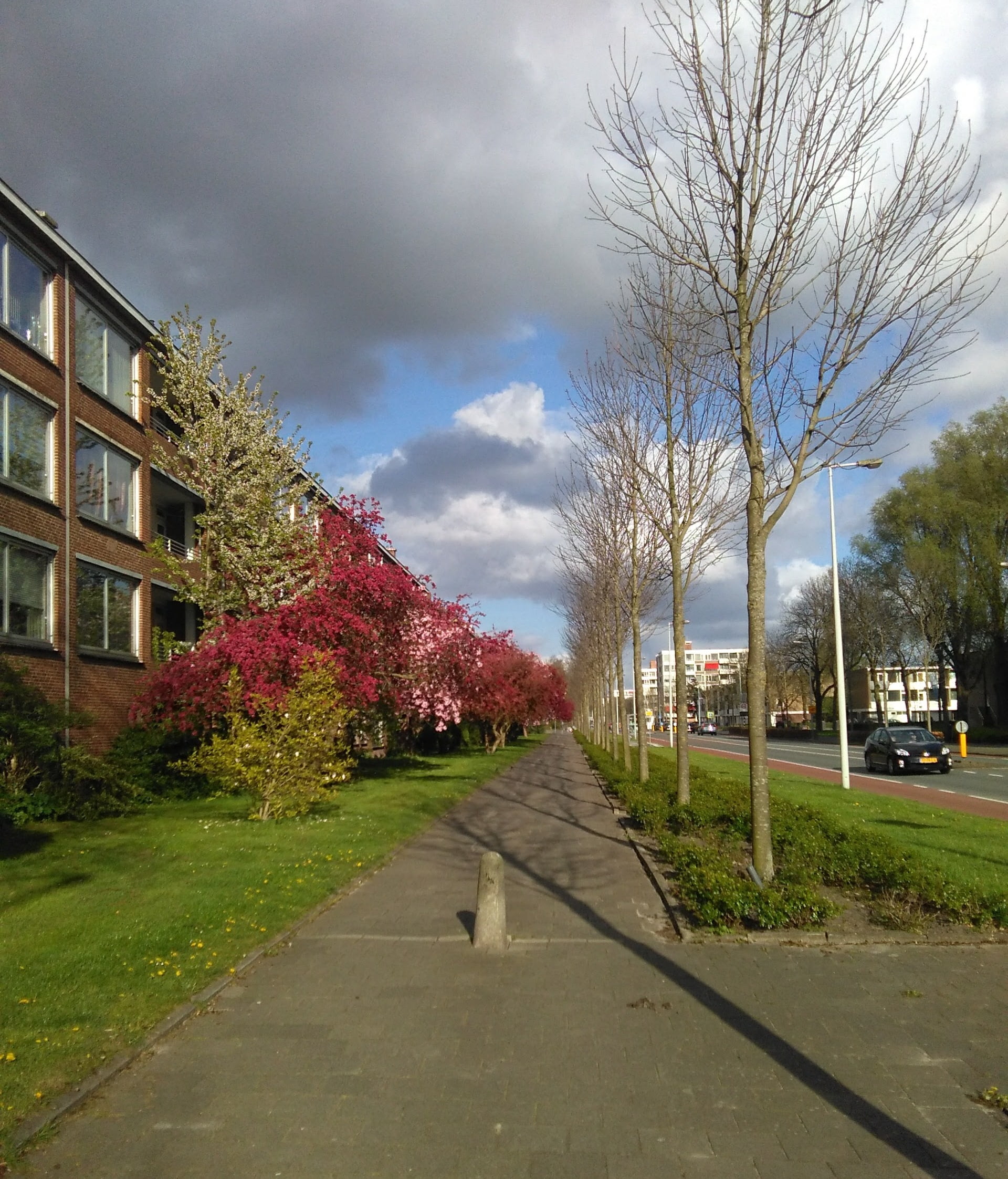
This is a picture of Van Boshuizenstraat in Amsterdam. Far right you can see the former offices of Russell Advocaten.
Check whether the licensing conditions have actually been violated. If this really is the case, you have to make sure that the insertion of the image does satisfy the licensing conditions. If such a modification isn’t possible, directly delete the image from your website.
In the event of an infringement you will also have to pay the invoice. You cannot prevent payment by correcting the violation because it has already occurred. As the author – and his or her lawyer – can, in principle, claim full compensation of the costs incurred, it is not advisable to assume that the counterparty won’t commence legal proceedings because of the high costs for litigation involved. If they are right, they will be reimbursed the costs anyway. Only if the claim is excessive and the costs are not caused by the infringement but by the author and his or her lawyer, you might not have to pay part of the requested amount.
Russell Advocaten can check whether the licensing conditions have actually been violated and whether you have corrected the infringement. We can also help you with a defence against an excessive claim. Naturally, we can also check in advance whether your use of images satisfies the licensing conditions.
Have you received a copyright claim and do you have doubts as to whether it is justified? Do you intend to use images of Wikipedia or other “free” sites and would you like to know what the conditions are? Or is somebody else showing off with your pictures? Please contact us:
On 2 June 2026, the Dutch Senate adopted the Digital General Meeting for Private Law Legal Entities Act. This Act makes it possible to hold general meetings entirely digitally. What does this mean for directors and shareholders of private limited companies, public limited companies and other legal entities?
The European AI Act requires employers to ensure that employees have sufficient knowledge of AI systems. This can be achieved through training, but also through an AI policy tailored to the company. What should you include in such a policy? What role does the works council play in the implementation of the AI policy?
Would you like to know whether you can establish your business on a particular plot of land and what conditions the buildings must meet? Then the zoning plan is the first document you should consult.
Almost all companies now use some form of AI. This means that they may be subject to the prohibitions and regulations set out in the European AI Act. How can you ensure that you comply with these rules?
In principle, a continuing performance agreement can always be terminated, even if no arrangements have been made in this regard. But you can’t just do it. What do you need to take into account when terminating the agreement? And what if you want to deviate from the arrangements made about terminating the agreement?
On 28 June 2025, the European Accessibility Act has entered into force. From that date, digital products and services must also be accessible to people with disabilities. Which companies, products and services does the Act apply to? What disabilities should you take into account? What are the consequences of not complying with the Act?
