


The Cabinet is considering the introduction of a coronavirus entry pass at the workplace. What consequences will a compulsory coronavirus entry pass have for employees? What should employers and works councils keep in mind?
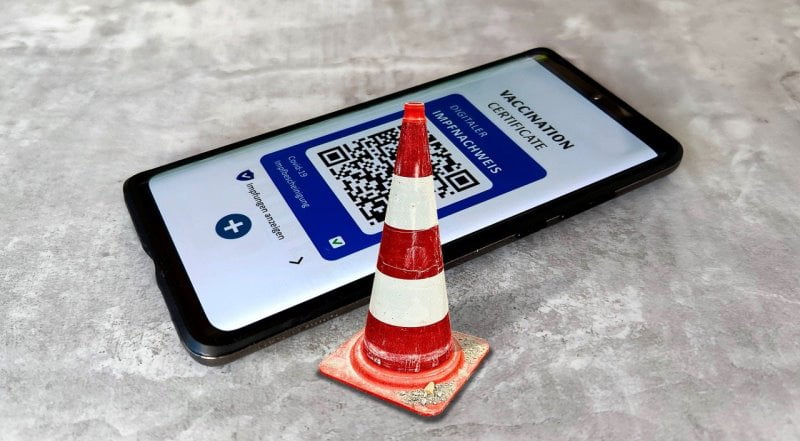
As the coronavirus rates continue to rise, the Cabinet is already looking for what other measures might be necessary. One of these is a compulsory coronavirus entry pass at the workplace. Then employees would have to prove that they have been vaccinated, cured (2G policy) or tested negative (3G policy). First in certain industries, but later perhaps more widely.
Currently, you need a QR code to drink a beer in a pub. But that does not apply to the person who brings you the beer. That seems strange. After all, you are in the pub for a much shorter period of time than the waiting staff. However, there is a good reason for the difference: without a code, you do not get a beer, but if the coronavirus entry pass were compulsory, the employee without such a code would not be allowed to work. That is why the conditions for making a coronavirus entry pass compulsory for staff are much stricter than those for visitors. And those conditions do not exist (yet). It is obvious that the industries in which a QR code is already compulsory will be the first to make it compulsory for staff as well.
The basic problem with all coronavirus measures has already been mentioned above: the more drastic the measures, the more important the reason to implement them must be. This applies not only to measures taken by the government, but also to interventions in the workplace.
Employees are entitled to a safe workplace, but also to privacy, to work and to the integrity of their own bodies. Those who go to work are therefore entitled to have their employer take all reasonable measures to prevent contamination. But is a breach of privacy such as a compulsory QR code still reasonable? Or a vaccination requirement? The first seems to be possible in the long run. If the government makes such measures compulsory, the employer will have to go along with them. There is still room for other measures, such as encouraging people to work from home, wearing mouth masks and maintaining a distance of 1.5 metres. There also seems to be created room for the introduction of a 3G or 2G policy at work. Please note: The consent of the works council is required for such measures.
If the coronavirus entry pass becomes compulsory at work, the question is who will pay for the tests of non-vaccinated employees, who have not had COVID-19 yet. Without a negative coronavirus test, they will not be allowed to work. To us this seems to fall under the regulation for access testing. After all, there is no medical indication for the test by the GGD. Currently, access testing is still free because the government pays for it. However, it is not certain whether this will remain so.
Who will bear the costs if the test becomes compulsory in the workplace and is no longer free? Our guess is that employers will not be inclined to reimburse these costs. After all, not getting a vaccination is an employee’s own choice. The employer is merely carrying out a legal requirement. Labour shortage and an obligation to continue to pay wages of employees who are absent from work may be reasons for paying all or part of the test costs. If 2 G is introduced, this discussion will no longer arise. After all, a test certificate will then be insufficient.
A bigger problem than the costs will be working hours. Unvaccinated employees will have to be tested daily in order to keep a valid QR code as this is currently only valid for 24 hours. And it can take up to two hours before the result is known.
We cannot imagine that this will fall under the regulation for emergency leave, such as a doctor’s appointment that cannot take place outside working hours. Although it is necessary for the implementation of a legal obligation, getting two shots is more time-efficient than daily testing. If it falls under emergency leave, the employer will have to accept it. If not, it may have consequences for employees’ time off if they are not tested in their own time. Refusing to take leave for this is not obvious. After all, without a test, the employee cannot work all day.
If employees have no valid QR code, they will not be allowed at work. If they can work from home, there is an alternative and they can still work. If that is not possible, employees will have to be vaccinated as soon as possible or have daily tests carried out. If an employee is unwilling to do so, this may be a ground for suspension and eventually dismissal. Please note that this scenario only applies to the situation where the government has made the entry pass compulsory and the employee therefore also refuses to be tested. In that case, there is a clear parallel with the Schiphol pass that is required to work at Schiphol Airport. If the employee is not granted it or the pass is withdrawn, this could be grounds for dismissal.
If there is a 2G or 3G situation and employees refuse to get vaccinated because of conscientious objections and, in the event of 3G, also to get tested, dismissal may be possible. Then, employees cannot do their job because of conscientious objections. However, since the entry into force of the Work and Security Act on 1 January 2015, no one has yet been dismissed on this ground.
If it is employers who have made the entry pass compulsory, it is their own choice and therefore at their own risk. In that case, suspension and dismissal do not seem likely to be an issue but continued payment of wages is.
The works council has the right of consent in all matters concerning working conditions and privacy. This also applies if the employer wants to introduce a coronavirus entry pass at work. If it concerns a legal obligation, the right of consent will be limited to the way in which this is carried out. If there is no obligation, consent is also required for checking the QR code itself. The works council will then have to make a careful assessment. The following factors may play a role in this:
Do you want advice on drawing up a protocol for the introduction of a coronavirus entry pass? Do you have a dispute with an employee? Are you a works council looking for advice in a conflict with an employer or do you need advice on your rights? Please contact us:
The works council has the right of consent when establishing, amending or withdrawing a remuneration system. Is an amendment to a share scheme an amendment to the remuneration system?
The salary thresholds for highly skilled migrants and European Blue Card holders are adjusted annually. What will be the amounts for 2026? Also, stricter rules for the highly skilled migrant scheme are proposed. What might change?
As of 1 January 2026, the Money Laundering and Terrorist Financing (Prevention) Act (Wwft) will change. Cash payments of EUR 3,000 or more will then be prohibited. What does this mean for the retail sector and the art trade?
On-call contracts offer many advantages for both employers and on-call employees. However, there are also a few rules that they need to take into account. What are they?
What shall we do with the drunken employee? Sack him? That isn’t always allowed. Alcohol abuse may be the result of an addiction and in that case the prohibition on termination during illness may apply. What do you have to take into account when dismissing an employee due to alcohol consumption?
24 November 2025 was Equal Pay Day in the Netherlands: the day of the year when men have earned on average as much as women in a whole year. How can the European Directive on wage transparency ensure that men and women are paid equally?
